
Wind is an emissions-free source of energy
Wind is a renewable energy source. Overall, using wind to produce energy has fewer effects on the environment than many other energy sources. Wind turbines do not release emissions that can pollute the air or water (with rare exceptions), and they do not require water for cooling. Wind turbines may also reduce electricity generation from fossil fuels, which results in lower total air pollution and carbon dioxide emissions.
An individual wind turbine has a relatively small physical footprint. Groups of wind turbines, sometimes called wind farms, are located on open land, on mountain ridges, or offshore in lakes or the ocean.
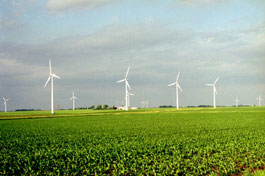
Wind turbines at the Cerro Gordo Project, west of Mason City, Iowa
Source: National Renewable Energy Laboratory (public domain)
Wind turbines can affect the environment
Modern wind turbines are very large machines. Wind turbine blades are noisy when they turn in the wind, and some people do not like the sound. Birds and bats are at risk of injury or death if they fly into turbine blades. The wind energy industry and the U.S. government are researching ways to reduce the effect of wind turbines on birds and bats.
A small number of wind turbines have caught fire, and some have leaked lubricating fluids, but these occurrences are rare. Producing the metals and other materials used to make wind turbine components can also affect the environment, and fossil fuels may be used to produce those components. Although most materials used to make wind turbines can be reused or recycled, turbine blades, as currently constructed, cannot be recycled. Researchers at the U.S. Department of Energy’s National Renewable Energy Laboratory (NREL) established an approach to manufacturing wind turbine blades using a thermoplastic resin system. These thermoplastic resins allow wind turbine blades to be recycled and reduce the energy required to manufacture blades.