
Geothermal resources
Geothermal power plants use special underground areas called hydrothermal resources, which have both water (hydro) and heat (thermal).
These power plants need very hot water or steam—from 300 degrees Fahrenheit (°F) to 700° F—found in either dry steam wells or from hot water wells. We get these resources by drilling wells into the earth and then piping the steam or hot water to the surface. The hot water or steam then powers a turbine that generates electricity. Some geothermal wells are as much as 2 miles deep.
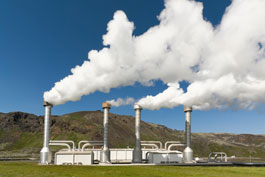
A geothermal power plant emitting steam
Source: Stock photography (copyrighted)
Types of geothermal power plants
There are three basic types of geothermal power plants:
- Dry steam plants use steam directly from a geothermal reservoir to spin generator turbines. The first geothermal power plant, built in 1904 in Italy, used the natural steam that came out of the ground.
- Flash steam plants, the most common type, use high-pressure hot water from deep inside the earth. When this hot water reaches the surface, its pressure drops, and some of it flashes (instantly turns) into the steam that drives a generator turbine. Once the steam cools, it turns back into water and is injected back into the ground to be used again.
- Binary-cycle power plants transfer the heat from geothermal hot water to another liquid with a lower boiling point. The heat from the geothermal water causes the second liquid to turn to steam, and the steam drives a generator turbine. In this type of plant, the geothermal water never touches the turbine and is returned to the earth. This closed system produces no air emissions.
Geothermal power plants
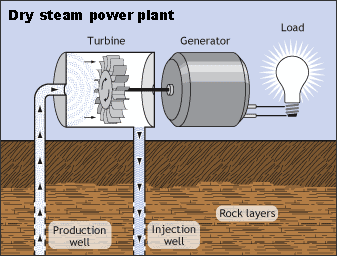
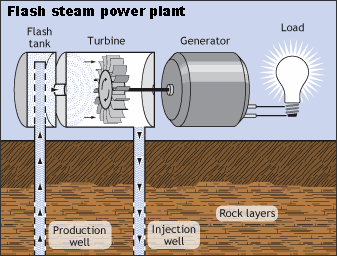
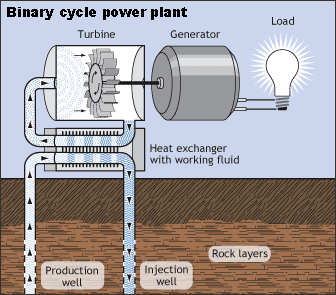
Source: U.S. Department of Energy, Geothermal Technologies Office (public domain)