
Ethanol is made from biomass
Fuel ethanol is clear, colorless alcohol that can be made from a variety of biomass materials called feedstocks (the raw materials used to make a product). Ethanol feedstocks include grains and crops with high starch and sugar content such as corn, sorghum, barley, sugar cane, and sugar beets. Fuel ethanol is made by adding a denaturant to ethanol to make it undrinkable. In the United States, nearly all fuel ethanol is produced from corn kernel starch, which is considered a conventional biofuel under the Renewable Fuel Standard Program (RFS) (the minimum federal requirements for using renewable fuels, including ethanol).
Fermentation is the most common method for producing ethanol
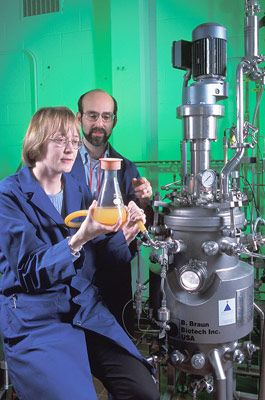
The most common ethanol production processes today use yeast to ferment the starch and sugars in corn, sugar cane, and sugar beets. Corn is the main feedstock for fuel ethanol in the United States because of its abundance and low price. The starch in corn kernels is fermented into sugar, which is then fermented into alcohol.
Sugar cane and sugar beets are the most common feedstocks used to make fuel ethanol in other parts of the world. Because alcohol is made by fermenting sugar, sugar crops are the easiest ingredients to convert into alcohol. Brazil, the world's second-highest fuel ethanol producer after the United States, makes most of its fuel ethanol from sugar cane. Most of the cars in Brazil can run on pure ethanol or on a blend of gasoline and ethanol.
Cellulosic ethanol is a significant potential source of fuel ethanol
Ethanol has other potential sources aside from fermenting grain starch and sugars. Ethanol can also be produced by breaking down cellulose in plant fibers. Researchers have experimented with several feedstocks, including:
- Agriculture residues, such as corn and rice stalks
- Fast-growing poplar and willow trees
- Grasses like switchgrass, which can produce two harvests a year for many years without annual replanting
- Biomass in municipal solid waste
Trees and grasses require less energy, fertilizers, and water to grow than grains do, and they can grow on lands that are not suitable for growing food crops. Ethanol made from these sources is called cellulosic ethanol and is considered an advanced biofuel under the RFS. However, despite the technical potential for cellulosic ethanol production from those sources, production is not economically advantageous for producers. As of the end of 2022, the United States had no commercial cellulosic ethanol production.

Ethanol is blended with gasoline
Nearly all motor gasoline now sold in the United States is about 10% ethanol by volume. Motor gasoline with 10% ethanol content by volume is called E10. Any gasoline-powered vehicle in the United States can use E10. Cars, light trucks, and medium-duty vehicles starting with model year 2001 can use E15. Only flexible-fuel vehicles can use gasoline with a higher ethanol content than 15%. E85, a fuel that contains 51%–83% ethanol, depending on location and season, is mainly sold in the Midwest and can only be used in a flexible-fuel vehicle.
Gasoline that does not contain ethanol—E0 (or ethanol-free gasoline)—may be available in some locations around the country for gasoline-powered tools, landscaping equipment, boats, and other equipment with gasoline engines for which E0 is recommended.
History of ethanol
In the 1850s, ethanol was a major lighting fuel. During the Civil War, a liquor tax was placed on ethanol to raise money for the war. The tax increased the price of ethanol so much that it could no longer compete with other fuels such as kerosene. Ethanol production declined sharply because of this tax, and production levels did not begin to recover until the tax was repealed in 1906.
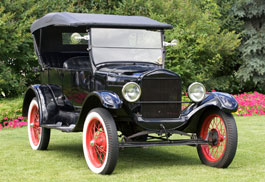
The Model T ran on ethanol
In 1908, Henry Ford designed his Model T, a very early automobile, to run on a mixture of gasoline and alcohol. Ford called this mixture the fuel of the future. In 1919, when Prohibition began, ethanol was banned because it was considered an alcoholic beverage. It could only be sold when mixed with petroleum. Ethanol was used as a fuel again after Prohibition ended in 1933.
Fuel ethanol is added to motor gasoline
Ethanol use increased temporarily during World War II when oil and other resources were scarce. In the 1970s, interest in ethanol as a transportation fuel was revived as oil embargoes, rising oil prices, and growing dependence on imported oil increased interest in alternative fuels. Since that time, ethanol use and production has been encouraged by tax benefits and by environmental regulations that require cleaner-burning fuels, which have led to large increases in fuel ethanol production and consumption.