
What is geothermal energy?
Geothermal energy is heat found inside the earth. The name comes from the Greek words geo (earth) and therme (heat). Geothermal energy is a renewable energy source because the earth constantly produces this heat. People use geothermal heat for many purposes, including:
- Bathing in hot springs
- Heating buildings
- Generating electricity
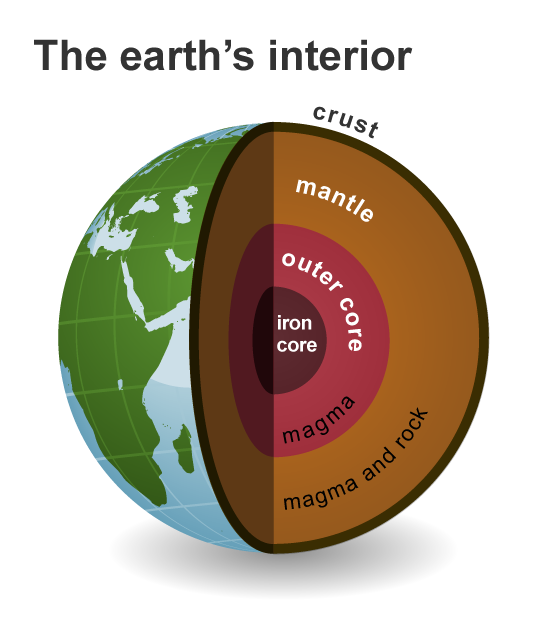
Source: Adapted from a National Energy Education Development Project graphic (public domain)
Where does geothermal energy come from?
Geothermal energy comes from deep inside the earth. It’s produced by the slow breakdown of radioactive particles in the earth's core. This process happens naturally in all rocks.
The earth has four main layers:
- Inner core: A solid ball of iron about 1,500 miles wide
- Outer core: Hot melted rock called magma about 1,500 miles thick
- Mantle: Magma and rock surrounding the outer core about 1,800 miles thick
- Crust: Outermost layer of solid rock that forms the continents and ocean floors; about 15 miles to 35 miles thick under the continents and 3 miles to 5 miles thick under the oceans
Heat within the earth
The earth's inner core is incredibly hot, about 10,800 degrees Fahrenheit (°F), which is as hot as the sun’s surface. Temperatures in the mantle range from about 392°F near the crust to about 7,230°F closer to the core.
Rocks and water absorb heat from magma deep underground. The deeper you go, the hotter the rocks and water.
Tectonic plates and magma
The earth's crust is broken into large pieces called tectonic plates. Magma gets close to the surface where these plates meet, which is where volcanoes occur. The molten rock that erupts from volcanoes is called lava. Lava is essentially magma that has reached the earth's surface.