
Energy from the sun
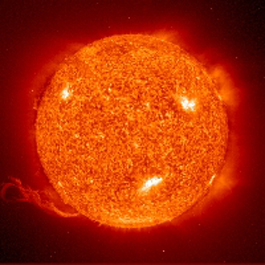
The sun has been producing energy for billions of years, and it’s the original source for nearly all the energy we use. People have used the sun's rays (solar radiation) for thousands of years for warmth and for drying food. Over time, we’ve developed technologies to capture solar energy for heat and to convert it into electricity.
Solar thermal (heat) energy
A solar oven (a box for collecting and absorbing sunlight) is a simple example of a solar energy collection device. In the 1830s, British astronomer John Herschel used a solar oven to cook during an expedition to Africa. Today, we use many different technologies to capture and convert solar energy into useful energy for various purposes.
We use solar thermal energy systems to heat:
- Water for homes, buildings, or swimming pools
- Air inside homes, greenhouses, and other buildings
- Fluids in solar thermal power plants
Solar photovoltaic systems
Solar photovoltaic (PV) devices, or solar cells, convert sunlight directly into electricity. Small PV cells can power calculators, watches, and other small electronic devices. Larger solar cells are grouped to form PV panels, and PV panels are connected in arrays that can produce electricity for an entire house. Some PV power plants have large arrays covering many acres to generate electricity for thousands of homes.
Benefits and limitations of solar energy
Benefits:
- Solar energy systems do not produce air pollutants or carbon dioxide emissions while operating.
- Solar energy systems on buildings have minimal negative effects on the environment.
Limitations:
- The amount of available sunlight depends on the time of day, location, season, and weather conditions.
- A large surface area is needed to capture enough energy to be useful.