
How does geothermal heat reach the surface?
Geothermal reservoirs are natural underground areas where heat and water are found together. These reservoirs are usually deep underground and cannot easily be seen.
Geothermal energy comes to the earth's surface in three ways:
- Volcanoes and steam vents called fumaroles (where volcanic gases are released) bring heated air to the surface.
- Hot springs produce naturally heated water from underground.
- Geysers are rare hot springs that send powerful eruptions of hot water and steam into the air.
Where are most geothermal resources found?
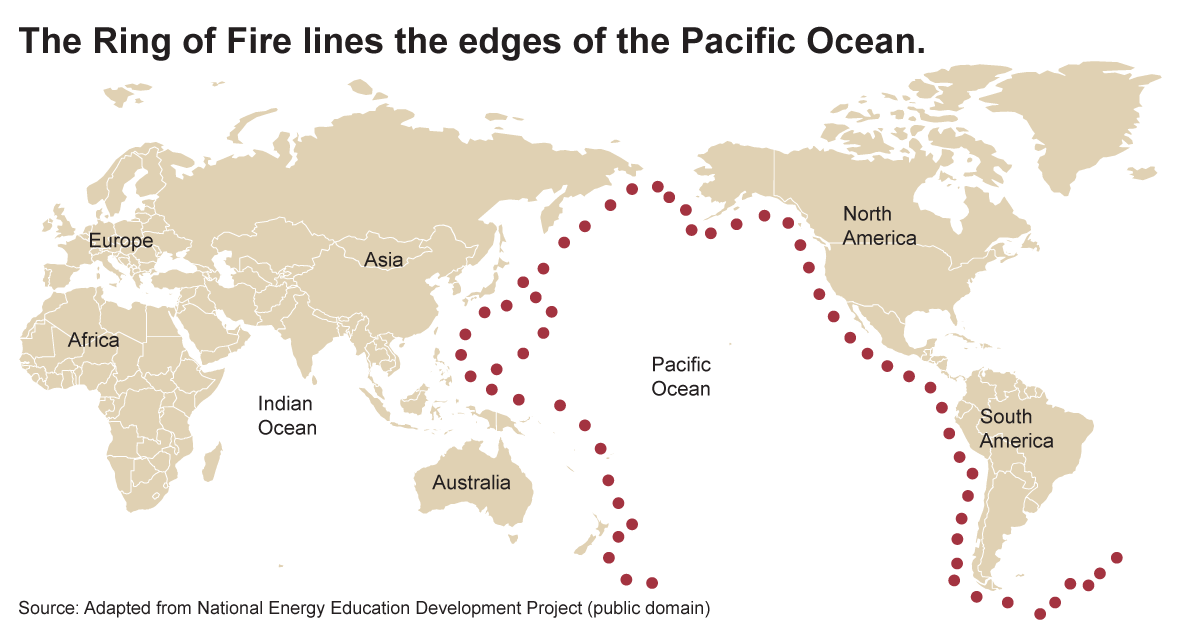
Most major geothermal resources are found near the edges of the earth’s major tectonic plates, which is also where most volcanoes are located. One of the most active geothermal areas in the world is called the Ring of Fire, which circles the Pacific Ocean.
When magma is close to the earth's surface, it heats ground water. This water may be trapped in porous rock or running through fractured rocks or faults. Hydrothermal features have two common ingredients: water (hydro) and heat (thermal).
Geologists use various methods to find geothermal reservoirs. The most reliable method is to drill a well and test the temperature deep underground.
Where are most U.S. geothermal power plants located?
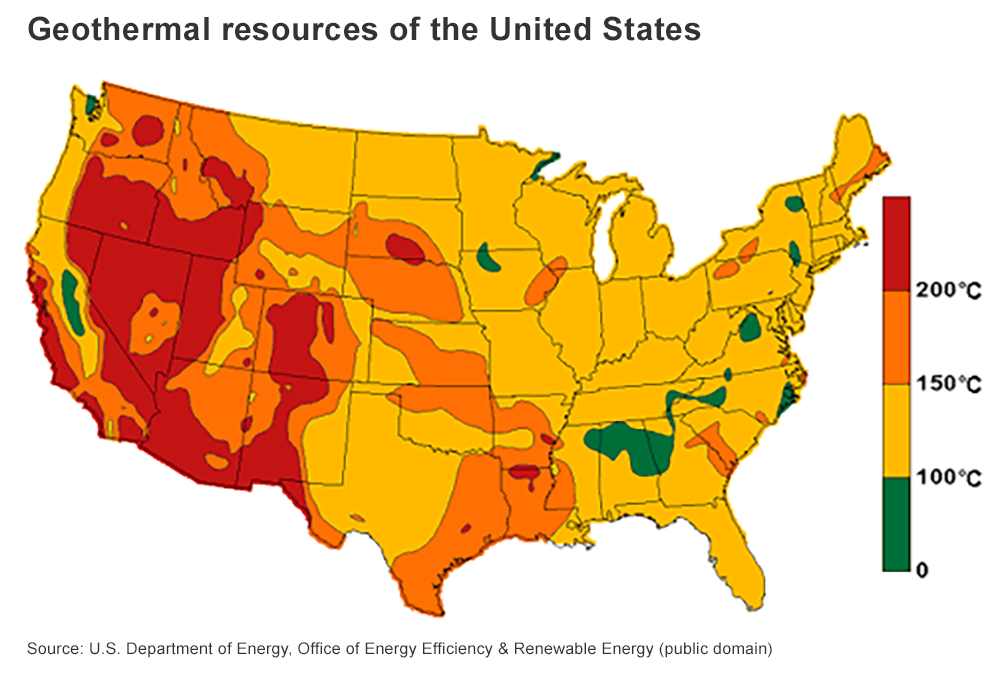
Most geothermal power plants in the United States are in western states and Hawaii, where geothermal energy resources are close to the earth's surface. California leads the United States in generating electricity from geothermal energy. The Geysers in Northern California is the largest known dry steam field in the world and has been producing electricity since 1960.