U.S. Energy Information Administration logo
Skip to sub-navigation

What is energy? Laws of energy

Energy is neither created nor destroyed

To scientists, energy conservation does not mean saving energy. Instead, the law of conservation of energy says that energy is neither created nor destroyed. When people use energy, it doesn't disappear, but instead, it changes from one form of energy into another form.

A car engine burns gasoline, converting the chemical energy in gasoline into mechanical energy. Solar photovoltaic cells change radiant energy from the sun into electrical energy. Energy changes form, but the total amount of energy in the universe stays the same.

Converting one form of energy into another

Energy efficiency is the amount of useful energy obtained from a system. A perfectly energy-efficient machine would convert all the energy it uses into useful work. Converting one form of energy into another form of energy always involves a conversion into useable and unusable energy.

Many energy transformations are relatively inefficient. The human body is a good example. The human body is like a machine, and the fuel it requires is food. Food gives a person energy to move, breathe, and think. However, the human body isn't very efficient at converting food into useful work. The human body is less than 5% efficient most of the time. The remaining energy is converted to heat, which may or may not be useful, depending on how cool or warm a person wants to be.
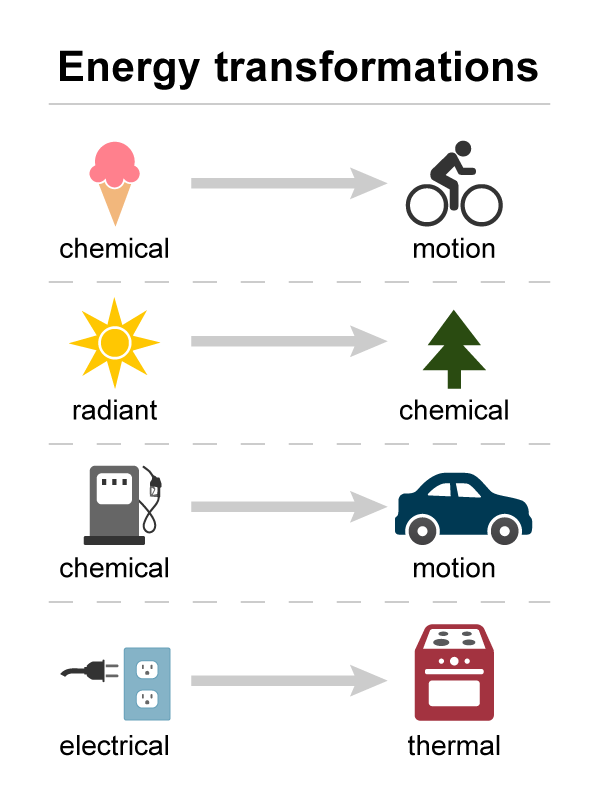
image of energy transformation from one form to another

Data source: National Energy Education Development Project (public domain)

Statistics
Analysis
Tools
Education
News

Petroleum & Other Liquids

Crude oil, gasoline, heating oil, diesel, propane, and other liquids including biofuels and natural gas liquids.

Natural Gas

Exploration and reserves, storage, imports and exports, production, prices, sales.

Electricity

Sales, revenue and prices, power plants, fuel use, stocks, generation, trade, demand & emissions.

Coal

Reserves, production, prices, employment and productivity, distribution, stocks, imports and exports.

Nuclear & Uranium

Uranium fuel, nuclear reactors, generation, spent fuel.

Renewable & Alternative Fuels

Includes hydropower, solar, wind, geothermal, biomass and ethanol.

EIA Survey Forms

Forms EIA uses to collect energy data including descriptions, links to survey instructions, and additional information.

Total Energy

Comprehensive data summaries, comparisons, analysis, and projections integrated across all energy sources.

U.S. States

State energy information, including overviews, rankings, data, and analyses.

International

International energy information, including overviews, rankings, data, and analyses.

Environment

Greenhouse gas data, voluntary reporting, electric power plant emissions.

Data Tools, Apps, & Maps

Tools to customize searches, view specific data sets, study detailed documentation, and access time-series data.

Open Data

EIA's free and open data available as API, Excel add-in, bulk files, and widgets

EIA Beta

Come test out some of the products still in development and let us know what you think!

Open Source Code

EIA's open source code, available on GitHub.

RSS Feeds

Subscribe to feeds for updates on EIA products including Today in Energy and What's New.