
U.S. nuclear electricity generation continues to decline as more reactors retire
From December 15 to December 30, Today in Energy will feature some of our favorite articles from 2022. Today’s article was originally published on April 8.
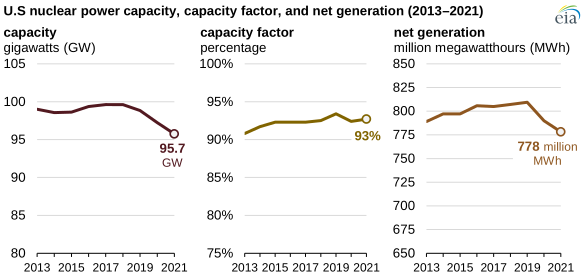
In 2021, for the second consecutive year, U.S. nuclear electricity generation declined. Output from U.S. nuclear power plants totaled 778 million megawatthours in 2021, or 1.5% less than the previous year. Nuclear’s share of U.S. electricity generation across all sectors in 2021 was similar to its average share in the previous decade: 19%.
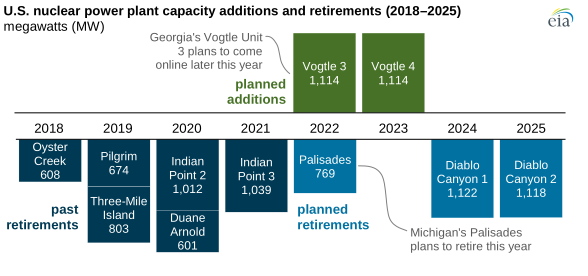
Six nuclear generating units with a total capacity of 4,736 megawatts (MW) have retired since the end of 2017. Three more reactors with a combined 3,009 MW of capacity are scheduled to retire in the coming years: Michigan’s Palisades is scheduled to retire later this year, and California’s Diablo Canyon is slated to retire one generating unit in 2024 and one in 2025. We compile announced retirement dates and new plants' intended online dates in our Preliminary Monthly Electric Generator Inventory.
The loss of electricity generation from the retirement of Indian Point Unit 3 in 2021 was partially offset by an increase in the generation of the remaining nuclear fleet at a higher capacity factor. Capacity factors measure how much of the time units operate, and nuclear units tend to be run more of the time than almost all other electricity-generating technologies. The U.S. nuclear power fleet has achieved an average annual capacity factor of at least 90% in every year since 2012. The nuclear capacity factor averaged 93% in 2021.
Although output has been rising from renewable energy sources and from turbine plants using natural gas, the U.S. nuclear fleet continues to operate at high and consistent utilization rates. Financial pressures from competitive wholesale power markets remain the primary cause of nuclear power plant retirements. Four units at two sites in Illinois had announced their intention to retire but then reversed that decision after the Illinois state legislature provided financial incentives to support the nuclear units' continued operation.
The Bipartisan Infrastructure Law, which was enacted in November 2021, includes the allocation of $6 billion to prevent the premature retirement of existing nuclear power plants. The funding will be made available to nuclear power plants that might otherwise retire and that are certified by the Nuclear Regulatory Commission as safe to continue operations.
Two nuclear generating units now under construction in Georgia (Vogtle Units 3 and 4) plan to come online by the end of 2023. Each unit is rated at 1,114 MW, and they will be the first nuclear units to come online in the United States since Tennessee's Watts Bar Unit 2 came online in mid-2016.
Principal contributor: Mark Morey