
EIA expects 2018 gasoline prices have peaked
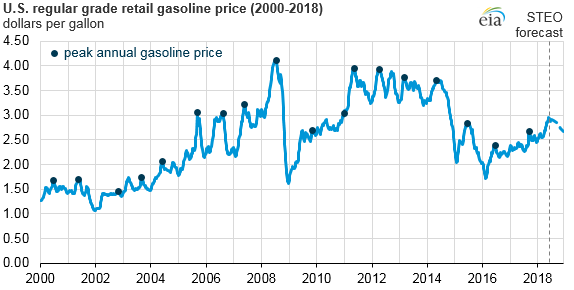
U.S. regular-grade retail gasoline prices averaged $2.89 per gallon (gal) in June, down from a high of $2.96/gal on May 28. EIA estimates that gasoline prices will remain lower than the May 28 price for the rest of the summer, reaching $2.84/gal in September. Gasoline prices are often higher in summer months when gasoline demand is higher and when federal and state environmental regulations require the use of summer-grade gasoline, which is more expensive to manufacture. Following the summer, EIA expects gasoline prices to decline to $2.68/gal by December.
Since 2000, gasoline prices have reached their yearly peak during or before June on 10 occasions. In some instances where gasoline prices have peaked after the summer, storms or other outages have driven the increase in prices. For example, supply disruptions and refinery outages in the wake of Hurricane Harvey resulted in gasoline prices peaking in September 2017.
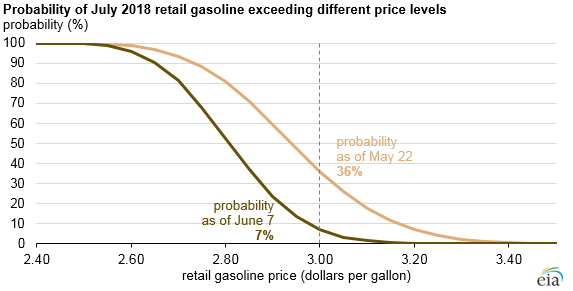
EIA’s latest Short-Term Energy Outlook noted that the probability of the regular-grade retail price of gasoline reaching or exceeding $3.00/gal declined from 36% on May 22 to 7% on June 7. These probabilities are calculated using price data from the July gasoline futures contract along with the implied volatility of the corresponding gasoline options contract.
In the five trading days ending June 7, the July 2018 futures contract for reformulated blendstock for oxygenate blending (RBOB, the petroleum component of gasoline used in many parts of the country) averaged $2.11/gal. Options prices and implied volatility during that time imply that this contract had a 7% probability of exceeding $2.30/gal. Futures prices at that level typically lead to a retail price of $3.00/gal at the contract’s expiration, based on the average retail gasoline markup that occurs at that time of year between futures contract prices and regular-grade retail gasoline prices. The probability of reaching $3.00/gal was 36% on May 22, when the RBOB price reached the highest level since late 2014.
The U.S. average regular-grade gasoline price as of June 25 was $2.83/gal, but U.S. gasoline prices in certain locations have already surpassed $3.00/gal. In states surveyed for EIA’s Gasoline and Diesel Fuel Update, prices range from an average of $2.55/gal in Ohio to $3.56/gal in California.
Principal contributors: Michael Mobilia, Rebecca George