
Release Date: September 12, 2023
STEO Between the Lines: EIA now publishes a short-term forecast of the propane spot price
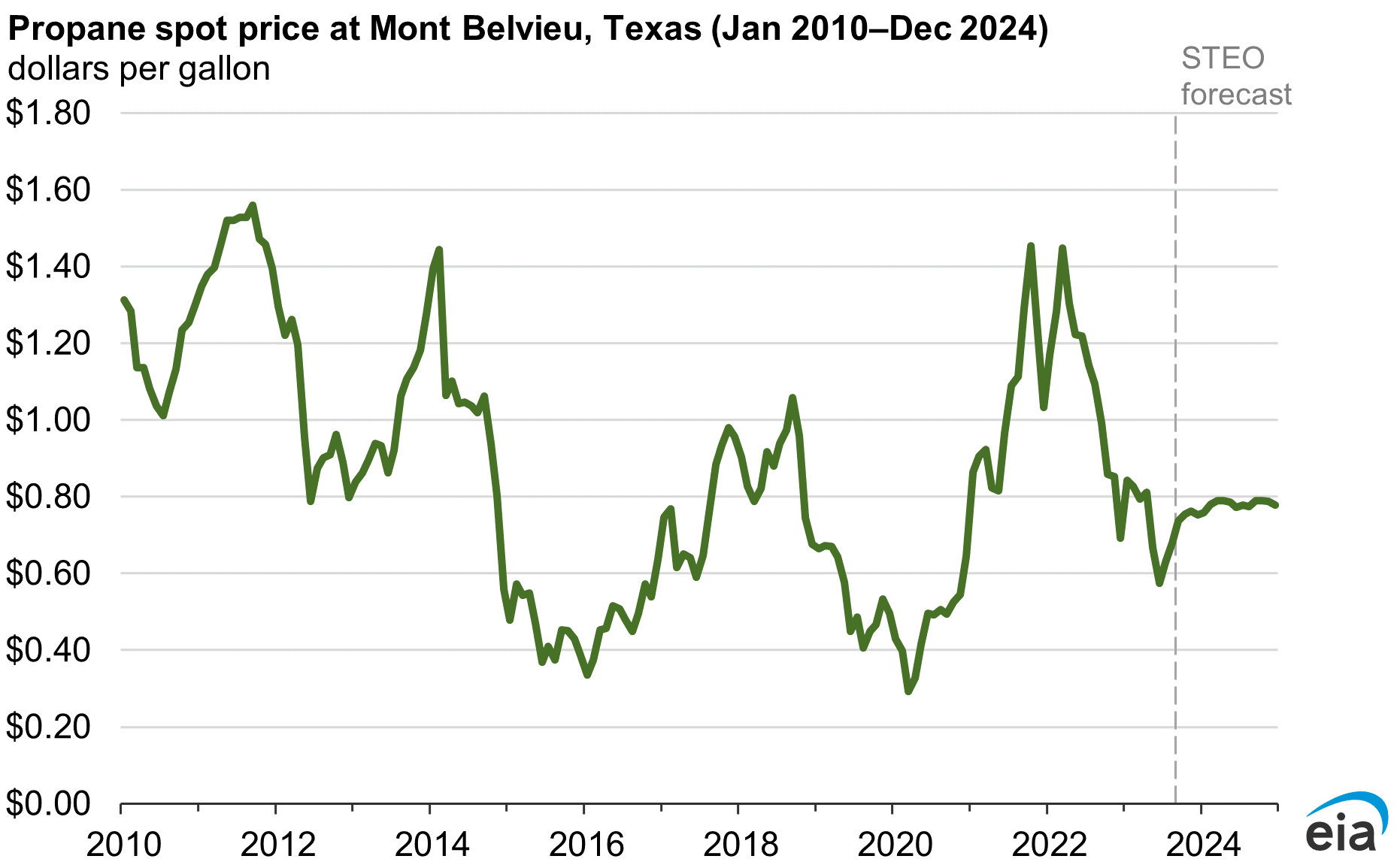
Beginning with our September Short-Term Energy Outlook we now include a forecast of the propane spot price at Mont Belvieu, Texas. Mont Belvieu, located on the U.S. Gulf Coast near Houston, is a major storage and trading hub for propane and other hydrocarbon gas liquids. Because propane is a product of refining crude oil and processing natural gas, the propane spot price is linked to the prices of those energy sources and factors specific to propane markets.
Data values: Energy prices
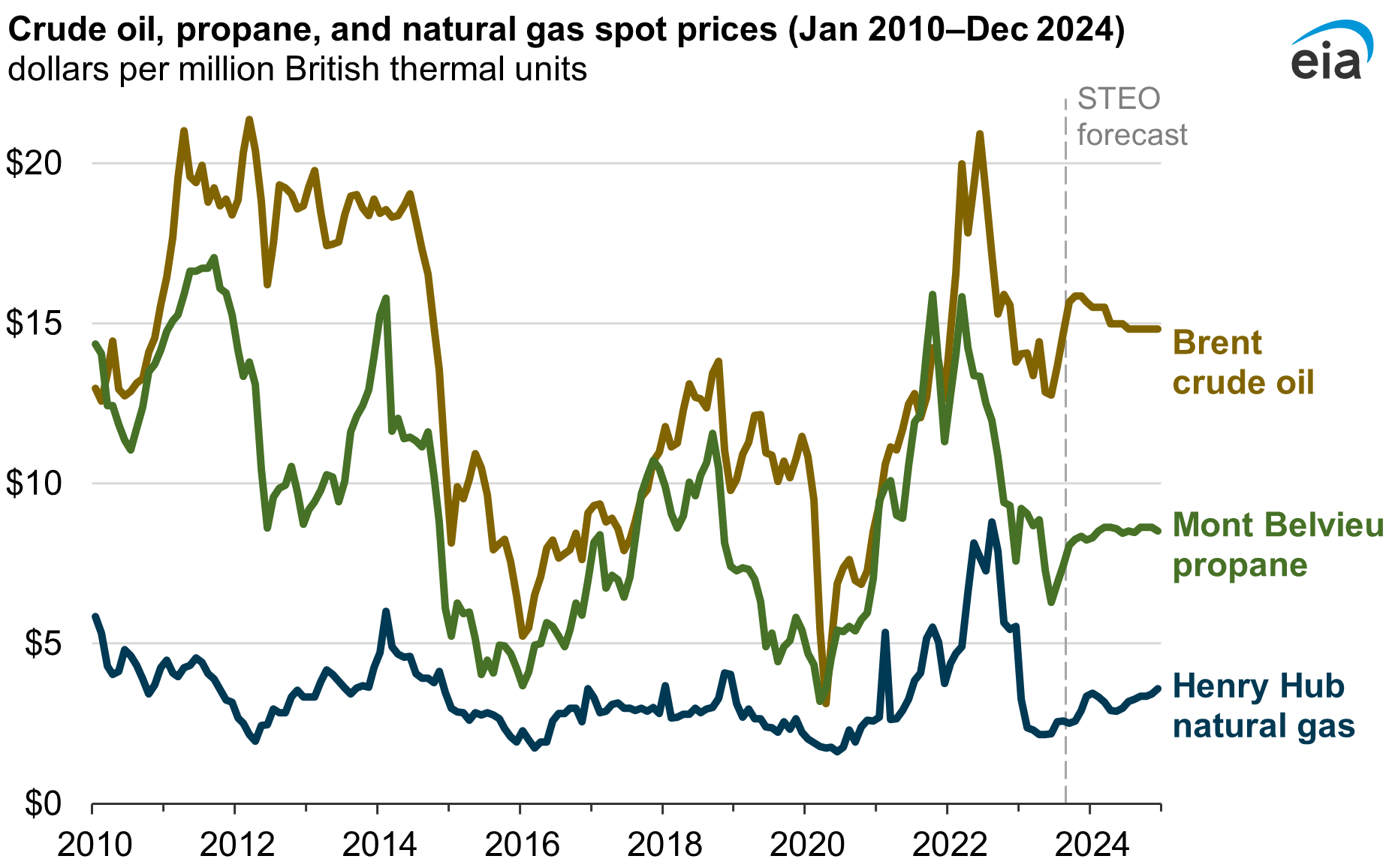
Propane spot prices typically fall between Brent crude oil and Henry Hub natural gas prices on an energy basis because propane is a product of both crude oil and natural gas. Generally, fossil fuels with a higher heat content are more valuable because they have more energy, and the heating value of propane is more than natural gas and less than crude oil. Although our propane spot price forecast covers the main drivers of price movements, weather events such as a winter storm or a hurricane are difficult to forecast in advance and can affect prices.
We forecast the Mont Belvieu wholesale propane price to increase from 70 cents per gallon (cents/gal) in August 2023 to 74 cents/gal by the end this year, based largely on a similar increase in our Brent crude oil price forecast. In 2024, we forecast that the wholesale propane price will reach a high of 81 cents/gal in September before dropping to 79 cents/gal at the end of the year.
Data values: Energy prices
Propane is used globally as a petrochemical feedstock, mostly for producing propylene, a base chemical used to manufacture polypropylene. Polypropylene is a versatile plastic used for car interiors, packaging, and personal protective equipment. Propane is also used as a fuel for space heating, agricultural grain drying, and cooking, among other uses.
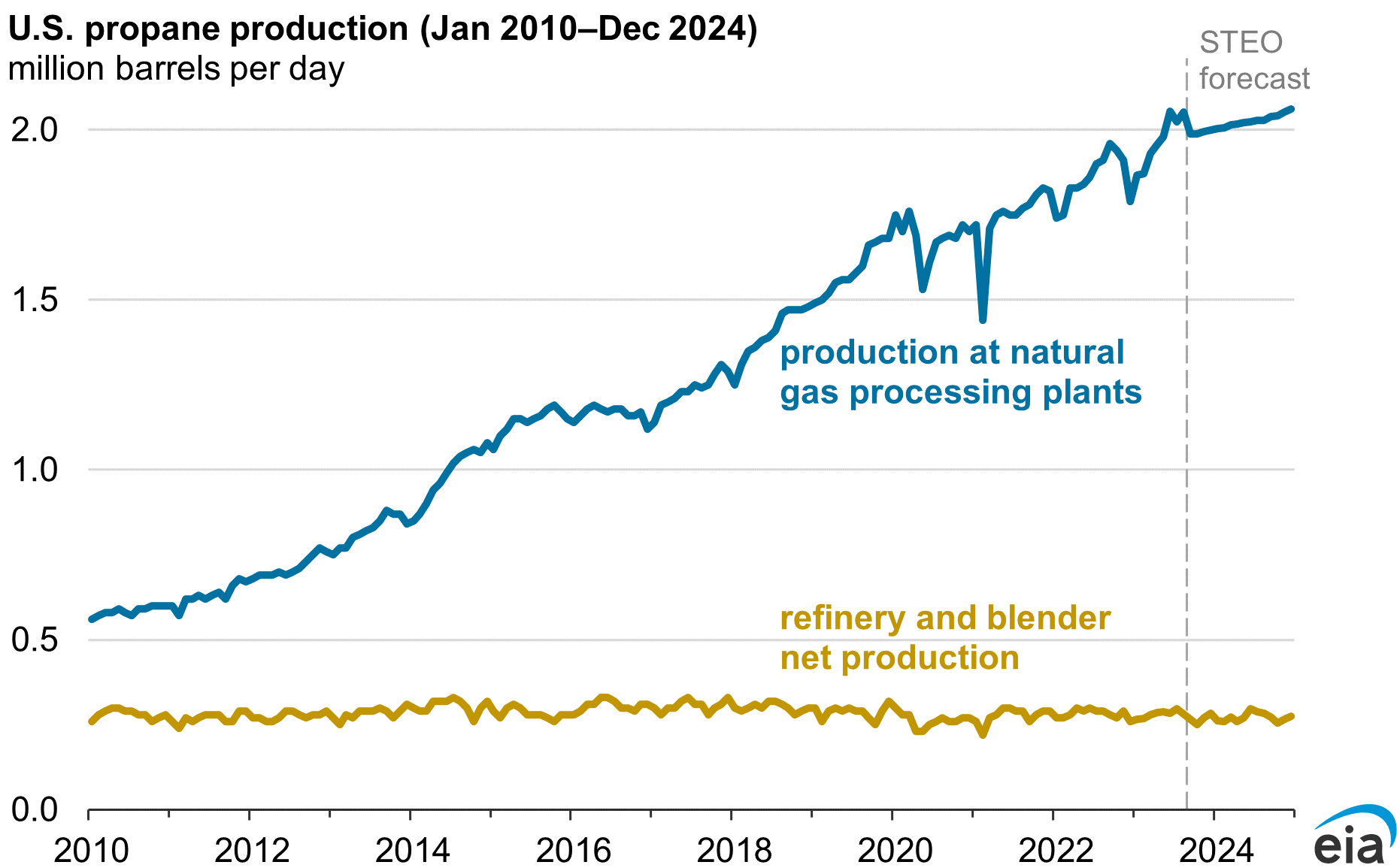
In the late 2000s, as U.S. natural gas production increased, U.S. propane production from natural gas processing plants rose substantially. Propane from natural gas production is now seven times larger than production from petroleum. In addition to being affected by crude oil prices, the propane spot price is increasingly affected by the price of U.S. natural gas because of more U.S. propane production from natural gas processing.
Data values: U.S. hydrocarbon gas liquids (HGL) and petroleum refinery balances
Increasing production and additional export capacity shifted the United States from importing more propane than we exported to exporting more than we import. In every year since 2010, the United States has been a net exporter of propane. Key export markets for U.S. propane in 2022 included Japan, China, and South Korea as well as neighboring Mexico.
In many places around the world, propane is consumed as a petrochemical feedstock; most propane consumed in the United States is as a winter heating fuel. A colder-than-normal winter will reduce propane inventories, which can put upward pressure on prices. Alternatively, a warmer-than-normal winter usually puts downward pressure on U.S. prices.
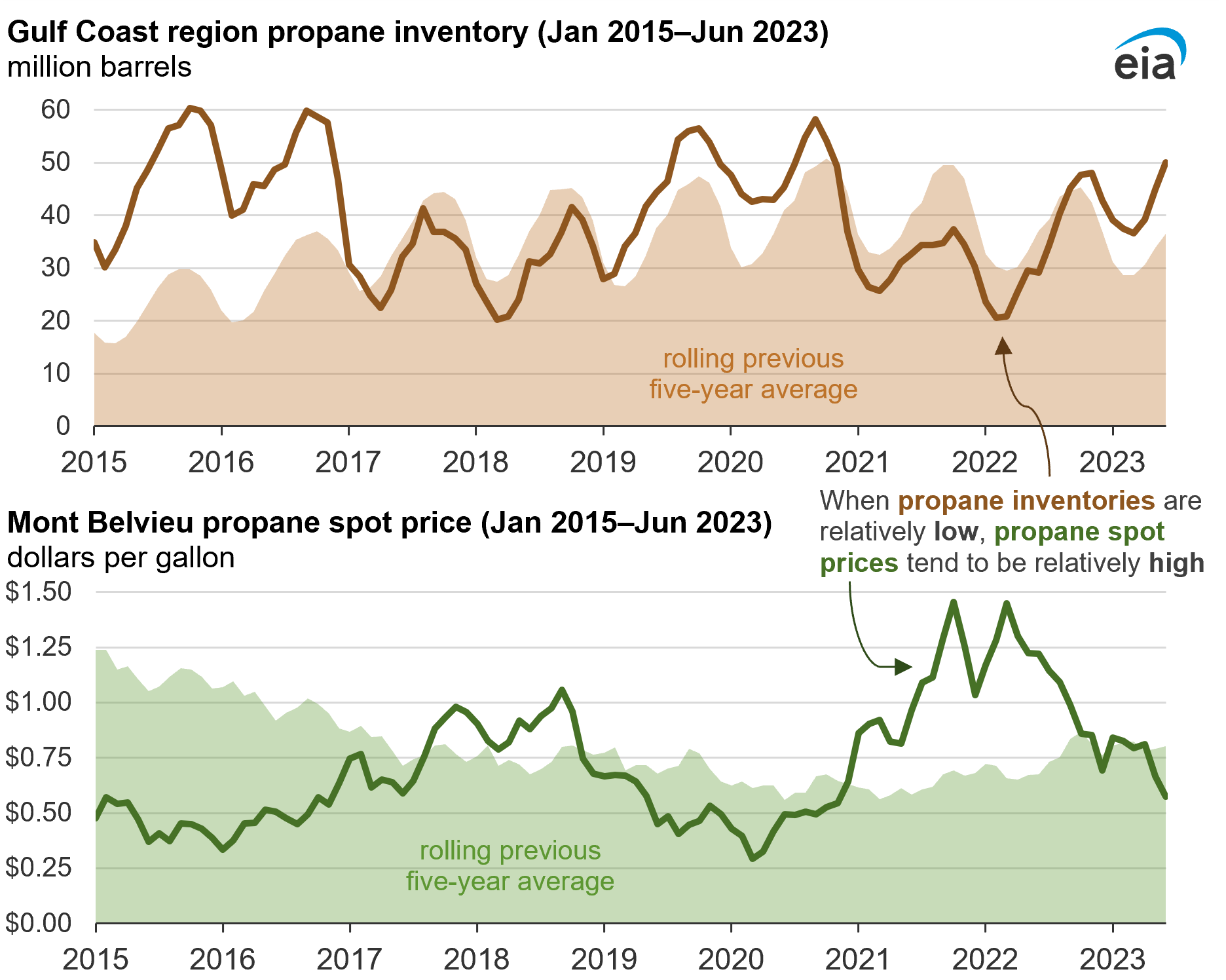
We also base our propane spot price forecast on domestic propane supply and demand balances, as captured by propane inventory changes. When forecasting propane spot prices, we consider propane inventories in the Gulf Coast region, where most U.S. petrochemical consumption, propane export capacity, and propane storage capacity are located. Generally, propane prices tend to be relatively high when inventories are relatively low; the reverse is also true.
Data values: Stocks by type and Spot prices