
Heating fuel choice shows electricity and natural gas roughly equal in newer homes
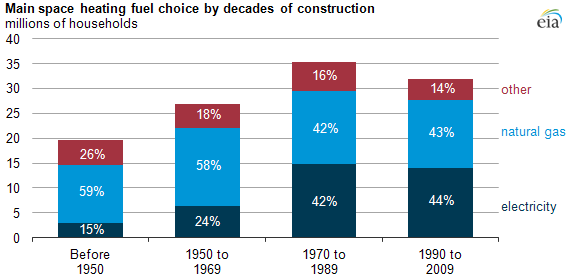
Note: 'Other' includes homes primarily heated by fuel oil, liquefied petroleum gases (propane), wood, kerosene, as well as homes that reported no main space heating fuel used in 2009.
Homes built since about 1970 use electricity and natural gas as their main space heating fuel in roughly equal proportions, a stark contrast to homes built before 1970, when natural gas dominated heating fuel choice. Other fuels such as fuel oil, liquefied petroleum gases (propane), wood, and kerosene are more likely to be used as heating fuels in homes built before 1970. The choice of fuel used for primary space heating also tends to drive fuel choice for water heating, cooking, and clothes drying. Virtually all other residential end uses are powered by electricity alone.
Households' heating fuel choice is part of the most recent Residential Energy Consumption Survey (RECS) data characterizing how households were using energy in 2009. A household's choice of heating fuel is dependent on several factors such as who makes the decision and what fuels they can choose from. The residents of the house may not have made the choice—often primary heating fuel and equipment is decided by the builder or contractor. Over time, households can switch heating equipment, which sometimes results in switching fuels as well. And certain fuels are not available in some areas of the country.
Fuel choice tends to vary significantly by region. Part of the change over time is explained by population shifts toward warmer and drier climates in the South and West regions. The fastest-growing region, the South, is primarily heated by electricity. The Midwest and West are mostly heated by natural gas. Fuel oil is generally only used in the Northeast; less than two percent of homes outside the Northeast use fuel oil (also known as distillate oil) as their primary space heating fuel.
Over 99% of homes make some use of electricity, but no other fuel is nearly as widespread. RECS data show how often fuels are used in households for any purpose, not just space heating. About 61% of homes use natural gas, followed by propane (43%), wood (12%), and fuel oil (7%). All remaining fuels are used in only one percent of homes. Relatively few uses (including space heating, water heating, cooking, and clothes drying) offer a choice of equipment across fuels. Almost everything else including air conditioners, lights, refrigerators, televisions, computers, electronics and other devices is powered only by electricity.
RECS provides data on how several residential energy characteristics can vary, presenting data by Census region, Census division, for selected states, year of construction, type of household, climate region, owned or rented, urban or rural, number of household members, and household income.