
U.S. proved reserves fell in 2023 from 2022 record
Data values: U.S. crude oil and natural gas proved reserves 1963–2023
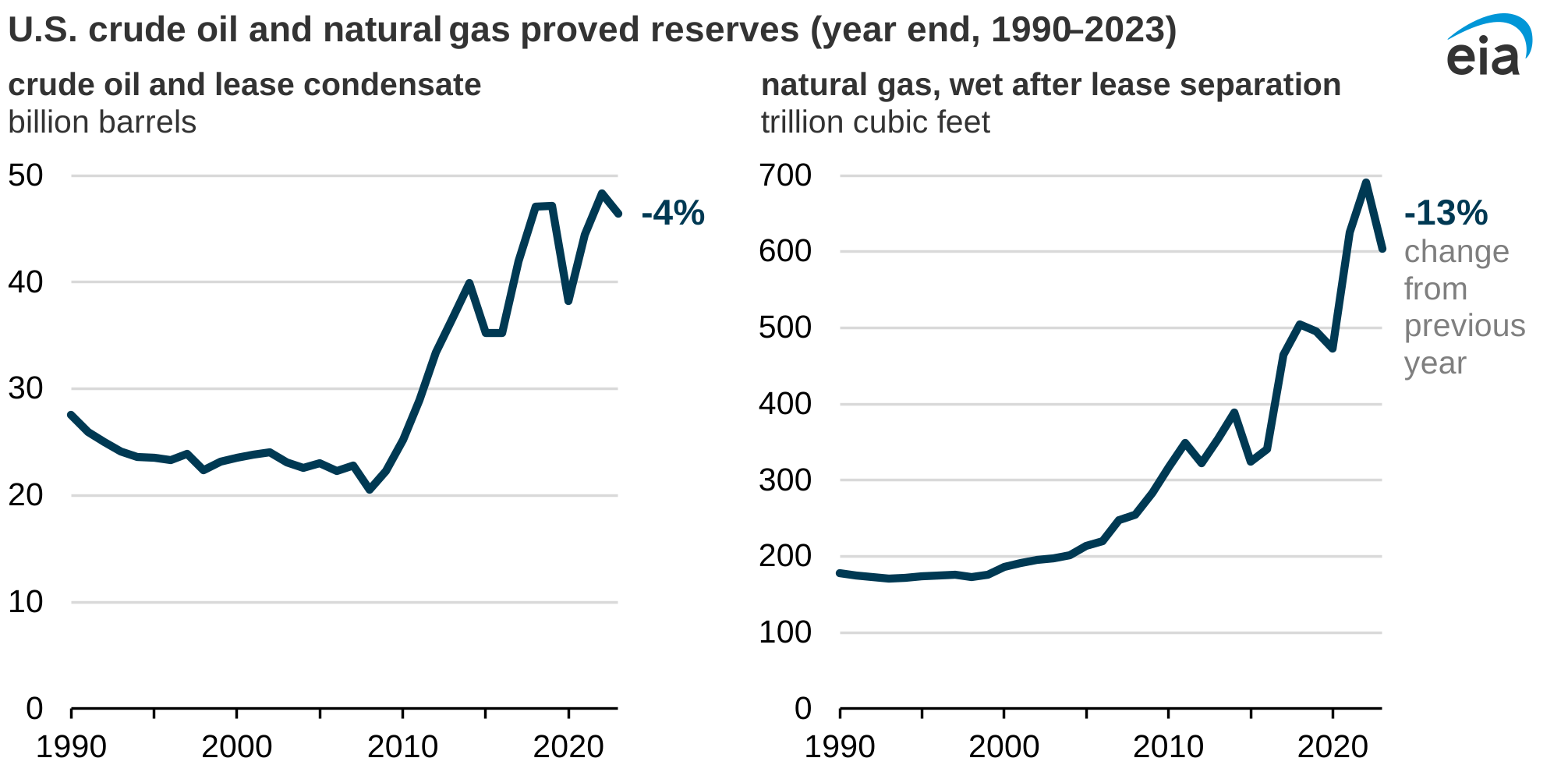
U.S. proved reserves of crude oil and lease condensate totaled 46 billion barrels at year-end 2023, a 4% decline from the previous year’s record, according to our U.S. Crude Oil and Natural Gas Proved Reserves, Year-End 2023 report. U.S. proved reserves of natural gas fell to 604 trillion cubic feet, a 13% decline from their 2022 record. Both declines marked the first annual decrease in U.S. proved reserves for those fuels since 2020.
Proved reserves are operator estimates of the volumes of oil and natural gas that geological and engineering data demonstrate with reasonable certainty to be recoverable in the future from known reservoirs under existing economic and operating conditions. Prices heavily affect estimates of proved reserves.
Operators revised their proved reserves downward in response to falling prices in 2023 from the historical highs observed in 2022. Annual average wholesale prices at the domestic benchmarks for West Texas Intermediate crude oil and Henry Hub natural gas fell by 18% and 61%, respectively, between 2022 and 2023.
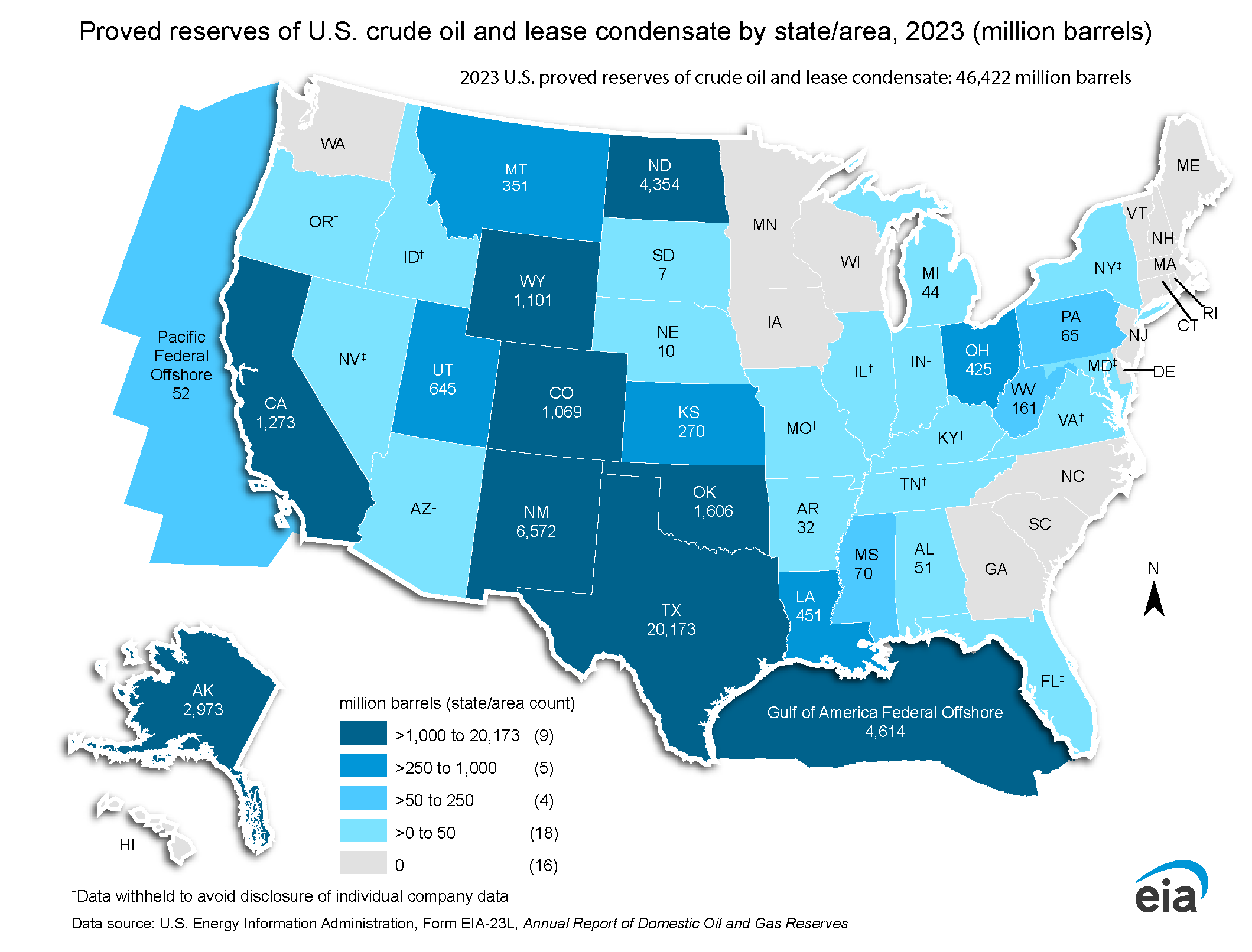
Source: U.S. Energy Information Administration, U.S. Crude Oil and Natural Gas Proved Reserves, Year-End 2023
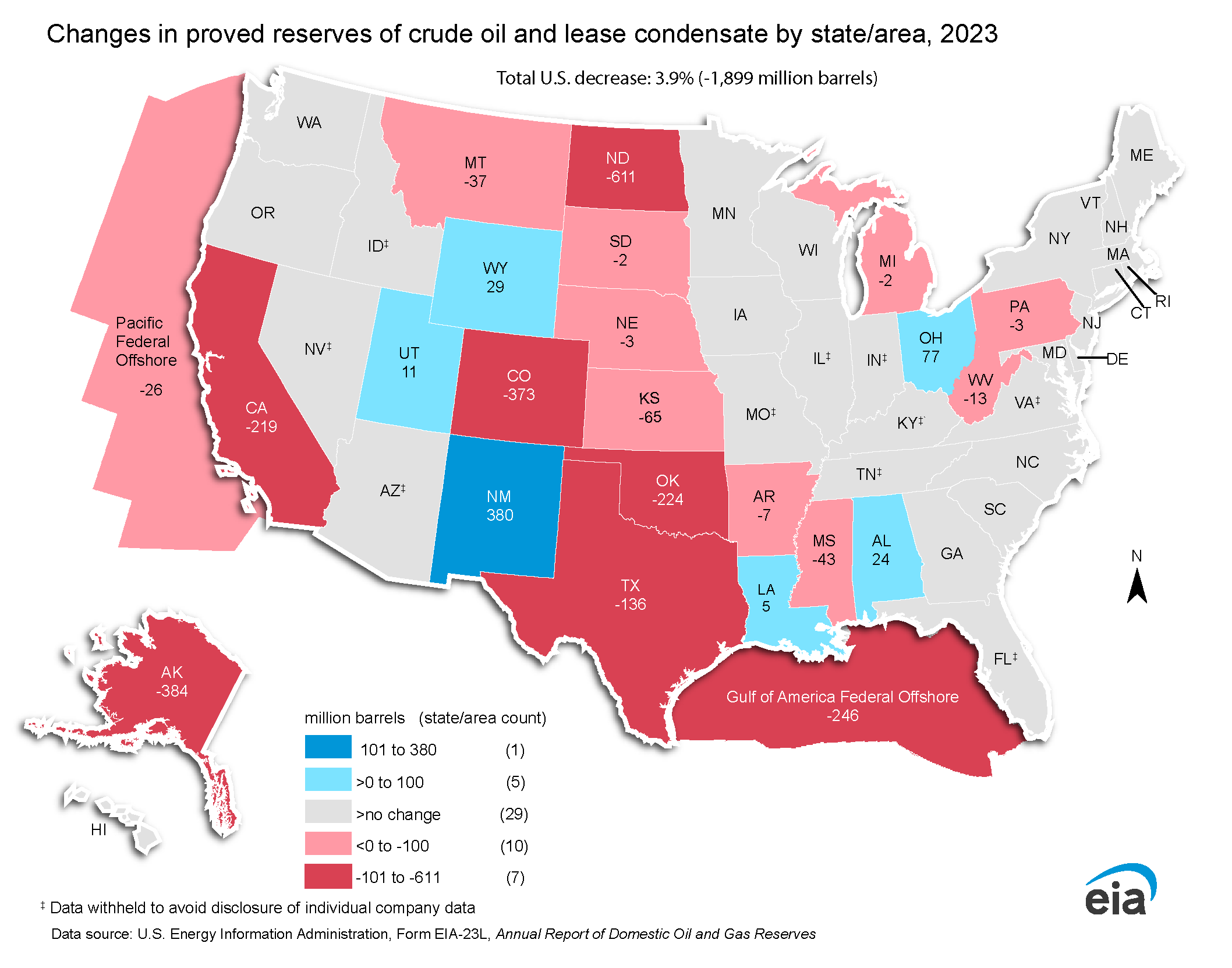
Source: U.S. Energy Information Administration, U.S. Crude Oil and Natural Gas Proved Reserves, Year-End 2023
North Dakota’s crude oil and lease condensate reserves decreased 12%, or 611 million barrels, from 2022, the largest annual net decline reported among all states. Alaska’s oil reserves decreased 11%, or 384 million barrels, the second-largest net decline. New Mexico’s reserves increased by 380 million barrels, the largest increase among the states in 2023.
Alaska’s natural gas proved reserves decreased 23%, the largest annual net decline (28 trillion cubic feet) among all states in 2023. Texas had the second-largest net decline in proved reserves of natural gas (13%, or 21 trillion cubic feet). Montana reported the largest annual net increase in proved reserves of natural gas (11%, or 70 billion cubic feet).
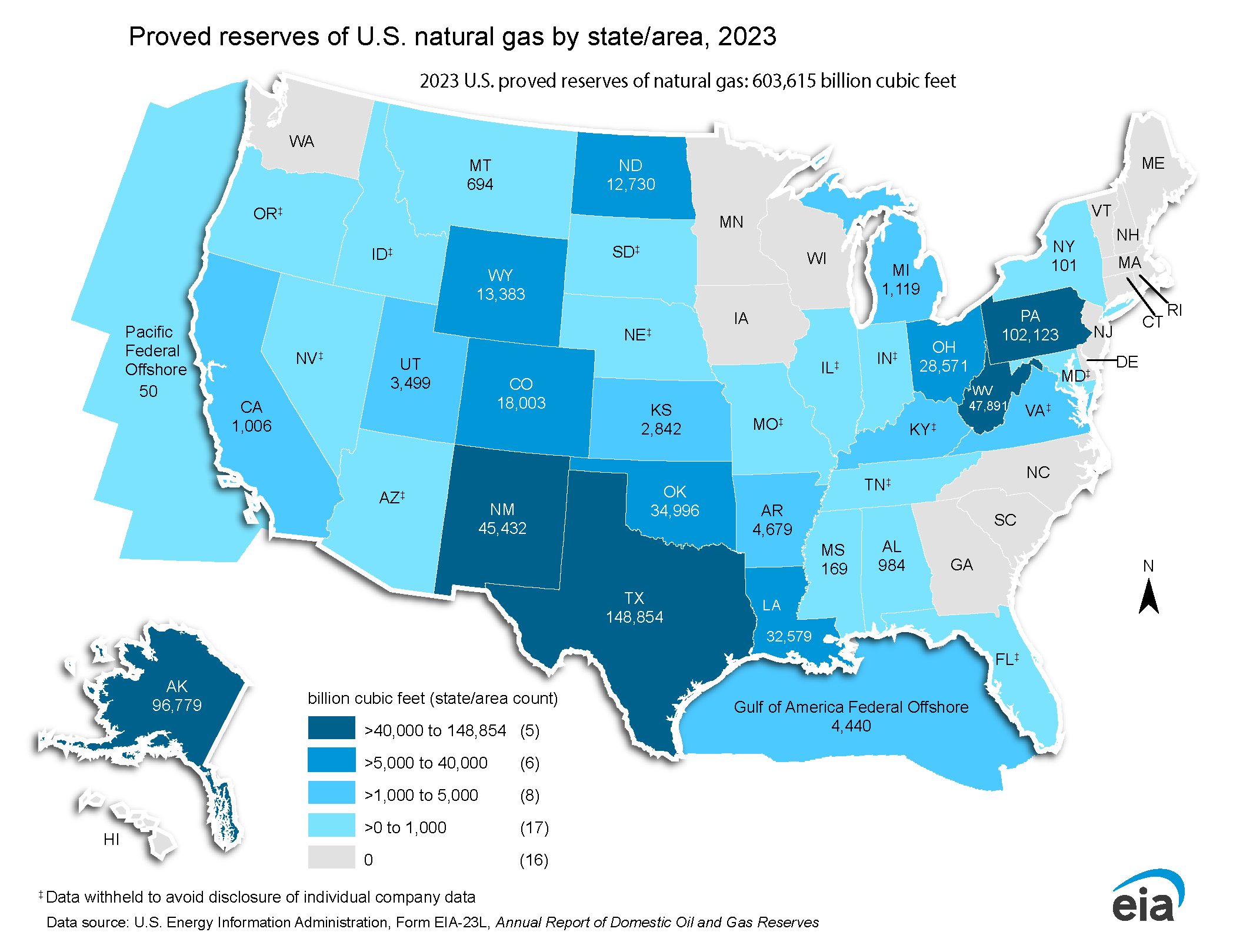
Source: U.S. Energy Information Administration, U.S. Crude Oil and Natural Gas Proved Reserves, Year-End 2023
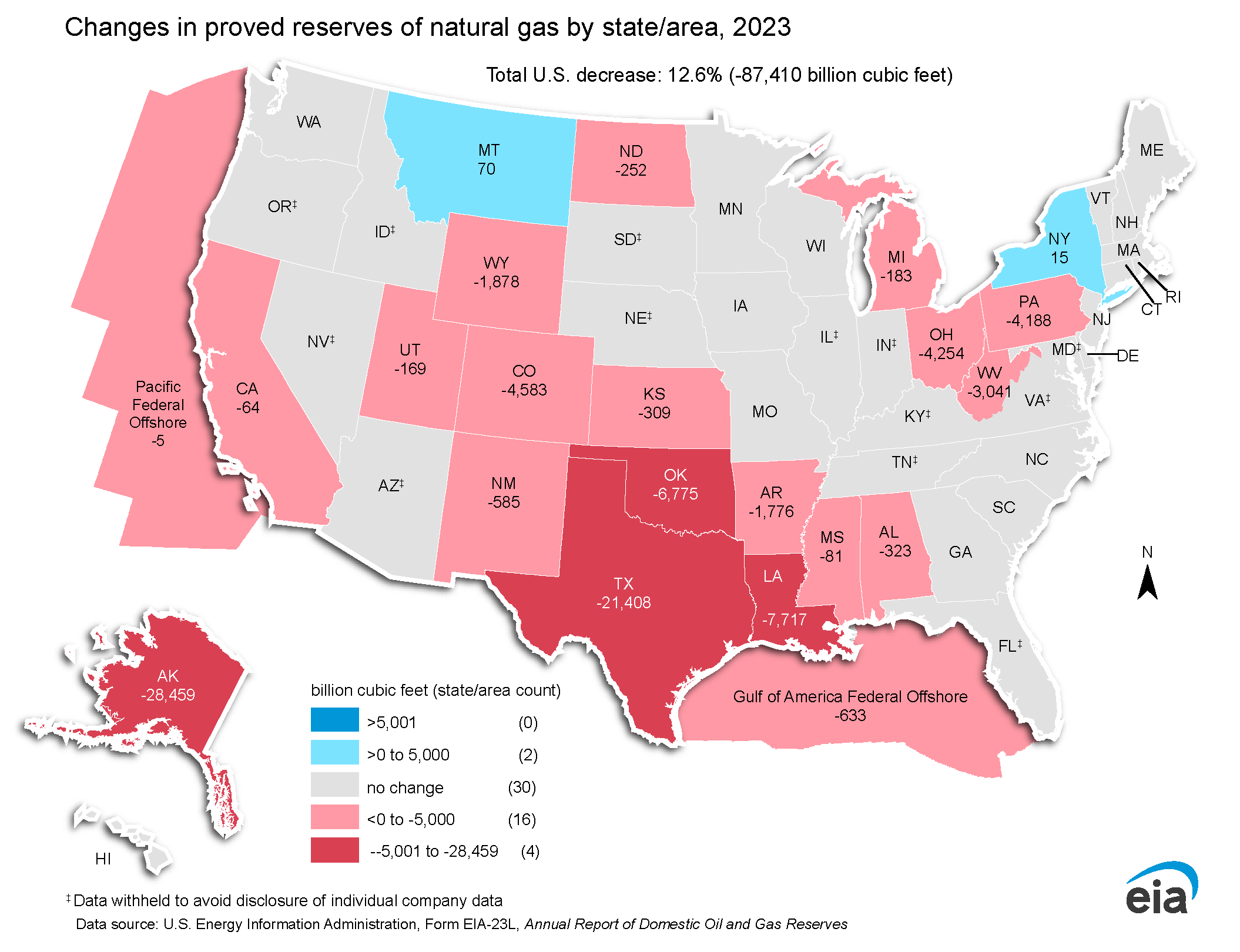
Source: U.S. Energy Information Administration, U.S. Crude Oil and Natural Gas Proved Reserves, Year-End 2023
Our U.S. Crude Oil and Natural Gas Proved Reserves, Year-End 2023 report includes additional data on proved reserves, including crude oil and lease condensate reserves from shale plays by state and area. We estimate reserves for subdivisions within each state or area for some locations, namely California, Louisiana, New Mexico, Texas, and the Federal Offshore Gulf of America.
Principal contributor: Steven Grape
Tags: reserves, natural gas, liquid fuels, crude oil, oil/petroleum, map