
U.S. diesel prices have fallen below prices from before Russia's invasion of Ukraine
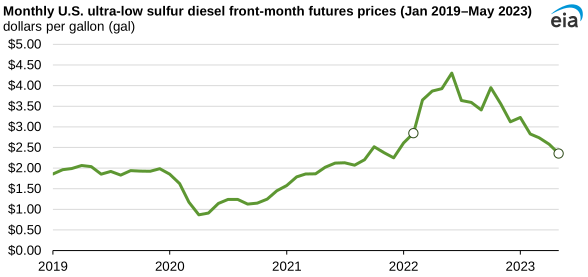
U.S. ultra-low sulfur diesel front-month futures prices have declined each month since January 2023 and, as of May, averaged $0.50 per gallon (gal) lower than prices in February 2022, just before Russia’s full-scale invasion of Ukraine. For over a year, Russia’s full-scale invasion of Ukraine, and the reaction to it, has disrupted global crude oil and petroleum product markets.
Diesel is produced from crude oil, so crude oil prices are closely linked to diesel prices. Diesel prices in the United States and globally increased rapidly in the spring of 2022 because of concerns about global diesel supply. The possibility of less petroleum being exported from Russia pushed crude oil to the highest prices since 2014. U.S. diesel futures prices also rose, reaching an average of $4.30/gal in June 2022.
Although crude oil prices declined in the second half of 2022, U.S. diesel futures prices rose again in October 2022 to $3.95/gal because of seasonal demand and diesel supply concerns for Europe. Each year in the fall, demand for diesel in the United States and Europe rises at the beginning of the winter heating season. The EU’s announcement in June 2022 of a ban on petroleum product imports from Russia, which began in February 2023, also contributed to the October 2022 price peak.
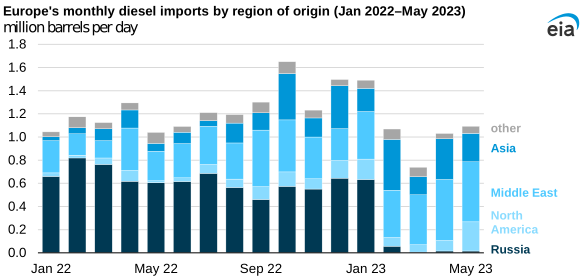
Historically, Russia has been Europe’s largest supplier of diesel. In 2023, diesel prices have declined in both Europe and the United States because Europe has been able to replace most of the diesel it would have imported from Russia with imports from other regions
Note: Excludes Türkiye, Ukraine, Georgia, Bulgaria, and Azerbaijan
Since February 2023, when the EU implemented the ban on petroleum product imports from Russia, diesel exports from Russia to Europe have averaged 24,000 barrels per day (b/d), down by 96% from the 630,000 b/d Russia sent to Europe in 2022. From February through May, diesel exports to Europe increased by 51% (160,000 b/d) from the Middle East, by 97% (147,000 b/d) from Asia, and by 65% (47,000 b/d) from North America.
Diesel is a globally traded commodity, so higher prices in Europe in 2022 increased U.S. distillate prices, even though most U.S. distillate exports are not delivered to Europe, but rather to Latin America.
Principal contributor: Alexander de Keyserling
Tags: prices, crude oil, diesel, oil/petroleum