
U.S. propane consumption last winter was the lowest since at least 2010
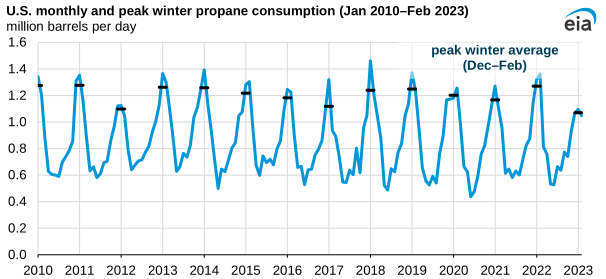
Note: Propane consumption is measured as product supplied.
We estimate that U.S. propane consumption averaged 0.986 million barrels per day (b/d) during the 2022–23 winter heating season (October through March), the least for a winter heating season on record, starting in 2010. Reduced average winter U.S. propane consumption was influenced by less consumption during the coldest winter months of December, January, and February. Based on our recently released Petroleum Supply Monthly, U.S. propane consumption during those three months averaged 1.07 million b/d, also the least since 2010. The lower consumption is primarily the result of warmer-than-normal temperatures during the winter. The consumption of propane is closely correlated with temperature in the United States during the winter and the resulting demand for heating.
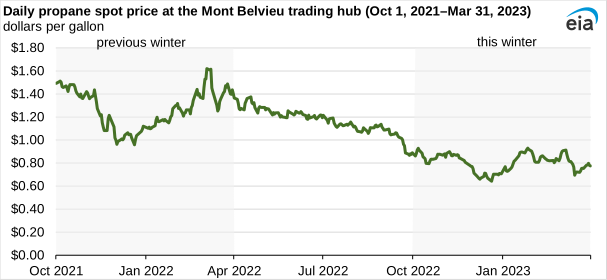
Mild winter temperatures reduced propane consumption in the U.S. residential and commercial sectors. The U.S. Midwest and Northeast account for 54% of the 6.3 million U.S. households that report using propane as their primary space heating fuel. The lower propane demand this winter reduced U.S. propane prices compared with last winter.
Wholesale propane prices at the U.S. benchmark location of Mont Belvieu, Texas, averaged $0.81 per gallon (gal) during the 2022–23 winter heating season, compared with an average of $1.28/gal last winter.
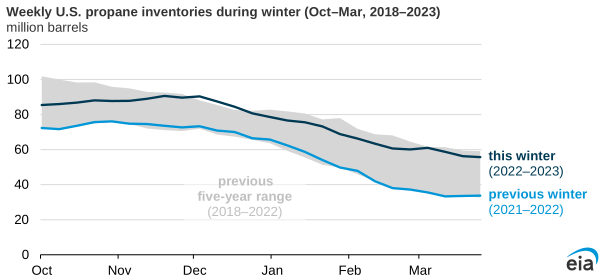
Propane inventories reflect supply and demand balances as well as prices. In the United States, most propane is consumed during the winter heating months. For the week ending October 7, 2022, the first week of the 2022–23 winter heating season, we reported U.S. propane inventories at 85.5 million barrels, 13.2 million barrels more than the same week in the previous winter. At the end of the winter heating season, for the week ending March 31, 2023, propane inventories were 55.7 million barrels, 22.0 million barrels more than at the end of last winter. U.S. propane stocks have continued growing during April, totaling 58.3 million barrels as of April 28.
Lower demand and prices for propane in the United States last winter caused U.S. propane prices to fall below benchmark hubs in Northwest Europe and East Asia. The price difference supported the most U.S. propane exports on record during a winter heating season.
Principal contributor: Josh Eiermann