
California natural gas storage levels are much lower in the north than in the south
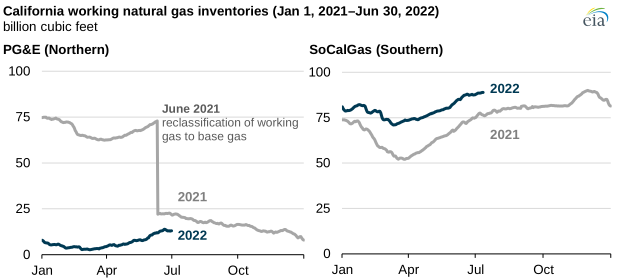
Working natural gas inventories at storage facilities operated by the two largest natural gas distributors in California—Pacific Gas & Electric (PG&E) in the north and Southern California Gas Company (SoCalGas) in the south—totaled 100.6 billion cubic feet (Bcf) as of June 30, 2022, according to publicly available company data. Although total California inventories are 4% higher than they were one year ago, storage operation and capacity utilization vary significantly by region.
As of June 30, PG&E, which accounts for 28% of the working natural gas capacity in Northern California, held approximately 13.0 Bcf of natural gas in storage, 40% less than it did one year ago. SoCalGas held 87.6 Bcf in working natural gas inventories, 17% more than at the end of June last year.
California’s 14 storage facilities have a total capacity of 323 Bcf, which represents 88% of the storage capacity in the Pacific region (California, Oregon, and Washington). Two additional storage facilities are located in the Pacific Northwest, one in Oregon and one in Washington.
About 0.1 Bcf/d more natural gas was withdrawn from storage in Northern California last winter (from November 2021 through March 2022) than during the winter of 2020–21. Even though PG&E’s inventories increased by 10.2 Bcf so far this injection season (from April 1 through July 10), PG&E’s inventories remain 33% below July 10, 2021.
On June 11, 2021, as the result of a California Public Utilities Commission (CPUC) Rate Case Final Decision, PG&E reclassified 51.0 Bcf of working gas to base gas. PG&E’s inventories declined from 72.9 Bcf to 22.0 Bcf, and the total working gas capacity of PG&E’s storage declined to 52.5 Bcf as a result of the reclassification.
During the first half of 2022, natural gas pipeline deliveries from the Pacific Northwest into Northern California decreased by 5% compared with the first half of 2021, resulting in increased withdrawals from storage to meet demand. Natural gas deliveries from the Desert Southwest into Southern California declined by 3%, according to data from PointLogic.
On November 4, 2021, the CPUC decided to allow SoCalGas, operator of four storage facilities in Southern California, to increase its working gas capacity at the Aliso Canyon Natural Gas Storage Facility to 41.0 Bcf from 34.0 Bcf to help ensure energy reliability in the region. As a result, SoCalGas is able to store more locally produced natural gas, and inventories have increased to 17% above last year.
Principal contributor: Katy Fleury
Tags: storage, natural gas, California, states