
New York’s Indian Point nuclear power plant closes after 59 years of operation
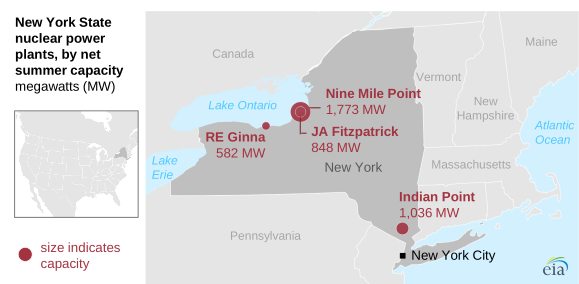
The Indian Point Energy Center (Indian Point) permanently stopped generating electricity on April 30, 2021, when it retired its last operating nuclear reactor, Unit 3, earlier than originally planned. The Indian Point nuclear power plant began operations in 1962 and produced over 565 terawatthours (TWh) of electricity in the 59 years it was open. The Unit 3 retirement removes almost 1,040 megawatts (MW) of nuclear generating capacity from New York State, leaving about 3,200 MW of remaining nuclear capacity at three plants in upstate New York.
Indian Point is located in Buchanan, New York, about 25 miles north of Midtown Manhattan. The plant had three pressurized water reactors. Unit 1 began operations in 1962 and shut down in 1974. Units 2 and 3 began operations in 1974 and 1976, respectively; Unit 2 retired in April 2020. The Consolidated Edison grid system distributed the plant’s electricity to the five boroughs of New York City and neighboring Westchester County.
Three natural gas-fired power plants have been introduced over the past three years to help support the electric supply needed by New York City that Indian Point had been providing: Bayonne Energy Center II (120 MW), CPV Valley Energy Center (678 MW), and Cricket Valley Energy Center (1,020 MW).
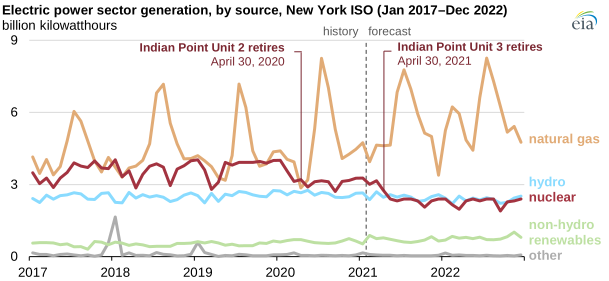
Nuclear reactors do not produce carbon emissions while operating. New York’s 2019 Clean Energy Standard (CES) requires utilities and other retail electricity suppliers in the state to obtain 100% of the electricity they sell from carbon-free sources by 2040. In addition to renewables such as wind and solar, New York’s CES recognizes nuclear power plants as zero emission resources.
Indian Point Unit 3 was one of New York’s 10 largest electricity generators; it produced over 270 TWh of carbon-free electricity since it began operating. Because of Indian Point Unit 3’s retirement, a large amount of new carbon-free generating capacity will need to come online to help meet the state’s CES goal.
Indian Point’s owner-operator, Entergy, retired Units 2 and 3 before their operating licenses expired as part of a settlement agreement with New York State. Entergy had been seeking a 20-year license renewal for both reactor units since 2007. However, New York challenged the renewals, citing environmental and safety concerns resulting from the plant’s nearness to New York City. Low wholesale electricity prices and increased operating costs also contributed to Entergy’s decision to retire Indian Point early.
Principal contributor: Slade Johnson
Tags: generation, electricity, nuclear, retirements, New York, power plants, states, map