U.S. Energy Information Administration logo
Skip to sub-navigation
December 9, 2019

U.S. onshore wind capacity exceeds 100 gigawatts
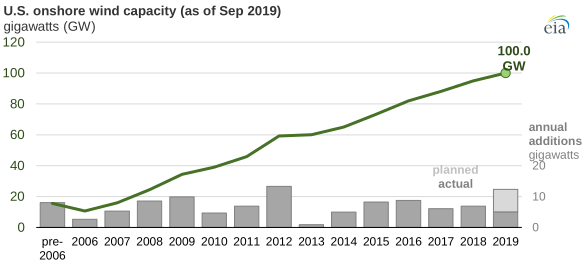
U.S. annual wind capacity additions by year
Source: U.S. Energy Information Administration, Preliminary Monthly Electric Generator Inventory
Note: Values given as nameplate capacity.

Cumulative U.S. installed onshore wind capacity exceeded 100 gigawatts (GW) on a nameplate capacity basis as of the end of September 2019, according to the U.S. Energy Information Administration’s (EIA) Preliminary Monthly Electric Generator Inventory. More than half of that amount has been installed since the beginning of 2012. The oldest wind turbines still operating in the United States came online as early as 1975.
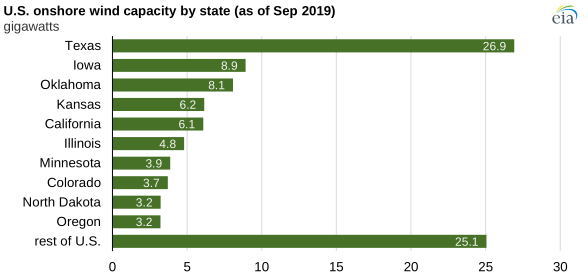
installed wind capacity by state
Source: U.S. Energy Information Administration, Preliminary Monthly Electric Generator Inventory

As of the third quarter of 2019, 41 states had at least one installed wind turbine. Texas had the most capacity installed, at 26.9 GW, followed by Iowa, Oklahoma, and Kansas. These four states accounted for half of the total U.S. installed wind capacity.

In the United States, wind turbines tend to come online late in the year. Based on information reported in the Preliminary Monthly Electric Generator Inventory, EIA expects that an additional 7.2 GW of capacity will come online in December 2019. EIA also expects that another 14.3 GW of wind capacity will come online in 2020. If realized, the United States would have about 122 GW of wind capacity by the end of next year.

Principal contributor: Richard Bowers

Statistics
Analysis
Tools
Education
News

Petroleum & Other Liquids

Crude oil, gasoline, heating oil, diesel, propane, and other liquids including biofuels and natural gas liquids.

Natural Gas

Exploration and reserves, storage, imports and exports, production, prices, sales.

Electricity

Sales, revenue and prices, power plants, fuel use, stocks, generation, trade, demand & emissions.

Coal

Reserves, production, prices, employment and productivity, distribution, stocks, imports and exports.

Nuclear & Uranium

Uranium fuel, nuclear reactors, generation, spent fuel.

Renewable & Alternative Fuels

Includes hydropower, solar, wind, geothermal, biomass and ethanol.

EIA Survey Forms

Forms EIA uses to collect energy data including descriptions, links to survey instructions, and additional information.

Total Energy

Comprehensive data summaries, comparisons, analysis, and projections integrated across all energy sources.

U.S. States

State energy information, including overviews, rankings, data, and analyses.

International

International energy information, including overviews, rankings, data, and analyses.

Environment

Greenhouse gas data, voluntary reporting, electric power plant emissions.

Data Tools, Apps, & Maps

Tools to customize searches, view specific data sets, study detailed documentation, and access time-series data.

Open Data

EIA's free and open data available as API, Excel add-in, bulk files, and widgets

EIA Beta

Come test out some of the products still in development and let us know what you think!

Open Source Code

EIA's open source code, available on GitHub.

RSS Feeds

Subscribe to feeds for updates on EIA products including Today in Energy and What's New.