
Horizontally drilled wells dominate U.S. tight formation production
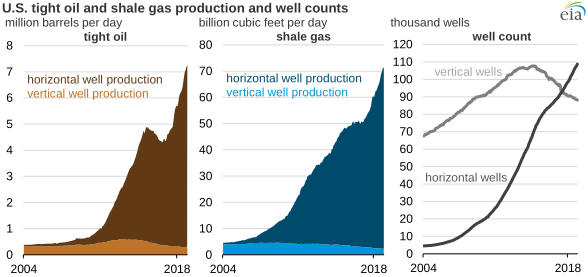
Note: Vertical well production also includes wells created by directional drilling and by unknown drilling type. Tight oil volumes include liquid production from shale gas formations, and shale gas totals include natural gas volumes from the tight oil formations.
Wells drilled horizontally into tight oil and shale gas formations continue to account for an increasing share of crude oil and natural gas production in the United States. In 2004, horizontal wells accounted for about 15% of U.S. crude oil production in tight oil formations. By the end of 2018, that percentage had increased to 96%. Similarly, horizontal wells made up about 14% of U.S. natural gas production in shale formations in 2004 and increased to 97% in 2018.
Although horizontal wells have been the dominant source of production from U.S. shale gas and tight oil plays since 2008 and 2010, respectively, the number of horizontal wells did not surpass the number of vertical wells drilled in these plays until 2017. About 88,000 vertical wells in tight oil and shale gas plays in the United States still produced crude oil or natural gas at the end of 2018, but the volume produced by these wells was minor compared with the volume produced by horizontal wells. Many of these remaining vertical wells are considered marginal, or stripper, wells, which will continue to produce small volumes until they become uneconomic.
Drilling horizontally, parallel to the geologic layers in tight formations, allows producers to access more of the oil- and natural gas-bearing rock than drilling vertically. This increased exposure allows additional hydraulic fracturing with greater water volumes and pounds of proppant (small, solid particles, usually sand or a manmade granular solid of similar size). The lateral length of horizontal wells has also increased, allowing for more exposure to oil- and natural gas-producing rock from a single well. Because tight formations have very low permeability, which prevents oil and gas from moving toward the well bore, using hydraulic fracturing to increase permeability, along with horizontal drilling, is necessary for oil and gas to be produced from these formations economically.
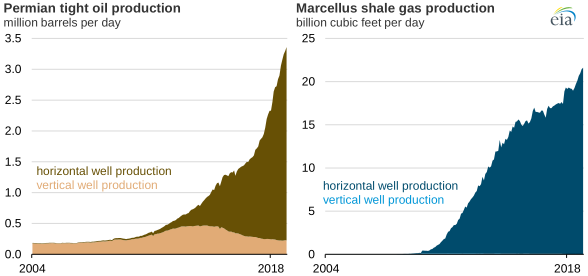
Note: The Permian Basin includes the Bone Spring Delaware, Spraberry, Wolfcamp, and Yeso-Glorieta formations.
The production history of horizontal versus vertical wells varies by play. For example, some tight formations in the Permian Basin have a long history of vertical well production. In 2004, vertical wells generated nearly all (96%) crude oil production from these formations. As late as 2014, vertical wells accounted for as much as half of Permian production, but by 2018, vertical wells accounted for only 7% of that production.
By contrast, modern production in the Marcellus formation in the Appalachian Basin is almost entirely from horizontal drilling. While some of the first natural gas wells in the United States were drilled in the Marcellus, production shifted to more economic areas and only resumed upon the development of horizontal drilling and hydraulic fracturing techniques. Presently, essentially all (99%) hydrocarbon production from the Marcellus has been from horizontally drilled wells.
For additional information on U.S. oil and natural gas wells, see EIA’s report on well production rates and data on producing wells.
Principal contributor: Jack Perrin
Tags: production/supply, natural gas, shale, tight oil, wells, drilling