
On Thursday, EIA’s weekly crude oil inventory will be presented without lease stocks
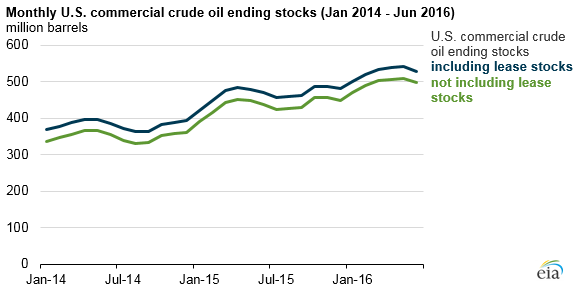
Starting with the Weekly Petroleum Status Report (WPSR) published on Thursday, October 13, the U.S. Energy Information Administration (EIA) will no longer include crude oil lease stocks in U.S. total commercial crude oil inventory data. Crude oil lease stocks refer to oil (currently about 31 million barrels) that is stored in tanks at sites across the United States where producers are drilling on leased land. Lease stocks are not yet available for commercial use, and in many cases, operators do not count them as production until the oil is transferred off the lease.
Lease stocks have been a relatively small and stable portion of total U.S. crude oil inventories, ranging from just 30.6 million barrels (5.8%) to 33.1 million barrels (7.4%) from January 2014 through June 2016. Over that same time period, total U.S. commercial crude oil stocks have increased from 367 million barrels to 529 million barrels, as increased U.S. crude oil production has contributed to growing commercial crude oil inventories. As of the week ending September 30, the total U.S. commercial crude oil inventory was about 500 million barrels, including about 31 million barrels of lease stocks.
Because the amount of oil held in lease stocks is relatively stable, the decision to exclude lease stocks from reported commercial inventories beginning in the October 13 WPSR should not affect WPSR users who focus on weekly changes in commercial crude oil inventories.
Analysts accessing EIA's weekly crude oil inventory data should know that the sourcekey and labels will not change for the commercial crude oil inventory data series in the WPSR files, either in Microsoft Excel or comma-separated values (CSV) formats. EIA has provided backcasted weekly historical commercial crude oil inventory data excluding lease stocks in advance of the October 13 WPSR publication. Also, going forward, other EIA publications that present commercial crude oil inventory data, such as This Week in Petroleum, will display the revised series that excludes lease stocks.
EIA's Petroleum Supply Monthly (PSM) has always accounted for lease stocks as a distinct crude oil category, allowing analysts to readily assess total crude oil inventories both with and without lease stocks. Starting with the monthly data for July, which was published in late September, the PSM will cease reporting crude oil lease stocks. The WPSR, however, had not made this distinction of presenting inventories with and without lease stocks. Once EIA starts to report weekly commercial crude oil inventory data without lease stocks, the WPSR values will be directly comparable to the PSM values.
Principal contributor: Rob Merriam
Tags: crude oil, inventories/stocks, liquid fuels