U.S. Energy Information Administration logo
Skip to sub-navigation
July 6, 2011

Natural gas use in the electric power sector is growing

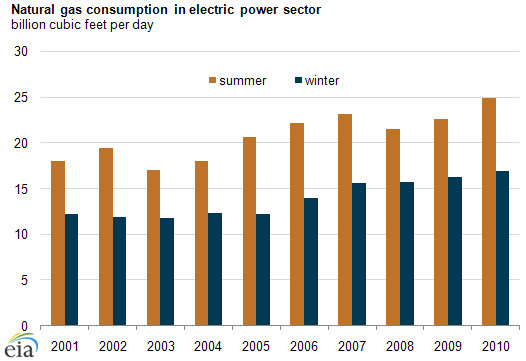
graph of Natural gas consumption in electric power sector, as described in the article text

Source: U.S. Energy Information Administration, Natural Gas Monthly
Note: Summer is defined as May through September; winter is defined as November through March.
Download CSV Data

Natural gas consumption in the electric power sector in the summer of 2010 was nearly seven billion cubic feet per day (Bcf/d) greater than during the summer of 2001—an increase of 38%. The volume of natural gas used to generate electric power during the winter also grew 38% over that same period—up nearly five Bcf/d since 2001. Natural gas-fired electrical generation increased 44% between 2001 and 2010; the disparity between increases in gas burn and generation is due to increased efficiency in natural gas-fired units.

The increased use of natural gas for electricity generation is driven by many factors. These include:

  • Nearly 237 gigawatts of natural gas-fired power generation capacity were added between 2000 and 2010, representing over three-fourths of total generation capacity additions over that period.
  • Since 2005, the Nation's fleet of natural gas combined-cycle power plants is contributing significantly more to baseload electricity needs. Additionally, natural gas combined-cycle power plants operate highly efficiently, allowing plants to generate a greater volume of electricity per unit of natural gas burned.
  • Largely due to gains in domestic natural gas production from shale plays, natural gas prices in 2010 were relatively low.
Statistics
Analysis
Tools
Education
News

Petroleum & Other Liquids

Crude oil, gasoline, heating oil, diesel, propane, and other liquids including biofuels and natural gas liquids.

Natural Gas

Exploration and reserves, storage, imports and exports, production, prices, sales.

Electricity

Sales, revenue and prices, power plants, fuel use, stocks, generation, trade, demand & emissions.

Coal

Reserves, production, prices, employment and productivity, distribution, stocks, imports and exports.

Nuclear & Uranium

Uranium fuel, nuclear reactors, generation, spent fuel.

Renewable & Alternative Fuels

Includes hydropower, solar, wind, geothermal, biomass and ethanol.

EIA Survey Forms

Forms EIA uses to collect energy data including descriptions, links to survey instructions, and additional information.

Total Energy

Comprehensive data summaries, comparisons, analysis, and projections integrated across all energy sources.

U.S. States

State energy information, including overviews, rankings, data, and analyses.

International

International energy information, including overviews, rankings, data, and analyses.

Environment

Greenhouse gas data, voluntary reporting, electric power plant emissions.

Data Tools, Apps, & Maps

Tools to customize searches, view specific data sets, study detailed documentation, and access time-series data.

Open Data

EIA's free and open data available as API, Excel add-in, bulk files, and widgets

EIA Beta

Come test out some of the products still in development and let us know what you think!

Open Source Code

EIA's open source code, available on GitHub.

RSS Feeds

Subscribe to feeds for updates on EIA products including Today in Energy and What's New.