
Heating fuel expenditures rise this winter, especially for propane-heated homes
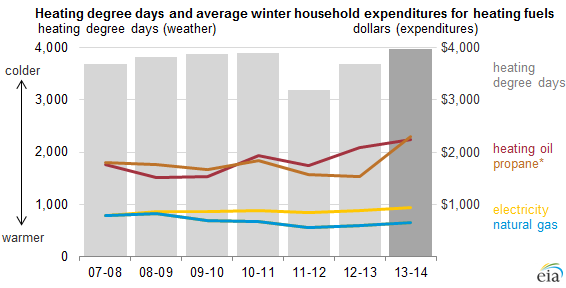
Note: Winter 2013-14 includes forecasts for March.
Note: * Propane expenditures represent households in the Midwest and Northeast.
Average expenditures for U.S. households heating primarily with propane are expected to be 54% higher this winter (October-March) compared with last winter, while expenditures for homes using heating oil will be 7% higher, natural gas 10% higher, and electricity 5% higher, according to EIA's March Short-Term Energy Outlook. Persistently cold weather east of the Rocky Mountains drove up demand for all heating fuels, depleted inventories, and put upward pressure on prices. Propane prices experienced an especially high spike during several weeks in January and February. EIA's current estimates for winter heating expenditures are significantly higher than the pre-winter forecasts in the October 2013 Short-Term Energy Outlook.
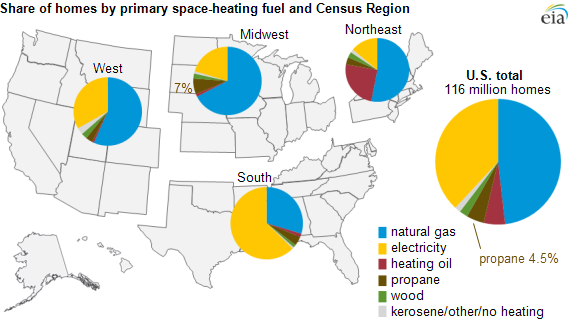
Source: U.S. Energy Information Administration, based on the U.S. Census Bureau's 2012 American Community Survey
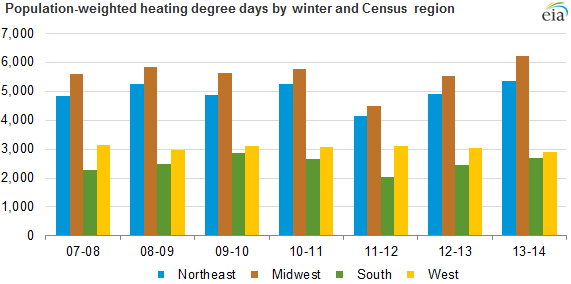
Source: U.S. Energy Information Administration, based on the National Oceanic and Atmospheric Administration
Between the beginning of October and the end of February, U.S. average heating degree days were 13% higher than last winter (indicating colder weather) and 10% above the 10-year average. The Northeast was 13% colder than last winter, the Midwest and South were both 19% colder, while the West was 5% warmer. The extreme weather had the greatest effect on households in the Midwest that primarily use propane and on households in the Northeast that use heating oil.
EIA's current estimate for winter energy expenditures for homes heating with propane in the Midwest is $2,212, which is $759 higher than projected in October. The current estimate for average U.S. expenditures for homes using heating oil is $2,243, which is $197 higher than projected in October.
However, in contrast to markets for propane and heating oil, where wholesale price movements are quickly reflected in retail prices, the retail electricity and natural gas rates paid by consumers who receive service through their local distribution utilities do not immediately reflect price spikes in the spot market. In addition, the use of electricity for space heating is centered largely in the Southeast and West—areas of the country that did not experience the same levels of prolonged, extreme cold.
For more information about propane markets this past winter, see EIA's Energy Market Alerts: Winter 2013-14 Propane Updates.
Principal contributor: Stacy MacIntyre