
EIA forecasts winter U.S. household expenditures higher on fuel oil and lower on propane
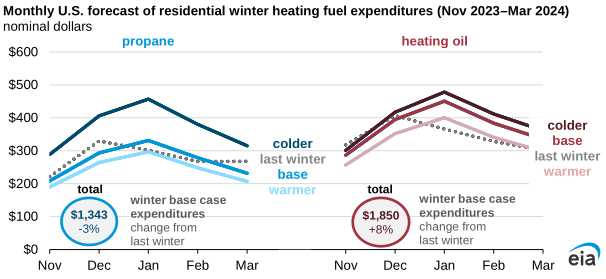
Note: Colder refers to a 10% colder winter than the base case. Warmer refers to a 10% warmer winter than the base case.
We forecast that U.S. households that heat primarily with heating oil will spend more this winter on heating compared with last winter, but households heating primarily with propane will spend less than last winter, according to our 2023 Winter Fuels Outlook (WFO) supplement to our October Short-Term Energy Outlook (STEO).
We expect increased heating oil consumption this winter because we expect this winter will be colder than last winter, driving up heating oil expenditures. We expect lower prices for U.S. propane this winter, which is why we forecast slightly lower propane expenditures.
In our base case, we forecast that the 4% of U.S. households that heat primarily with heating oil will spend an average of $1,851 this winter, up 8% from last winter. The 5% of U.S. households heating primarily with propane will spend $1,343, down 3% from last winter.
In our base case, we forecast that households that heat primarily with heating oil, which are located primarily in the Northeast, will consume 40 more gallons of heating oil per household this winter than last winter. Although we forecast a somewhat colder winter this year than last year, we expect this winter to be slightly warmer than the 30-year winter average. We expect higher consumption because we forecast a somewhat colder winter this year than last year.
We forecast the heating oil price will average $4.20 per gallon (gal) this winter, down from $4.31/gal last winter. Because households will use more heating oil this winter, winter heating oil expenditures will be higher, despite a slightly lower price forecast for heating oil.
Our forecast propane expenditures vary significantly by region of the country. We expect households that heat with propane in the Northeast will spend about the same as last winter, households in the Midwest will spend 11% less, and households in the South will spend 6% more.
We base our weather assumptions in the WFO on data from the National Oceanic and Atmospheric Administration (NOAA) and the previous 30-year trend. We use heating degree days (HDDs) as a measure of how cold temperatures are compared with a base temperature—more HDDs indicate colder temperatures. Our warmer case has 10% fewer HDDs than our base assumption, and our colder case has 10% more.
Beginning with this year’s WFO, we consider winter to run from November through March. In previous years, winter also included October. We recalculated the previous winters referenced in this report to exclude October data. More information is available in our Winter Fuels Outlook, which we will update every month this winter at the same time as the monthly STEO release.
Principal contributors: Matthew French, Josh Eiermann