Menu
Crude oil, gasoline, heating oil, diesel, propane, and other liquids including biofuels and natural gas liquids.
Exploration and reserves, storage, imports and exports, production, prices, sales.
Sales, revenue and prices, power plants, fuel use, stocks, generation, trade, demand & emissions.
Energy use in homes, commercial buildings, manufacturing, and transportation.
Reserves, production, prices, employment and productivity, distribution, stocks, imports and exports.
Includes hydropower, solar, wind, geothermal, biomass and ethanol.
Uranium fuel, nuclear reactors, generation, spent fuel.
Comprehensive data summaries, comparisons, analysis, and projections integrated across all energy sources.
Monthly and yearly energy forecasts, analysis of energy topics, financial analysis, congressional reports.
Financial market analysis and financial data for major energy companies.
Greenhouse gas data, voluntary reporting, electric power plant emissions.
Maps, tools, and resources related to energy disruptions and infrastructure.
State energy information, including overviews, rankings, data, and analyses.
Maps by energy source and topic, includes forecast maps.
International energy information, including overviews, rankings, data, and analyses.
Regional energy information including dashboards, maps, data, and analyses.
Tools to customize searches, view specific data sets, study detailed documentation, and access time-series data.
EIA's free and open data available as API, Excel add-in, bulk files, and widgets
Come test out some of the products still in development and let us know what you think!
EIA's open source code, available on GitHub.
Forms EIA uses to collect energy data including descriptions, links to survey instructions, and additional information.
Sign up for email subscriptions to receive messages about specific EIA products
Subscribe to feeds for updates on EIA products including Today in Energy and What's New.
Short, timely articles with graphics on energy, facts, issues, and trends.
Lesson plans, science fair experiments, field trips, teacher guide, and career corner.
EIA is continuing normal publication schedules and data collection until further notice.
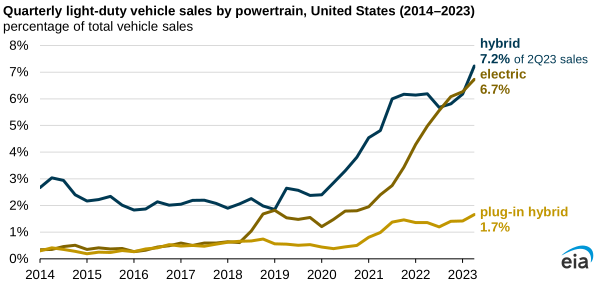
Hybrid, plug-in hybrid, and battery-electric vehicle sales in the United States have increased in recent years as sales have decreased for non-hybrid gasoline- or diesel-fueled vehicles. In the second quarter of 2023 (2Q23), hybrid, plug-in hybrid, and battery-electric vehicles collectively accounted for 16% of light-duty vehicle sales in the United States, according to data from Wards Intelligence.
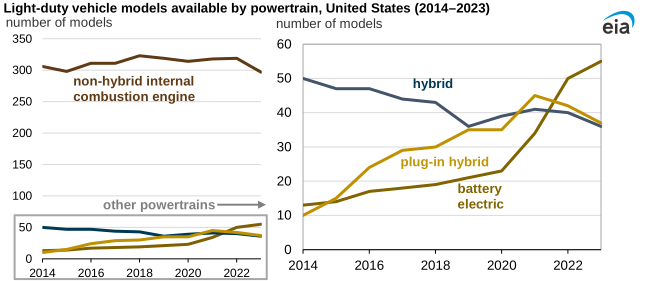
A large portion of the sales increase was due to new manufacturer offerings across different market segments, although existing models also accounted for some of the increase in sales. Manufacturers reduced the number of non-hybrid internal combustion engine (ICE) vehicle models from 318 to 297 between 2021 and 2Q23, and they increased the number of battery-electric models from 34 to 55. In this context, a single vehicle model includes one nameplate and all the available trim levels associated with that nameplate.
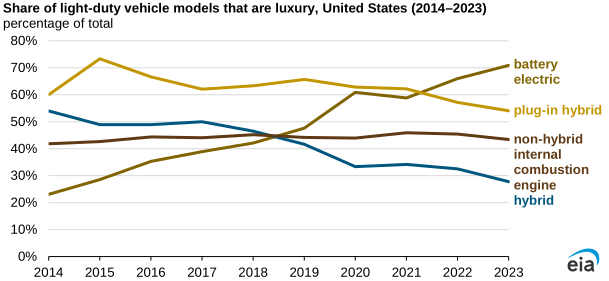
The luxury vehicle market captured 18% of total new vehicle sales in 2Q23, up from 14% in 2020. Most of the shift toward battery-electric models is in the luxury segment. Manufacturers removed 17 luxury non-hybrid ICE vehicle models and added 19 luxury battery-electric models between 2021 and 2Q23.
Battery-electric vehicles now account for 20% of all available luxury models, compared with 7% of non-luxury models. Model availability is an indicator of consumer acceptance within a market segment. In 2Q23, battery-electric vehicles accounted for 32% of total luxury sales and a little over 1% of non-luxury sales. Market segment sales data indicate luxury-vehicle buyers are more willing to pay electric-vehicle price premiums than non-luxury market buyers.
Principal contributor: Michael Dwyer
Tags: electricity, gasoline, liquid fuels, vehicles