
Residential retail electric choice participation rate has leveled off since 2019
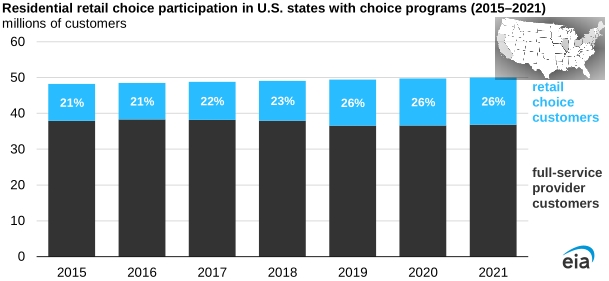
Note: Excludes Texas because Texas’s retail choice program is mandatory in areas operated by the Electric Reliability Council of Texas (ERCOT) under state law.
In 2021, 26% of eligible U.S. customers participated in their state’s retail choice program, or 13.2 million U.S. residential electric customers, based on data from our Annual Electric Power Industry Report. The participation rate in U.S. residential retail choice programs remained relatively unchanged from 2019 to 2021, following several years of modest growth.
In states with retail electricity choice programs, customers can choose to purchase their electricity directly from a retail energy supplier rather than from their local utility. Their local utility then delivers the purchased electricity to their home through the traditional power grid system. Retail choice programs differ from traditional utility services, where the utility both procures electricity for the customer (either by generating the electricity itself or by purchasing it from a supplier) and delivers it to the customer’s home.
Currently, 13 states and the District of Columbia have active statewide or districtwide retail choice programs for residential customers. This count does not include Texas, where the retail choice program is mandatory under state law and the Electric Reliability Council of Texas (ERCOT) manages the power grid for most of the state. Four other states—Michigan, Nevada, Oregon, and Virginia—have limited retail choice programs that are largely available to only non-residential electric customers.
In 2021, Ohio, Massachusetts, and California had the most retail choice participation. In Ohio, participation increased from 45% in 2015 to 50% in 2021. In Massachusetts, participation increased from 22% in 2015 to 49% in 2021.
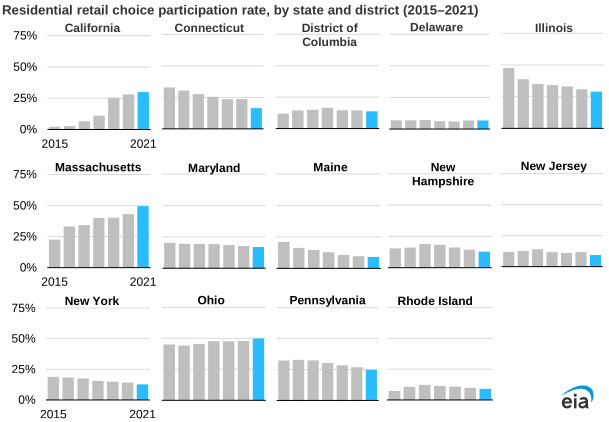
Participation in California increased rapidly from just 2% in 2015 to 30% in 2021. The marked increase was driven by the growth of Community Choice Aggregator (CCA) programs in the state. Under CCA programs, local governments purchase electricity from retail electric suppliers on behalf of community residents, which the local utility then delivers. When a community begins a CCA program, customers in the area are automatically enrolled, although they have the choice to opt out if they wish. The first CCA program in California launched in 2010. In 2021, 22 CCA programs were operating in the state.
Both Illinois and Connecticut have seen large drops in retail choice participation rates over time. In Illinois, the share of customers opting for retail choice peaked in 2014 at 57%. That share had fallen to 31% in 2021. In Connecticut, retail choice participation dropped from a peak of 42% in 2013 to 24% in 2021.
Principal contributor: Marc Harnish
Tags: prices, residential, electricity, Ohio, Connecticut, Massachusetts, California, Illinois, states