
Decline in drilled but uncompleted wells may limit future crude oil production growth
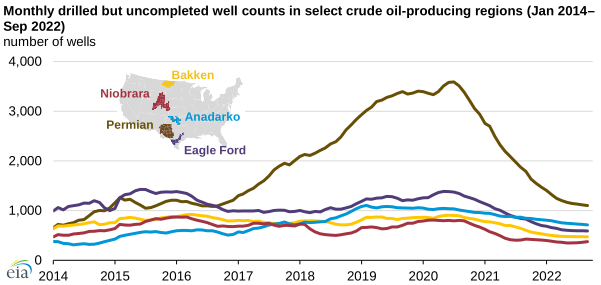
According to our Drilling Productivity Report (DPR), more wells were completed than were drilled in the United States from July 2020 through September 2022 (the latest month for which data are available). As a result, the number of drilled but uncompleted wells (DUCs) in the United States fell to 4,333 as of September 2022, the fewest since at least December 2013, when we started estimating the number of DUCs. Fewer DUCs, along with natural gas pipeline constraints, could limit future U.S. crude oil production growth.
The two main stages in bringing a horizontally drilled, hydraulically fractured well online are drilling and completion. The drilling phase involves dispatching a drilling rig and crew, who then drill one or more wells on a pad site. A separate crew typically performs the completion phase by casing, cementing, perforating, and hydraulically fracturing the well so it can begin production. In general, the time between the drilling and completion stages is several months.
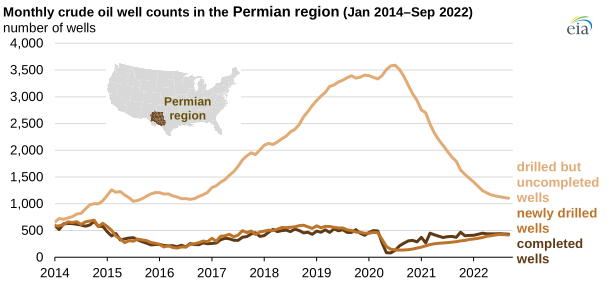
Of the seven major oil- and natural gas-producing regions in the United States covered in our DPR, the Permian region accounts for around 60% of the crude oil total production. Because most natural gas from the Permian region is produced along with, and as a result of, crude oil production, limitations on the ability to ship natural gas out of the Permian region, known as takeaway capacity, could limit future crude oil production growth in the region.
Crude oil producers can flare excess natural gas, but the Texas Railroad Commission regulates the amount of flaring allowed in the Texas portion of the Permian region. As natural gas takeaway capacity approaches its limits in the Permian region, the Commission may grant flaring permits, which could lessen oil production constraints.
You can find more detailed analysis on this topic in our This Week in Petroleum article published on October 19, 2022.
Principal contributors: Jeffrey Barron, Matthew French, Jozef Lieskovsky
Tags: production/supply, wells, liquid fuels, crude oil, oil/petroleum, drilling, map