
Households primarily heating with heating oil or propane will likely pay more this winter
Note: Expenditures are in nominal terms, not adjusted for inflation.
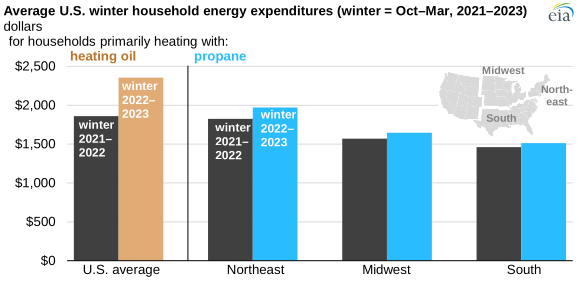
According to our 2022 Winter Fuels Outlook, we expect that households that use heating oil as the primary fuel for space heating will spend 27% more money on these fuels this winter than last winter, in nominal terms (not adjusted for inflation). Higher prices for heating oil, combined with greater heating demand due to colder temperatures, will increase heating costs. Households that use propane as the primary space-heating fuel will likely pay 5% more in winter heating costs compared with last winter, in nominal terms.
We define the winter heating season as October through March. Based on the September 15, 2022, weather forecast from the National Oceanic and Atmospheric Administration, we assume temperatures for the winter of 2022–23 in most of the country will be slightly colder than both last winter and the average of the previous 10 winters.
We expect that the 4% of U.S. households that use heating oil as the primary space-heating fuel, mostly located in the Northeast, will spend about $2,354 on average this winter, up 27% from last winter. Our expectation of higher heating costs is based on our forecast of a 16% increase in heating oil prices compared with last winter and a 9% increase in consumption.
Higher heating oil prices have been partially driven by low distillate inventories. At the end of September, distillate inventories in the Northeast were 57% less than the previous five-year average for that week. In addition, demand for distillate fuel in Europe’s electric power sector has increased because of record-high natural gas prices in Europe, which has further tightened Atlantic Basin distillate markets. Imports of distillate fuel to the East Coast in the first half of 2022 fell by 40% from the first half of 2021.
About 5% of all U.S. households use propane as the primary space-heating fuel. We expect households in the Northeast, Midwest, and South that use propane will spend about $1,668 this winter, a 5% increase from last winter, due to a higher retail markup on wholesale propane prices. As of September 30, the propane spot price at the Mont Belvieu Hub, near Houston, was down 38% from the same time in 2021, 55 cents per gallon lower than last year at this time. Last winter, high winter-heating demand and increased global demand for propane contributed to tight U.S. propane inventories and high propane prices. Since March 2022, the wholesale propane price has steadily decreased.
We expect total propane demand in the United States to be relatively unchanged this winter compared with last winter. Increased propane use for space heating and petrochemical production is offsetting lower agricultural demand this fall for propane-fueled grain drying. Contributions to propane inventories in the United States, and particularly on the Gulf Coast, were limited this summer because of strong global propane demand. Global demand for propane has risen because of its use as a petrochemical feedstock in propane dehydrogenation units and flexible feedstock crackers, particularly in Asia.
Principal contributors: Matt French, Josh Eiermann, and Kevin Hack