
In 2020, the value of energy trade between the United States and Canada declined
Note: Data displayed are for crude oil, petroleum products, natural gas, and electricity only.
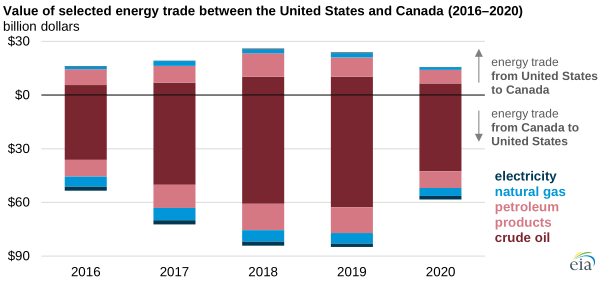
In 2020, the value of U.S. energy imports from Canada totaled $58 billion—accounting for more than one-fifth of the value of all U.S. imports from Canada. The value of U.S. energy imports from Canada fell by 31% in 2020 compared with 2019, and the value of U.S. energy exports to Canada fell 34%, according to data from the U.S. Census Bureau.
Crude oil and petroleum products combined accounted for 89% of the value of all U.S. energy imports from Canada in 2020. U.S. energy imports from Canada in 2020 were at their lowest level since 2016 as a result of overall energy imports to the United States decreasing. Less petroleum consumption during the COVID-19 pandemic drove the decrease.
In 2020, the United States also exported the lowest monetary value of energy to Canada since 2016. U.S. energy exports to Canada totaled $16 billion in crude oil, petroleum products, natural gas, and electricity.
The volume of combined U.S. energy imports and exports with Canada in 2020 fell from record highs in 2019. U.S. crude oil imports from Canada in 2020 averaged 3.6 million barrels per day (b/d)—down from 3.8 million b/d in 2019.
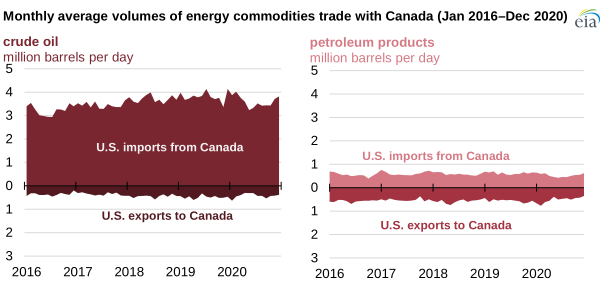
Although the total volume of U.S. crude oil imports from Canada fell in 2020, Canada’s share of total U.S. crude oil imports increased to 61%, mainly because U.S. imports of crude oil from OPEC producers declined. In particular, crude oil imports from Canada replaced imports from Venezuela.
In 2020, the United States exported an average of 420,000 b/d of crude oil to Canada, a decrease from a record-high 479,000 b/d in 2019. U.S. crude oil exports to Canada are typically low-density and low-sulfur crude oil grades that are shipped to Eastern Canada. U.S. crude oil imported from Canada tends to be high-sulfur crude oil from oil sands in Western Canada. Most U.S. crude oil imports from Canada are shipped to U.S. Midwest refineries.
Petroleum product trade between the United States and Canada is relatively balanced in both volume and value. In 2020, the United States imported 529,000 b/d of petroleum products from Canada, down from a high of 618,000 b/d in 2019. The value of petroleum product imports from Canada to the United States was $9.2 billion in 2020, a 36% decrease from 2019. The value of petroleum product exports from the United States to Canada decreased by 30% to $7.6 billion in 2020 compared with 2019.
Principal contributor: Natalie Kempkey