
EIA lowers its forecast of India’s oil demand because of rising COVID-19 cases
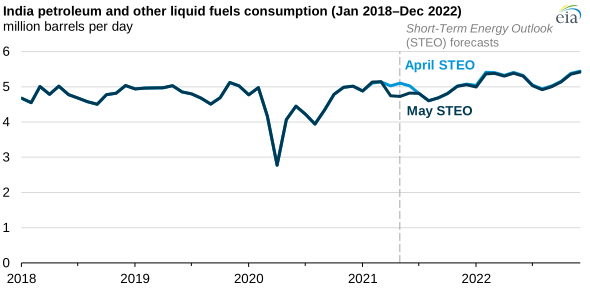
The rapid increase in COVID-19 cases in India has led to various travel restrictions, which reduced consumption of transportation fuels such as gasoline and diesel. As a result, we revised down our forecast for petroleum consumption in India in the May Short-Term Energy Outlook (STEO). We estimate that petroleum consumption in India declined by 0.4 million barrels per day (b/d) (8%) to 4.7 million b/d between March and April.
India’s petroleum consumption data, released after the May STEO’s publication, revealed a similar decline of 0.3 million b/d (6%) over the same period. Reduced travel in India will likely continue, so we also revised down petroleum consumption in May and June from the April STEO. We expect India’s consumption of petroleum and other liquids will return to previously forecast levels by July.
Data from India’s Petroleum Planning & Analysis Cell (PPAC) of its Ministry of Petroleum & Natural Gas indicate that consumption of gasoline and diesel returned to pre-pandemic levels by September 2020 and continued through March 2021. Gasoline and diesel consumption, however, declined in April 2021, reflecting the increases in COVID-19 cases and the country’s responses to limit its spread.
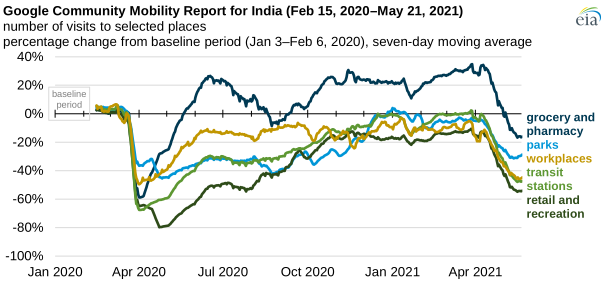
Real-time mobility indicators suggest even larger declines in travel in India through mid-May. The Google COVID-19 Community Mobility Reports provide data on the change in the number of visits to various places compared with a baseline from January 3, 2020, to February 6, 2020. As of May 21, 2021, the data indicate that travel in India to every category of destination has declined significantly over the past several weeks, likely reflecting the country’s response to the outbreak.
Similarly, Google data indicate that the percentage of time spent at home increased 25% in mid-May 2021 from the baseline period. Time spent at home in mid-May 2021 was similar to the amount of time people spent at home in April 2020, when travel in India was also significantly low. The May 2021 drop in mobility is consistent with large declines in gasoline and diesel demand, but the extent of the decline will depend on how long these conditions last and how severe the country’s responses to the outbreak ultimately become.
Principal contributors: Jeff Barron, Matthew French