
Annual U.S. coal exports drop 26% between 2019 and 2020
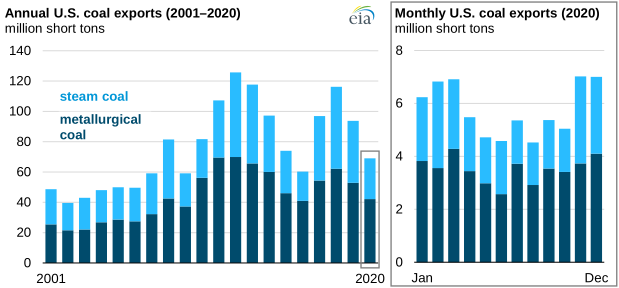
In 2020, U.S. coal exports declined to 69 million metric short tons (MMst), a 26% decrease from 93 MMst in 2019. Steam coal exports, which accounted for 40% of the total, declined by more than one-third, dropping 34% from the previous year to 27 MMst. Metallurgical coal had a smaller, but still significant, decrease of 20%. The COVID-19 pandemic slowed global demand for coal, and some U.S. coal mines were idled for extended periods to slow the spread of the virus. Coal exports decreased significantly in April 2020 as the United States and countries around the world responded to the pandemic.
Steam coal, also known as thermal coal, is used for electricity generation. Steam coal is ground into a fine powder that burns quickly at high heat. Power plants use this powder to heat water in boilers that run steam turbines to generate electricity. Steam coal can also be used to directly heat homes and businesses. Although steam coal is mined across the United States, most steam coal comes from the Powder River Basin in Wyoming and Montana.
Metallurgical coal, or coking coal, can be used to produce coke, a primary fuel and reactant in the blast furnace process for steelmaking. Demand for metallurgical coal is correlated with demand for steel. Most U.S. metallurgical coal comes from Appalachia.
As U.S. exports of both coal types decreased, more of the exports went to fewer destinations in 2020. In 2020, the top five export destination countries for U.S. steam coal accounted for 73% of the total, which is up from the previous four-year average of 54%. The market for U.S. metallurgical coal saw a similar, although less significant, consolidation as the top five destination countries consumed 53% of total exports, which is up from the four-year average of 48%.
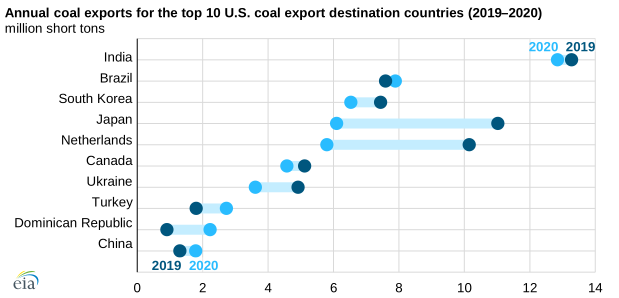
Four of the top 10 U.S. coal export destinations—Brazil, Turkey, the Dominican Republic, and China—increased their imports of U.S. coal in 2020. Exports to the Dominican Republic increased by 1.3 MMst, more than double its 2019 U.S. coal imports and the largest increase of all export destinations.
U.S. coal exports to Japan decreased by 45% and to the Netherlands by 43%. The Netherlands serves as the primary transshipment hub for the European Union (EU), importing coal and then sending it to other EU countries.
In 2020, U.S. coal production decreased by 24% (166 MMst) from 2019 to 539 MMst. The COVID-19 pandemic contributed to the global downturn in coal demand, which had already been declining. As a share of coal production, coal exports represented 13% of total production in 2020, unchanged from the previous year.
Principal contributor: Bonnie West
Tags: coal, electricity, exports/imports