
Cold weather led to refinery shutdowns in U.S. Gulf Coast region
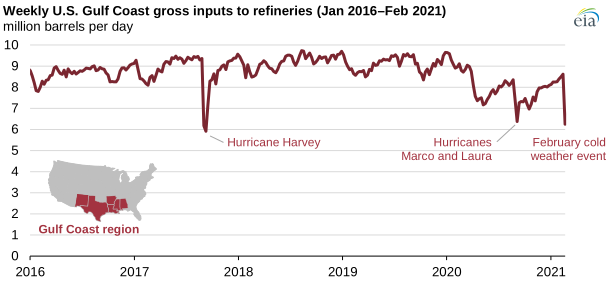
The cold snap that affected much of the central part of the country in mid-February disrupted energy systems, particularly in and around Texas. In the U.S. Gulf Coast, where the petroleum infrastructure has rarely operated in sub-zero temperatures, several refineries fully or partially shut down, leading to the largest reduction in Gulf Coast refinery operations in several years.
Based on the U.S. Energy Information Administration’s (EIA) Weekly Petroleum Status Report (WPSR), gross inputs of crude oil and other feedstock to U.S. refineries declined 2.7 million barrels per day (b/d) (18%) to 12.6 million b/d for the week ending February 19, 2021. Most of the reduction in gross inputs (also known as refinery runs) was in the Gulf Coast region, which includes Texas.
Gulf Coast refinery runs decreased by 2.4 million b/d (28%) to 6.3 million b/d, the largest weekly decline since the impact of Hurricane Harvey in September 2017. The refinery closures will likely continue to affect petroleum markets in the coming weeks, reducing refinery demand for crude oil and production of refined products such as motor gasoline and distillate fuel oil.
The Gulf Coast accounts for more than half of total U.S. refinery capacity, and Texas alone accounts for about 32% of total U.S. capacity. By the peak of the weather’s impact on February 17, several refineries had announced either substantial or complete shutdowns as a result of external power outages, constrained natural gas supplies, logistical disruptions, or damage to process units. In total, an estimated 3.7 million b/d, or 20% of total U.S. refining capacity, was shut in as a result of the weather, according to U.S. Department of Energy estimates. Most of the disruptions and shutdowns were among refiners in the Beaumont/Port Arthur, Houston, and Corpus Christi regions of Texas.
A more detailed analysis of how the cold weather affected Gulf Coast refineries is available in EIA’s This Week in Petroleum.
Principal contributor: Kevin Hack
Tags: weather, Gulf Coast, Texas, liquid fuels, crude oil, oil/petroleum, states, refineries