
U.S. jet fuel consumption during the week of Thanksgiving was about half of last year’s
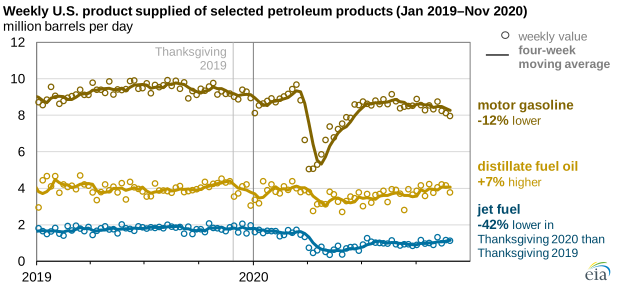
For the week of Thanksgiving 2020, estimated consumption of major transportation fuels (motor gasoline, distillate, and jet fuel) was 11% lower than during Thanksgiving week 2019. About half as much jet fuel was consumed during the week of Thanksgiving as last year, measured using product supplied as a proxy for consumption: 1.1 million barrels per day (b/d) in 2020 compared with 2.0 million b/d in 2019, according to estimates in the U.S. Energy Information Administration’s (EIA) Weekly Petroleum Status Report.
Using flight-level data provided by Cirium on commercial passenger flights (which accounted for approximately three-quarters of overall jet fuel consumption in 2019), EIA estimates that about 108,000 flights took off from U.S. airports during the week of Thanksgiving in 2020, or 37% fewer than the 170,000 flights that departed during Thanksgiving week in 2019. EIA estimates that these flights consumed 45% less fuel than the flights during Thanksgiving week in 2020 compared with 2019.
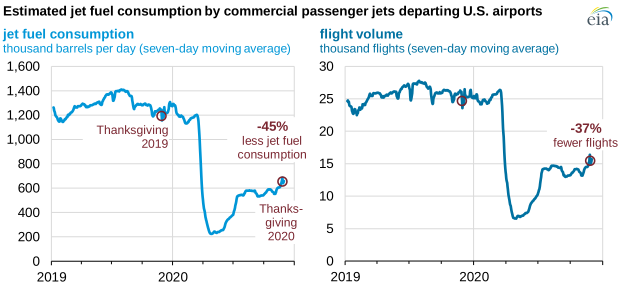
EIA’s analysis, published in This Week in Petroleum, shows that states such as New York, Massachusetts, and California may have had the largest percentage declines (at least 60%) in commercial jet fuel consumption between the two Thanksgiving weeks. However, two states—Montana and Wyoming—may have had increases in commercial jet fuel consumption.
State-level variation in flight volume and implied fuel consumption could result from several factors:
- Differences in state quarantine policies and travel restrictions
- The relative severity of COVID-19 in that state
- The share of the state’s population that was born or naturalized there (with higher shares associated with less travel during holidays)
- The share of each state’s international air travel (which has generally been more affected than domestic travel)
Principal contributor: Jesse Barnett
Tags: consumption/demand, liquid fuels, jet fuel