
Distillate yields at U.S. refineries are rising
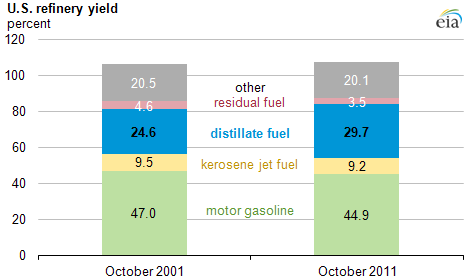
In October 2011, the refinery yield of distillate fuels (a category that includes diesel fuel and heating oil) reached 29.7%, matching the previous record set in December 2008. For all major products, only the distillate yield is higher now than it was in October 2001.
Since 2001, distillate yields have followed an upward trend, peaking in December 2008 before falling back to an average of 27.5% in 2010. During 2011, the distillate yield grew, reaching 29.7% in October (latest EIA data available). The recent uptick in distillate yield can partly be explained by the significantly higher price margins over the cost of crude oil for distillate relative to gasoline. It can also be explained by growing distillate exports, which reached a record of 1,067 thousand barrels per day in October 2011. Refineries in the U.S. still average about 1.5 times as much gasoline as distillate from each barrel of oil refined, down from about 2 times from the 1990s to 2004. In response to market conditions, refiners took steps to maximize distillate yield and production.
Refiners can adjust product yields in response to changing product prices and other market conditions by varying refinery processes and the types of crude oil they choose to refine. For most products, refinery yields are calculated as barrels of finished product produced divided by the sum of crude oil and unfinished oils inputs. However, calculating gasoline yields is slightly more complicated. When calculating yields for motor gasoline, U.S. total finished gasoline production must be adjusted for imported blending components, ethanol, and some "other inputs" including natural gas plant liquids, hydrogen, and other hydrocarbons.
The yields sum to more than 100% due to processing gain, which is the volumetric amount by which total output is greater than input for a given period of time. Refinery processing gain results from some refining processes, such as fluid catalytic cracking and hydrocracking, where volumes can increase when large, heavy molecules are broken into smaller and lighter molecules that take up more space.
The refinery processing gain has also grown over the last decade. It reached 7.3% in October 2011. Processing gains tend to increase as refineries add cracking capacity and as the product slate changes from heavier products (like residual fuel oil) to lighter ones (like motor gasoline and distillate fuel).