U.S. Energy Information Administration logo
Skip to sub-navigation
October 21, 2020

EIA forecasts slightly higher U.S. propane consumption this winter season
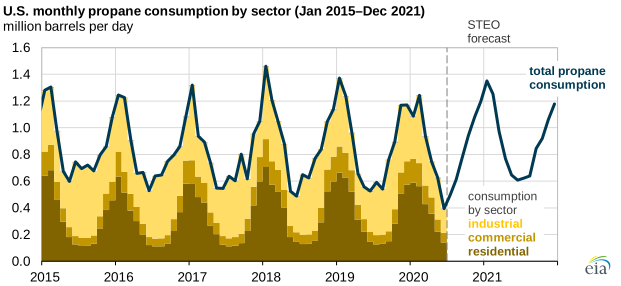
U.S. monthly propane consumption by sector
Source: U.S. Energy Information Administration, Monthly Energy Review and Short-Term Energy Outlook (STEO), October 2020

The U.S. propane market is highly seasonal: about two-thirds of the propane consumed last year was consumed in the winter months (October through March). In the United States, most propane is consumed in homes during the winter; about 5% of U.S. homes use propane as their main heating fuel. In its latest Short-Term Energy Outlook (STEO), the U.S. Energy Information Administration (EIA) expects 5% more U.S. propane consumption this winter compared with last winter, largely because a cooler winter forecast means more demand for residential space heating.

EIA’s October STEO includes a supplement for consumption, price, and expenditures of residential heating fuels in the United States. EIA expects residential propane expenditures this winter for propane-heated homes to be 18% higher in the Northeast and 12% higher in the Midwest, the two regions where propane heating is most prevalent.

EIA forecasts higher propane expenditures in these regions because it expects higher propane prices and colder weather, which will require more fuel for space heating. EIA also assumes that more people will be working or attending school from home this winter, which will also increase demand for residential heating fuels compared with last winter.

EIA expects the increased heating demand will more than offset reduced demand for propane as a petrochemical feedstock by U.S. industry. Propane is also used as a fuel for drying agricultural crops, and EIA expects less grain drying demand than last year. According to U.S. Department of Agriculture data and forecasts, corn crop maturity in the United States is on track with the previous five-year average, and harvested grain moisture content will be lower than last year, which means less use of propane for drying crops in commercial grain dryers.

Principal contributor: Owen Comstock

Statistics
Analysis
Tools
Education
News

Petroleum & Other Liquids

Crude oil, gasoline, heating oil, diesel, propane, and other liquids including biofuels and natural gas liquids.

Natural Gas

Exploration and reserves, storage, imports and exports, production, prices, sales.

Electricity

Sales, revenue and prices, power plants, fuel use, stocks, generation, trade, demand & emissions.

Coal

Reserves, production, prices, employment and productivity, distribution, stocks, imports and exports.

Nuclear & Uranium

Uranium fuel, nuclear reactors, generation, spent fuel.

Renewable & Alternative Fuels

Includes hydropower, solar, wind, geothermal, biomass and ethanol.

EIA Survey Forms

Forms EIA uses to collect energy data including descriptions, links to survey instructions, and additional information.

Total Energy

Comprehensive data summaries, comparisons, analysis, and projections integrated across all energy sources.

U.S. States

State energy information, including overviews, rankings, data, and analyses.

International

International energy information, including overviews, rankings, data, and analyses.

Environment

Greenhouse gas data, voluntary reporting, electric power plant emissions.

Data Tools, Apps, & Maps

Tools to customize searches, view specific data sets, study detailed documentation, and access time-series data.

Open Data

EIA's free and open data available as API, Excel add-in, bulk files, and widgets

EIA Beta

Come test out some of the products still in development and let us know what you think!

Open Source Code

EIA's open source code, available on GitHub.

RSS Feeds

Subscribe to feeds for updates on EIA products including Today in Energy and What's New.