
Smoke from California wildfires decreases solar generation in CAISO
Note: CAISO=California Independent System Operator.
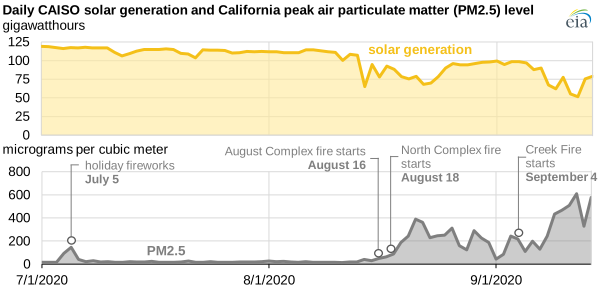
In the first two weeks of September 2020, average solar-powered electricity generation in the California Independent System Operator (CAISO), which covers 90% of utility-scale solar capacity in California, declined nearly 30% from the July 2020 average as wildfires burned across the state. Wildfire smoke contains small, airborne particulate matter particles that are generally 2.5 micrometers or smaller (referred to as PM2.5). This matter reduces the amount of sunlight that reaches solar panels, decreasing solar-powered electricity generation. As of September 28, California wildfires have burned an estimated 3.6 million acres in 2020, an area about the size of Connecticut.
According to data from the California Air Resources Board, peak California PM2.5 pollution began increasing in mid-August and reached a record high of 659 micrograms per cubic meter (µg/m3) on September 15, the highest level since record keeping began in 2000. Peak PM2.5 pollution is measured as the daily average value at the testing site that has the highest measured particulate matter concentration on a given day.
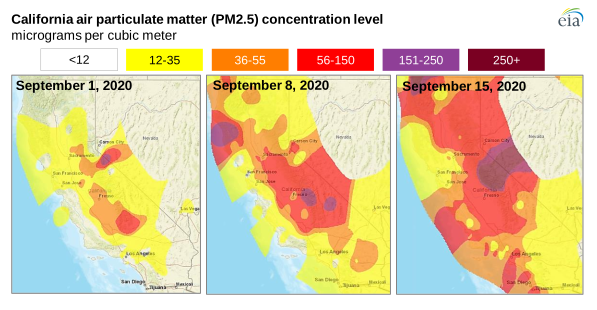
In July 2020, daily solar-powered electricity generation, which includes generation from solar photovoltaic and solar thermal electric generators, ranged from 104 gigawatthours (GWh) to 119 GWh, averaging 113 GWh for the entire month. Daily solar-powered generation began declining as large wildfires broke out in mid-August, reaching a low of 68 GWh on August 22 before returning to approximately 100 GWh by the end of the month. Solar-powered generation began declining again as wildfire activity rose in September, falling as low as 50 GWh on September 11 as PM2.5 smoke pollution increased.
Note: CAISO=California Independent System Operator.
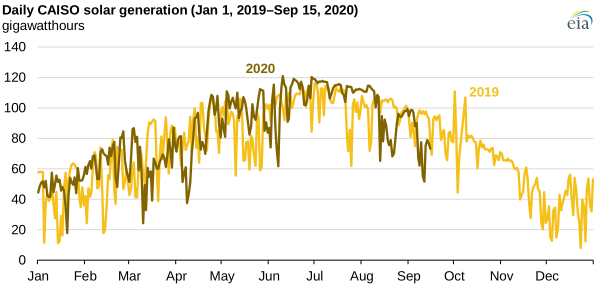
In the first two weeks of September 2020, solar-powered generation in CAISO was 13.4% lower than at the same time a year ago, despite growth in installed solar generating capacity in California. Since September 2019, California has added 659 megawatts (MW) of utility-scale solar-powered generation capacity, increasing total solar capacity by 5.3% to more than 13,000 MW as of June 2020. Although small-scale distributed solar photovoltaic capacity (such as rooftop solar panels) is not included in the Hourly Electric Grid Monitor solar generation data, small-scale solar accounts for a large share of total solar capacity in California. Small-scale solar capacity in California also increased in the past year, rising 11% to 9,800 MW.
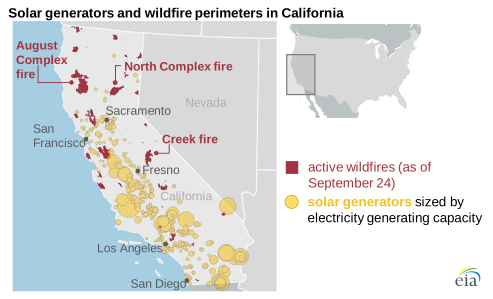
Although most solar capacity in California is in the southern half of the state and the largest wildfires are currently concentrated in the northern and central parts of the state, offshore winds push wildfire smoke into Southern California. As of September 28, Cal Fire reports that the August Complex Fire, the largest wildfire in California history, was 45% contained. Other large, ongoing fires, such as the North Complex Fire and the Creek Fire, were 78% and 39% contained, respectively.
Principal contributor: Stephen York
Tags: generation, electricity, solar, California, states, map