U.S. Energy Information Administration logo
Skip to sub-navigation
April 24, 2020

Withdrawals from natural gas storage this winter were lowest since 2015–16
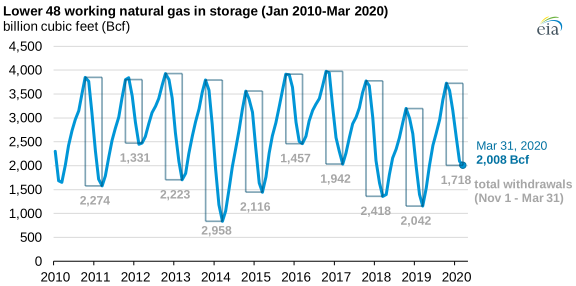
lower 48 working natural gas in storage
Source: U.S. Energy Information Administration, Natural Gas Monthly and Weekly Natural Gas Storage Report
Note: Heating season is defined as November 1–March 31. The March 31, 2020, value is interpolated based on the Weekly Natural Gas Storage Report.

Working natural gas in storage in the Lower 48 states as of March 31, 2020, totaled 2,008 billion cubic feet (Bcf), 19% more than the previous five-year (2015–19) average for the end of the heating season, according to EIA’s Weekly Natural Gas Storage Report. The 2019–20 heating season, which ran from November 1, 2019, to March 31, 2020, ended with the most working natural gas in storage since the 2016–17 winter, with 1,718 Bcf in net withdrawals, the least in four winters. Continued growth in natural gas production and relatively mild winter temperatures accounted for relatively higher inventory levels.

Working U.S. natural gas stocks entered the heating season at 3,575 Bcf, nearly the same as the average over the previous five years. The 2019–20 U.S. heating season was characterized by periods of significantly warmer-than-normal temperatures. Heating degree days (HDD), a temperature-based indicator of heating demand, were 10% less this winter than the 30-year normal (1981–2010) and were higher than normal for only one week in November during this heating season.
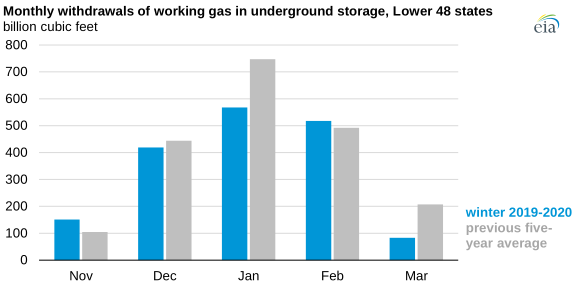
monthly changes in working gas in underground storage
Source: U.S. Energy Information Administration, Weekly Natural Gas Storage Report

EIA expects total working gas inventory to remain higher than the previous five-year average through the 2020 refill season (April 1–October 31). EIA’s Short-Term Energy Outlook (STEO) forecasts natural gas production to decline from year-ago levels this summer. These production declines, combined with growth in natural gas exports, will lead to smaller net injections into working gas storage through the refill season.

EIA expects that inventories will total 3,904 Bcf by the end of the 2020 refill season, or 185 Bcf more than the previous five-year average and 252 Bcf more than last year. EIA’s April 2020 STEO forecast is subject to heightened uncertainty because of economic slowdown and significant recent changes in energy markets.
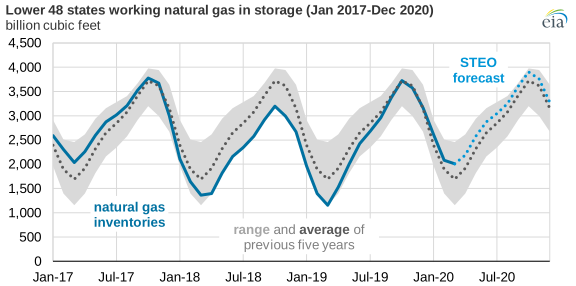
lower 48 states working natural gas in storage
Source: U.S. Energy Information Administration, Natural Gas Monthly, Weekly Natural Gas Storage Report, and Short-Term Energy Outlook

Principal contributor: Jose Villar

Statistics
Analysis
Tools
Education
News

Petroleum & Other Liquids

Crude oil, gasoline, heating oil, diesel, propane, and other liquids including biofuels and natural gas liquids.

Natural Gas

Exploration and reserves, storage, imports and exports, production, prices, sales.

Electricity

Sales, revenue and prices, power plants, fuel use, stocks, generation, trade, demand & emissions.

Coal

Reserves, production, prices, employment and productivity, distribution, stocks, imports and exports.

Nuclear & Uranium

Uranium fuel, nuclear reactors, generation, spent fuel.

Renewable & Alternative Fuels

Includes hydropower, solar, wind, geothermal, biomass and ethanol.

EIA Survey Forms

Forms EIA uses to collect energy data including descriptions, links to survey instructions, and additional information.

Total Energy

Comprehensive data summaries, comparisons, analysis, and projections integrated across all energy sources.

U.S. States

State energy information, including overviews, rankings, data, and analyses.

International

International energy information, including overviews, rankings, data, and analyses.

Environment

Greenhouse gas data, voluntary reporting, electric power plant emissions.

Data Tools, Apps, & Maps

Tools to customize searches, view specific data sets, study detailed documentation, and access time-series data.

Open Data

EIA's free and open data available as API, Excel add-in, bulk files, and widgets

EIA Beta

Come test out some of the products still in development and let us know what you think!

Open Source Code

EIA's open source code, available on GitHub.

RSS Feeds

Subscribe to feeds for updates on EIA products including Today in Energy and What's New.