
Monthly generator capacity factor data now available by fuel and technology
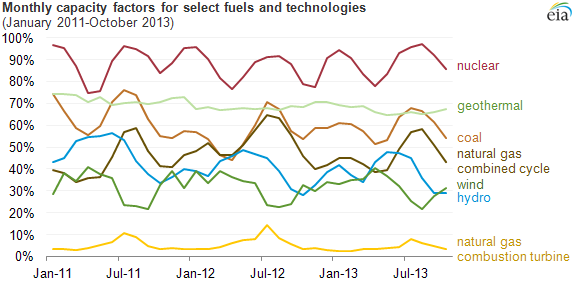
Capacity factors are an important measure of electric generator usage. In December 2013, EIA began publishing tables of monthly capacity factors for 16 different fossil and non-fossil fuel and technology combinations in the Electric Power Monthly.
What is a capacity factor?
Capacity factors describe how intensively a fleet of generators is run. A capacity factor near 100% means a fleet is operating nearly all of the time. It is the ratio of a fleet's actual generation to its maximum potential generation.
In the past, EIA published annual capacity factors for only a few fuel types, and several renewable fuel types were aggregated. With an updated methodology and more detailed technology breakout, these new tables allow readers to distinguish between generators having different roles within the electric power system. Baseload generators, like nuclear units, typically have high capacity factors, while peaking generators like natural gas-fired combustion turbines have low capacity factors.
Monthly data allow users to see seasonal patterns, such as periods of nuclear refueling outages in the shoulder seasons (spring and fall) and increased operation of peaking generators during the periods of highest electricity demand in the summer months (driven primarily by air conditioning use).
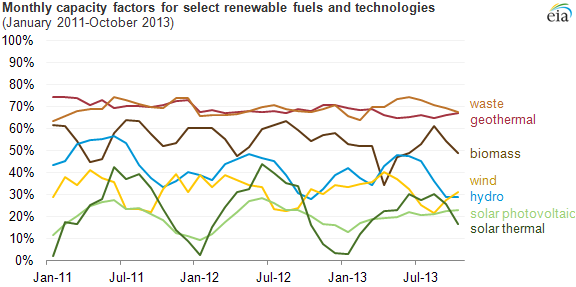
EIA's new tables include capacity factors for individual renewable generating technologies (see chart below). Geothermal and waste technologies operate fairly steadily and at high capacity factors. Intermittent renewable sources like solar and wind tend to have lower capacity factors, as their output varies with the availability of the sun and wind on both a daily and seasonal basis. Solar generators—particularly solar thermal—operate at a minimum during winter months, while the U.S. wind fleet on average has a period of low production during the late summer. Hydroelectric generators show both seasonal and annual variations reflecting changing levels of precipitation, river flow, and snowmelt.
Principal contributor: EIA Staff
Tags: capacity factor, electricity, generation, renewables