
Nuclear outages begin to increase with the start of the fall refueling season
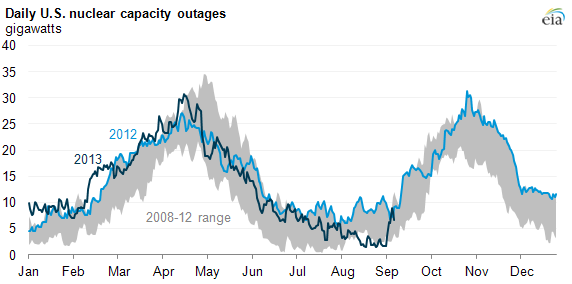
Note: Nuclear capacity outages are estimated based on monthly generation data collected by EIA and daily availability data from the U.S. Nuclear Regulatory Commission. Recent retirements are removed from the capacity figure outage in the month the retirement was reported to EIA.
Republished September 13, 2013, 10:00 a.m. text was modified to clarify content.
Outages at operational nuclear power plants were generally lower this summer than in recent years, reflecting the retirement of several units along with a lower number of generators in refueling outages. Beginning in early September, several units began to reduce their output to enter into refueling outages, bringing the total level of capacity in outage closer to the levels seen last year at this time.
Because of their low variable cost, nuclear plants nearly always run whenever they are available. Thus, outages are directly reflected in the level of nuclear power generation.
Refueling and maintenance outages for nuclear units (as well as fossil-fueled units) typically occur in the spring and fall "shoulder" seasons when demand for electricity is generally lower. However, a late-summer heat wave in recent days has pushed up demand for electricity in the midwestern and eastern United States. Outages in PJM territory (an electric system that stretches from New Jersey to Chicago) and New England likely contributed to the spike in on-peak, day-ahead wholesale electricity prices in these regions on September 11-12.
The retirement of four nuclear generators decreased the amount of operational capacity in extended outage, which had elevated outage levels throughout 2012. Although the retirements reduced the amount of operational capacity in outage, they also reduced the total nuclear capacity by almost 3.6 gigawatts. Two other units are in full or partial extended outages:
- Omaha Public Power District's (OPPD) Fort Calhoun reactor (478 MW capacity) has been off-line since April 9, 2011, initially due to flooding on the Missouri River. A subsequent inspection by the U.S. Nuclear Regulatory Commission identified additional problems, and OPPD is working through a checklist of repairs and changes to be addressed before restarting the plant. In August 2012, OPPD hired Exelon, a company that operates 17 U.S. nuclear plants, to manage day-to-day operations at Fort Calhoun.
- Detroit Edison Electric Company's Fermi unit 2 (1,085 MW capacity) has been operating at a reduced capacity (68%) since the beginning of the year after repairs were made to the generator at the end of 2012.
Principal contributor: M. Tyson Brown
Tags: electricity, nuclear, outages