
Transmission upgrades compensate for coal-fired retirements in Ohio electric region
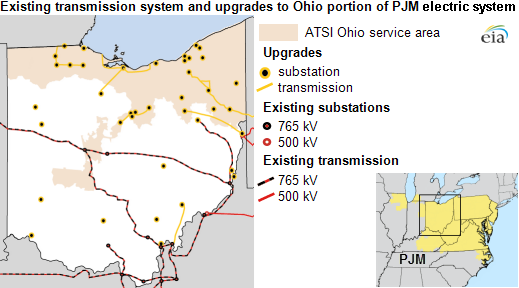
Note: Click to enlarge.
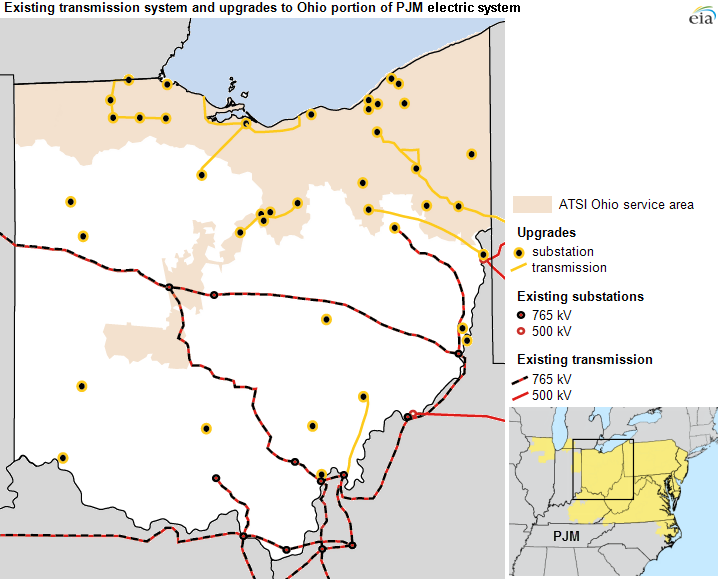
In 2012 a total of 1,400 megawatts of coal-fired power plants were retired in the American Transmission System Inc. (ATSI) load zone in the northern Ohio part of the PJM regional transmission organization's system. These retirements comprised nearly 13% of total generating capacity in that zone. Instead of building new replacement power plants, PJM is upgrading its transmission system to increase the use of existing electric generating capacity outside the ATSI zone to satisfy its load with an adequate safety margin.
Electric systems can ensure a reliable supply of electricity by building new power plants, but in a highly populated area that requires significant backup power in reserve, it may be more cost-effective to upgrade the transmission system to improve the flow of power between regions. PJM has an overall reserve margin of 29%, 13 percentage points above its target, but the recently announced retirements created reliability concerns that PJM plans to address through transmission upgrades, taking advantage of the higher reserve margin elsewhere in the system.
The ATSI region faced a capacity shortfall after companies owned by FirstEnergy, a large electric power holding company, announced the retirement of 1,400 megawatts of coal-fired capacity in 2012, followed by another 885 megawatts in 2015. This represents a 21% drop in the amount of electric capacity in this region, while the rest of PJM will remain relatively well-supplied.
Each year PJM holds auctions for capacity and sets a price per megawatt-day for available generating capacity, three years into the future. The shortfall in capacity was the main factor driving a high price for the ATSI region in PJM's May 2012 capacity auction (see chart below).
Following the auction, PJM identified 35 individual transmission projects, each costing more than $5 million, that could alleviate transmission congestion in the ATSI region. These projects would allow more power from other parts of PJM to flow into the ATSI zone and avoid the need to install new generating capacity in ATSI. A year later, in the May 2013 auction, the ATSI regional clearing price was more in line with the other PJM regions, reflecting these planned transmission upgrades.
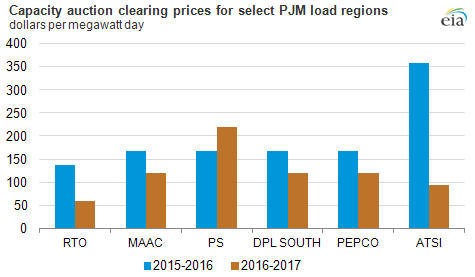
Note: Prices shown are annual clearing prices from the base residual auction by select regions for 2015-16 and 2016-17 vintages. See map of the regions for locations.
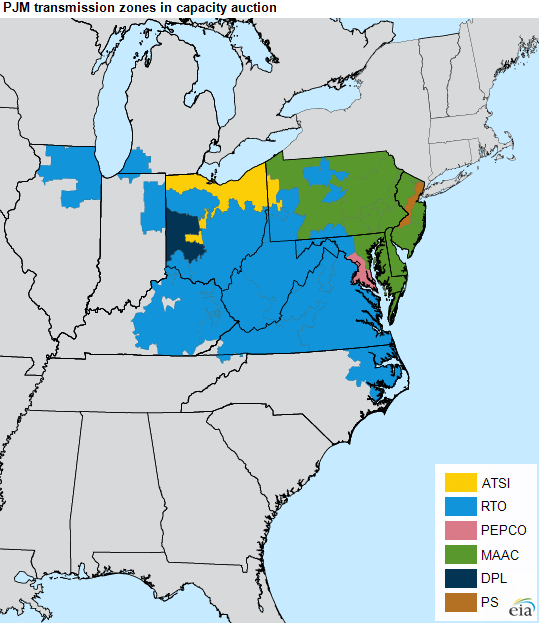
Some of the key transmission projects in the ATSI zone include:
- Installation of the Toronto-Harmon 345-kilovolt (kV) transmission line that runs west from a substation in Toronto, Ohio (near the border of West Virginia) to Harmon, in northeastern Ohio, for an estimated cost of $218 million.
- Installation of the Mansfield-Northfield 345 kV transmission line from the Mansfield substation in Beaver County, Pennsylvania, to the Northfield substation, about 20 miles southwest of Cleveland, for an estimated cost of $184.5 million.
- Conversion of the retiring coal-fired generators at the Eastlake and Lakeshore power plants to synchronous condensers for a total estimated cost of $120 million. Synchronous condensers provide voltage support in the form of reactive power to the transmission grid, allowing the ATSI zone to bring in more power from the rest of PJM.