
Price spread between regular and premium gasoline has changed over time
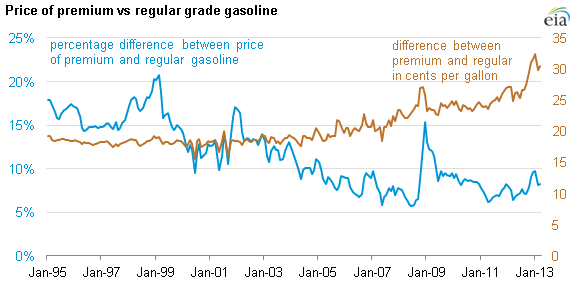
The difference between the U.S. average retail price for premium and regular gasoline—the premium for premium—reached 30 cents per gallon for the first time at the end of 2012, a level that has been maintained thus far in 2013. However, on a percentage basis, the price spread between premium grade and regular grade gasoline has actually remained relatively stable since mid-2009. With the exception of a spike in late 2008, the percentage spread fell fairly steadily from 17% in 2001 to a low of 6% in early 2008. The decline in the percentage price spread between premium grade and regular grade gasoline over this period coincides with increased blending of ethanol into the motor gasoline pool.
Over the last decade ethanol emerged as an important component of gasoline and provided a considerable source of octane. Ethanol blended into gasoline has an average octane rating of 115, significantly higher than the gasoline octane rating at retail stations for regular (87 octane) and premium (91-93 octane) gasoline. As a result, refineries have been able to decrease the octane level of gasoline blendstock, which will be blended with ethanol to make finished gasoline. The Environmental Protection Agency (EPA) estimates that refiners produce 84 octane blendstock that, when blended with ethanol, will meet the 87 octane minimum for regular-grade gasoline, and produce 88 octane blendstock that will meet a 91 octane premium-grade finished gasoline requirement after blending.
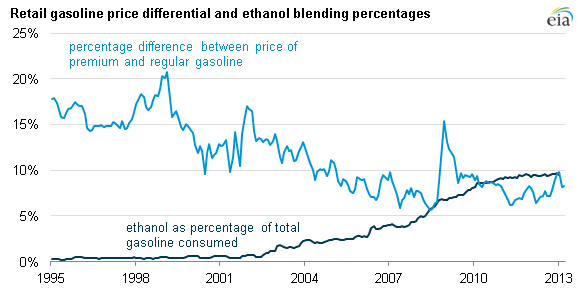
For a refiner, there is a tradeoff between octane levels and volume of gasoline produced: higher levels of octane reduce production volume, raising the relative price of higher octane fuels. This tradeoff is not linear, and production declines more rapidly as octane increases. As a result, more cost savings result from reducing octane levels for premium gasoline blendstock (91 octane to 88) than from reducing the already lower regular gasoline blendstock octane levels (87 to 84). As the percentage of ethanol in gasoline grows, higher octane blendstock becomes relatively cheaper, reducing the percentage-based grade differential for premium versus regular gasoline.
In addition to ethanol's impact on the relative decline in premium gasoline production costs, the changing price relationship between premium and regular gasoline may reflect other factors. Consumption of premium gasoline has declined for more than two decades, possibly making premium a less competitive fuel from a pricing standpoint.
For additional information see EIA's assessment in This Week in Petroleum.
Tags: ethanol, gasoline, liquid fuels, oil/petroleum, prices, refining