
How has energy use changed throughout U.S. history?
Note: Data use captured energy approach to account for wind, hydro, solar, and geothermal.
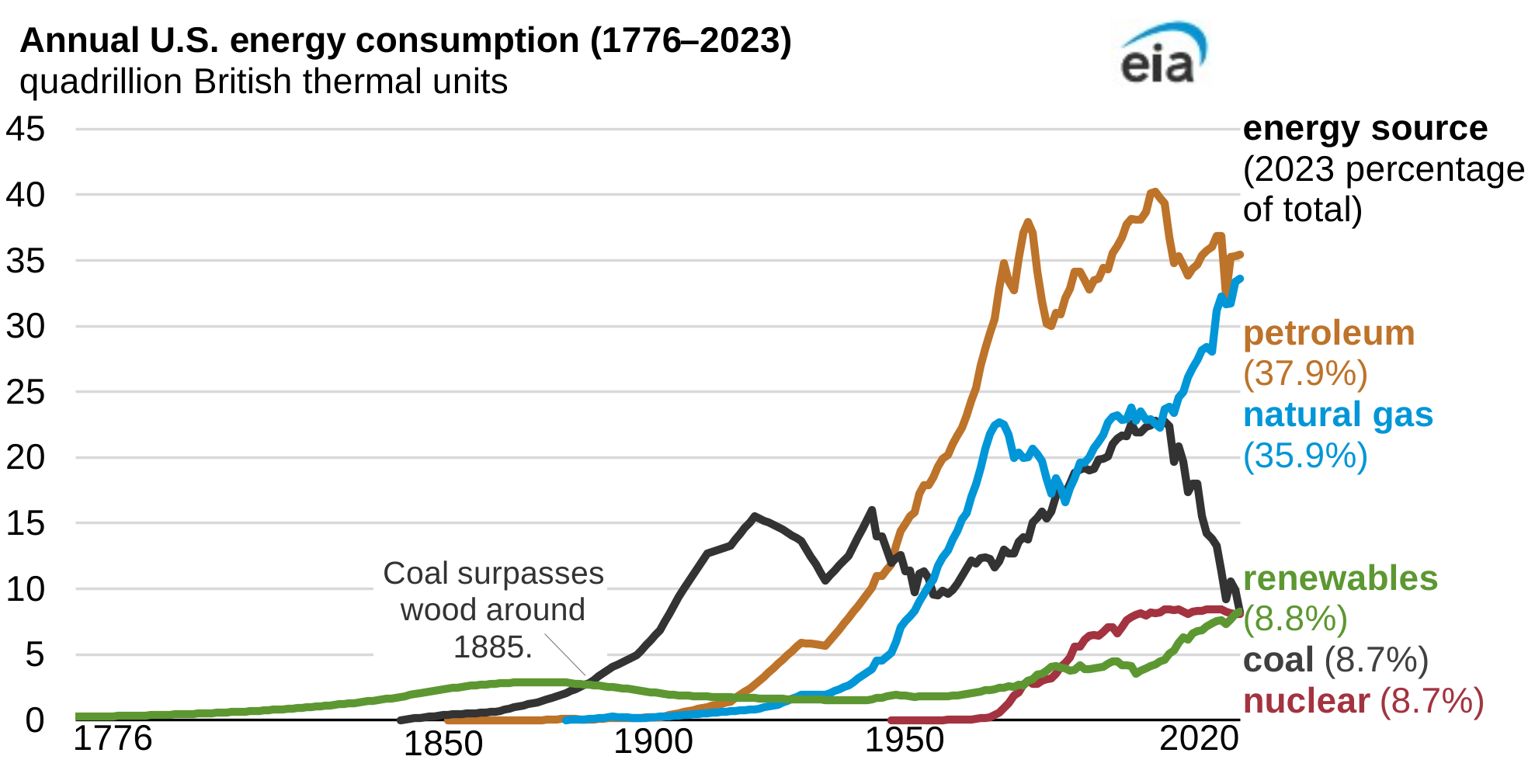
In 2023, 94 quadrillion British thermal units (quads) was consumed in the United States, a 1% decrease from 2022, according to our Monthly Energy Review. Fossil fuels—petroleum, natural gas, and coal—accounted for nearly 83% of total U.S. energy consumption in 2023. Nonfossil fuel energy—from renewable sources and from nuclear—accounted for the other 17%. In 2023, petroleum remained the most-consumed fuel in the United States, as it has been for the past 73 years, and renewables exceeded coal for the first time in about 140 years.
How has energy use changed throughout U.S. history?
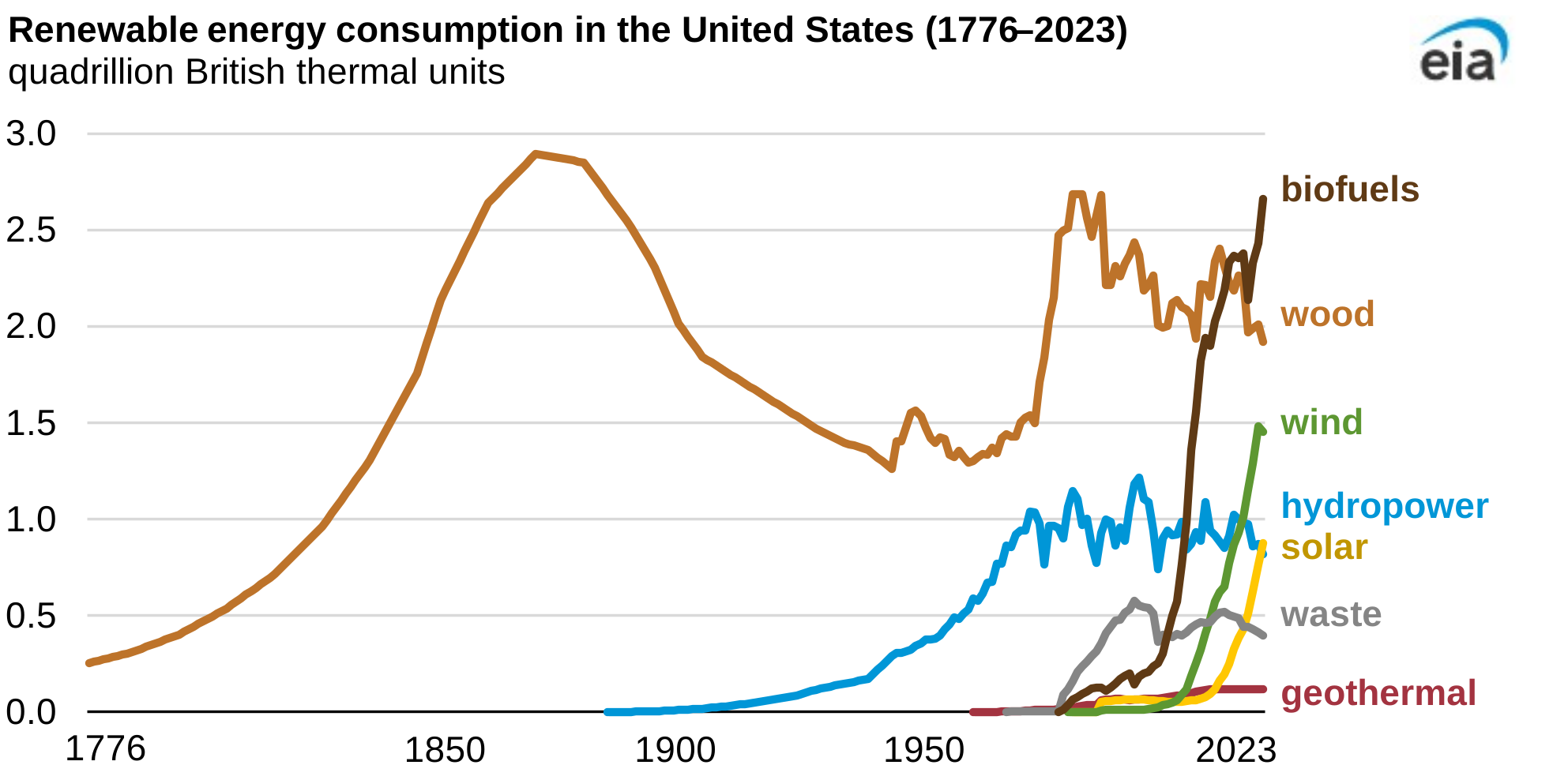
When the Declaration of Independence was signed in 1776, wood, a renewable energy source, was the largest source of energy in the United States. Used for heating, cooking, and lighting, wood remained the largest U.S. energy source until the late 1800s, when coal surpassed it.
Early use of water to power grist, lumber, and other milling operations is not well quantified and not included in our data, but such mills were common throughout early U.S. history. The first industrial use of hydropower to generate electricity in the United States was to power lamps at a chair factory in Grand Rapids, Michigan, in 1880. The world’s first hydroelectric power plant to sell electricity to the public opened on the Fox River near Appleton, Wisconsin, in 1882.
Renewable energy did not become a more significant part of U.S. energy again until more recently. Biofuels became the most-consumed U.S. renewable energy source in 2016, surpassing wood. In the 1980s, the United States began to consume more ethanol blended with petroleum motor gasoline and later biodiesel and renewable diesel blended with petroleum diesel. Renewable diesel can be substituted for petroleum diesel while chemical differences limit the amount of biodiesel that can be blended into petroleum diesel. U.S. renewable diesel surpassed biodiesel use for the first time in 2022.
Note: Data use captured energy approach to account for wind, hydro, solar, and geothermal.
Electricity generation from zero-carbon sources such as wind and solar has increased rapidly in recent years. In 2022, U.S. energy consumption from renewable sources surpassed that from nuclear for the first time since 1984. U.S. nuclear energy consumption began in the late 1950s and has remained fairly constant since the early 2000s.
Coal was the largest source of U.S. energy for about 65 years, from 1885 until 1950, when petroleum surpassed it. Early uses of coal included many purposes that are no longer common, such as in stoves for home heating and in engines for train and boat transportation. Since the 1960s, nearly all coal consumed in the United States has been used to generate electricity.
Petroleum remains the most-consumed source of energy in the United States as it has been since 1950. Petroleum products, such as motor gasoline, diesel, jet fuel, and propane, are commonly used across all sectors of the modern U.S. economy, from transportation to industrial chemicals and plastics.
Natural gas is the second-largest source of U.S. energy consumption as it has been most years since it surpassed coal in 1958. Natural gas was once seen as a waste byproduct of crude oil production but has become a common energy source used for heating and electricity generation. In part because of recent advancements in U.S. drilling technology, the availability of natural gas in the United States increased rapidly, and its consumption almost surpassed petroleum in 2020 when the effects of the Covid pandemic limited the amount of energy consumed for transportation.
Click to see full chart.
How did U.S. energy consumption change in 2023?
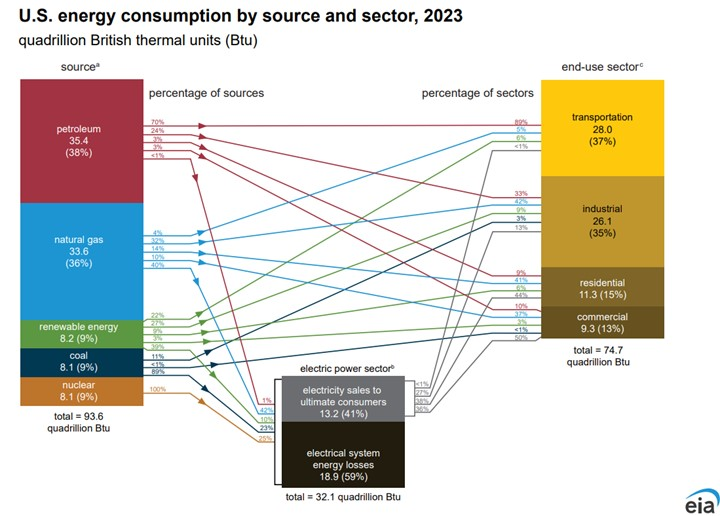
Renewable energy consumption in the United States increased 2% from 2022 to a record 8.2 quads in 2023, largely because of increased use of biofuels in transportation and solar to generate electricity. In 2023, U.S. wind consumption decreased for the first time in 25 years.
Coal consumption declined to 8.2 quads in 2023, the least since around 1900. U.S. coal consumption has decreased by more than half since its peak in 2005, largely because of less coal use for electricity generation.
Nuclear energy consumption totaled 8.1 quads in 2023, a slight increase compared with 2022. The small increase largely came because of the new Vogtle Unit 3 reactor in Georgia in July 2023.
Petroleum consumption in the United States remained below its 2005 peak, totaling 35.4 quads in 2023. Most petroleum energy was consumed in transportation. Although use of electric vehicles has increased, petroleum remains the predominant fuel for cars, trucks, and planes.
U.S. natural gas consumption reached a record 33.6 quads in 2023, largely because of increased use for electricity. More natural gas has been consumed in the U.S. electric power sector than in any other economic sector every year since 2018.
How do we compare different types of energy to one another?
We use the common unit of heat called British thermal units to compare energy across sources and sectors.
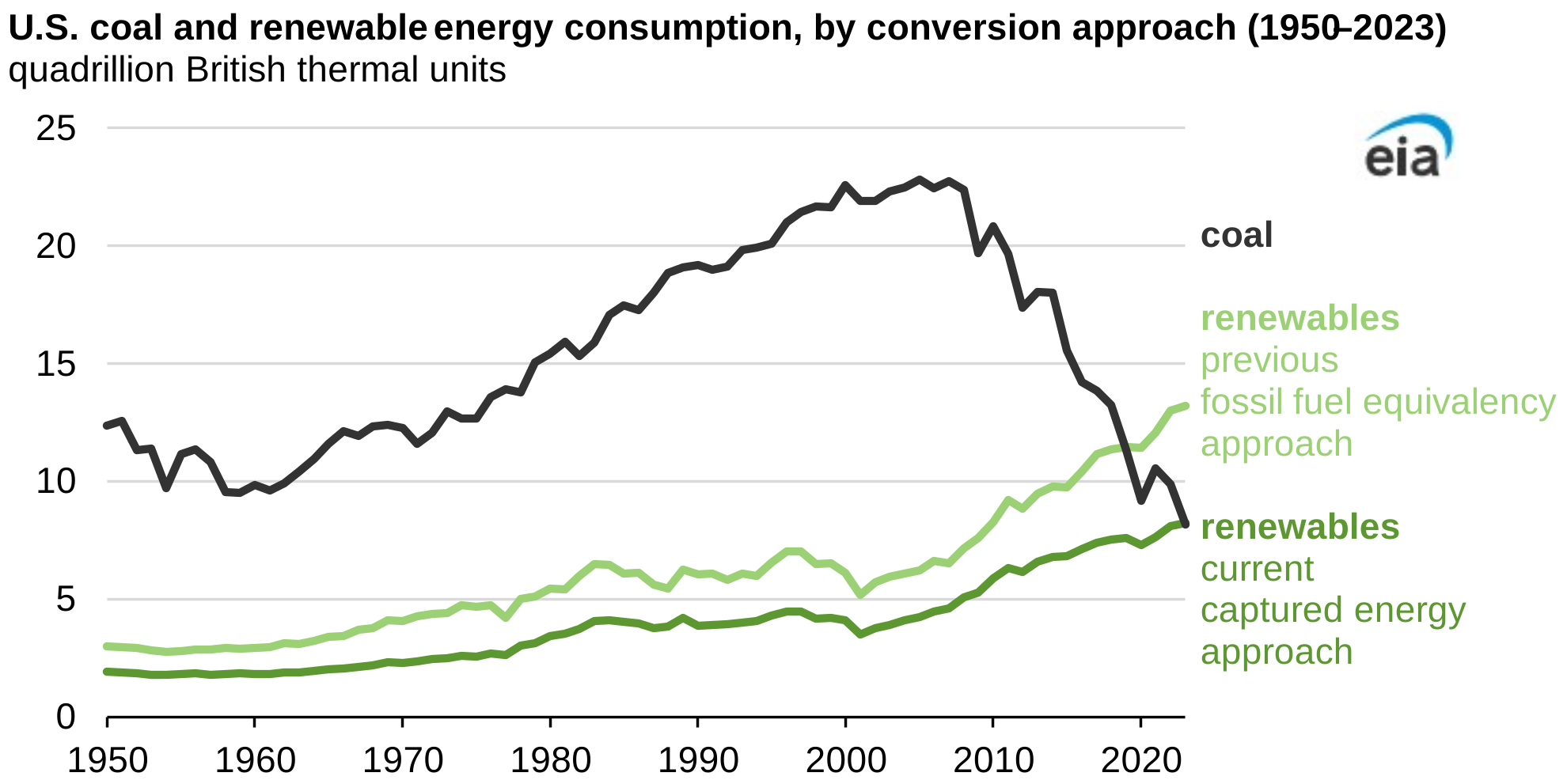
Beginning with our data release for 2023, we changed our approach to converting the electricity generated by non-combustible renewables to British thermal units, which altered our assessment of when renewable consumption passed coal consumption.
Under the captured energy approach we now use, U.S. consumption of renewables surpassed coal in 2023 for the first time since about 1885. Under our previous fossil fuel equivalency approach, renewables had surpassed coal in 2019.
Principal contributors: Mickey Francis, Owen Comstock