
EIA estimates drilled but uncompleted wells for key oil and natural gas basins
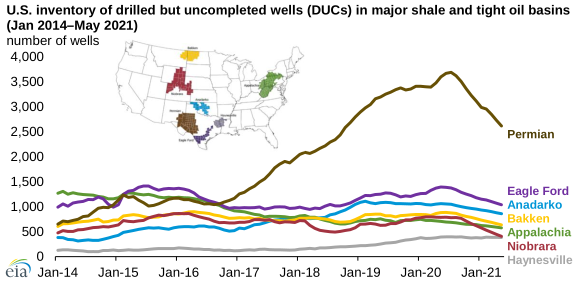
We release an updated inventory of what we consider drilled but uncompleted wells (DUCs) each month in our Drilling Productivity Report (DPR). We publish updates to DUC estimates by region in a publicly accessible spreadsheet. In May 2021, the most recent month available, we estimated that the United States has about 6,521 DUCs in seven major tight oil and shale natural gas basins, up from about 4,425 DUCs in 2013, the earliest year in the data series. Nearly 40% of DUCs (or 2,616 DUCs) are in the Permian Basin, located in western Texas and eastern New Mexico.
We estimate that the U.S. DUC inventory peaked at 8,874 DUCs in June 2020. From June 2020 through May 2021, we estimate that DUCs declined by 27%, or by 2,353 DUCs. Since the COVID-19 pandemic began, exploration and production (E&P) companies have cut capital expenditures, deployed fewer rigs, and reduced oil and natural gas production in response to lower demand and lower prices. DUCs help operators produce oil and natural gas at a lower cost.
We estimate DUCs by examining the difference between records of drilled wells and completed wells each month; the difference equals the net change in the DUC inventory, or well count. Our DUC inventory estimates depend on assumptions about the wells reported to FracFocus.
We estimate that most DUC wells are completed and begin producing hydrocarbons within one year after they are drilled. However, the timeline for completing wells can vary based on a variety of factors, including the prices of crude oil, petroleum products, and natural gas.
E&P companies maintain DUC well inventories to ensure the well completion rate remains flexible. For instance, E&P companies coordinate the drilling and completion of wells to minimize operational delays. Generally, E&P companies maintain a DUC backlog that can sustain oil or natural gas production for several months so that they always have wells they can complete quickly. Because new oil and natural gas wells have decline rates that can be as high as 60%–70%, E&P operators need a constant supply of new wells that are ready to be completed to maintain steady production levels.
You can find the monthly updates to our DUC inventory on our website in the Drilling Productivity Report.
Principal contributors: Christopher Peterson, Jozef Lieskovksy
Tags: natural gas, wells, oil/petroleum, drilling