
Gulf Coast refinery runs are approaching levels seen prior to Hurricane Harvey
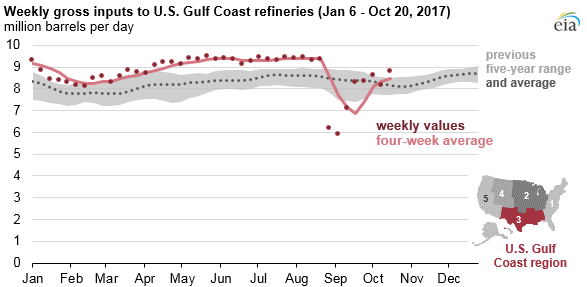
For the week ending October 20, 2017, gross inputs to petroleum refineries in the U.S. Gulf Coast averaged 8.8 million barrels per day (b/d), or about 324,000 b/d higher than the previous five-year range for mid-October, based on data in EIA’s Weekly Petroleum Status Report (WPSR). Gross inputs, also referred to as refinery runs, in the Gulf Coast had been higher than the five-year range for much of 2017 until Hurricane Harvey made landfall in the Houston, Texas, area on August 25.
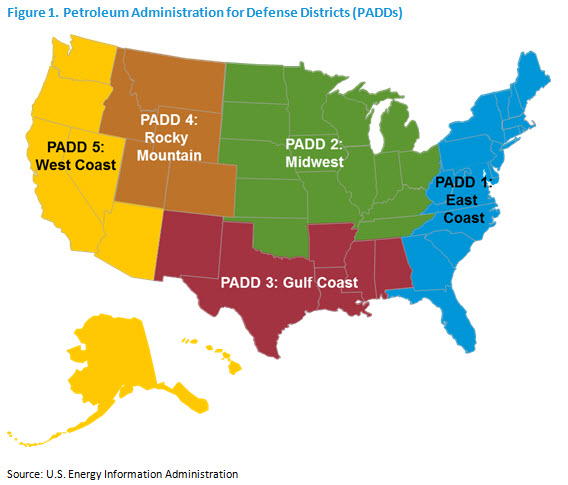
A little more than half of all U.S. refinery capacity is located in the U.S. Gulf Coast region (defined as Petroleum Administration for Defense District 3). Texas, where Harvey made landfall, represents 31% of all U.S. refinery capacity according to data from January 2017. Gulf Coast refineries supply petroleum products to domestic markets in the Gulf Coast, East Coast, and Midwest, as well as to international markets.
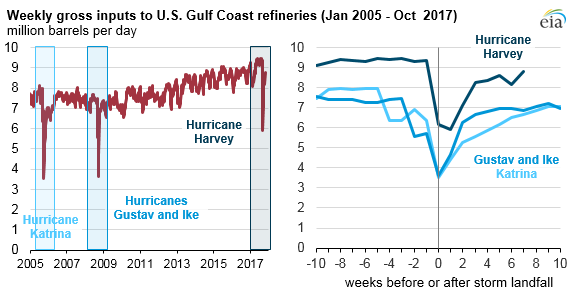
Hurricane Harvey’s most significant effect on petroleum markets was the curtailment of some refinery operations in Texas. Refinery operations rely on a supply of crude oil and feedstocks, electricity, workforce availability and safe working conditions, and outlets for production. As a result of Hurricane Harvey, many refineries in the region either reduced runs or temporarily shut down.
For the week ending September 1, 2017, the first WPSR data point after Harvey’s landfall, gross inputs to refineries in the Gulf Coast fell 3.2 million b/d, or 34%, from the previous week. For the week ending September 8, Gulf Coast gross inputs to refineries fell by another 263,000 b/d to 5.9 million b/d, the lowest weekly value since Hurricanes Gustav and Ike disrupted refinery operations in September 2008.
After several weeks of increasing refinery runs following Hurricane Harvey in late September and early October 2017, Gulf Coast refinery runs fell again during the week ending October 13 because of additional disruptions caused by Hurricane Nate. Overall, the magnitude and duration of Hurricane Harvey’s impact on Gulf Coast refinery runs has been similar to what happened following Hurricanes Katrina in 2005 and Gustav and Ike in 2008.
Principal contributor: Hannah Breul
Tags: Gulf Coast, liquid fuels, oil/petroleum, refineries, Texas, weather