
What drives petroleum product prices: Consumption
Prices for petroleum products like motor gasoline, diesel fuel, and jet fuel are influenced by consumption levels. Increased consumption typically leads to higher prices, encouraging the use of existing inventories to meet demand. Decreased consumption generally results in lower prices.
Although markets can prepare for seasons of higher consumption, such as by building gasoline inventories in anticipation of the summer driving season, when consumption levels differ from expected levels, petroleum product prices are often affected. For example, when petroleum product consumption decreased sharply in 2020 in response to COVID-19 mitigation efforts, gasoline and diesel prices and crack spreads fell across the globe. Crack spreads represent the price difference between petroleum products and crude oil and can be used to determine the relative value of various petroleum products for refineries to produce.
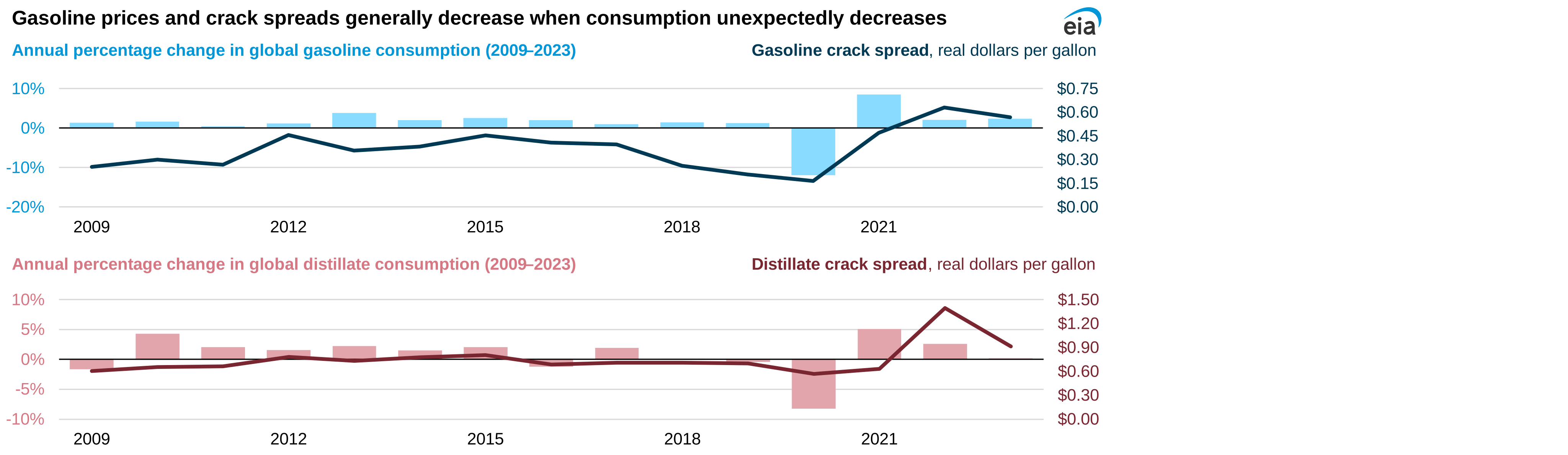
Data source: U.S. Energy Information Administration
Note: Real prices are adjusted to July 2025 dollars. Crack spreads are calculated by subtracting the value of a gallon of crude oil from the spot prices for a gallon of RBOB and ULSD at New York Harbor.
Gasoline is the most consumed petroleum product in the United States and is used primarily as a transportation fuel. Factors affecting gasoline consumption include gasoline prices, disposable income, employment, weather, vehicle miles traveled, as well as the fuel efficiency of the vehicle fleet.
Distillate is the second-most consumed petroleum product in the United States. In addition to its use for transportation, distillate is also used for heating, agricultural equipment, and power generation. Its use as a heating fuel and for agricultural harvests contributes to higher consumption during the fall and winter. Distillate consumption is also affected by growth in consumption of goods, vehicle efficiency, heavy-duty vehicle miles traveled, and displacement by biofuels. Global distillate consumption generally follows trends in industry and manufacturing. Because economies in developing countries tend to be driven by industry rather than services, strong growth in their economies drives much of the global growth in distillate consumption. Conversely, the shift towards service-oriented economies that often takes place in developed countries can slow down distillate consumption.