
Natural gas remains the largest source of hydrogen in our long-term projections
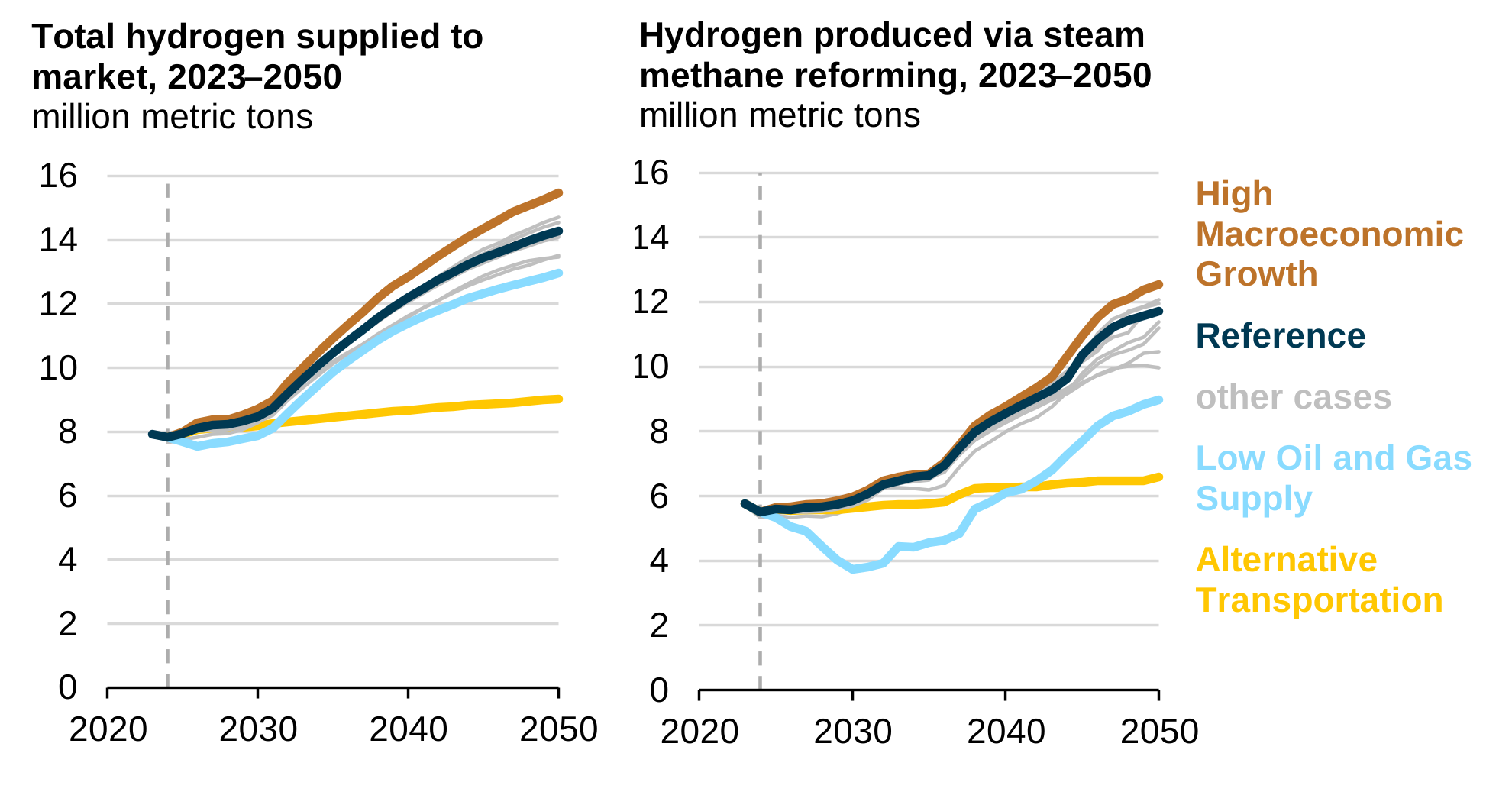
In our recently published Annual Energy Outlook 2025 (AEO2025), we introduced our new Hydrogen Market Module (HMM), which allows us to model the market for hydrogen in the coming decades.
In most AEO2025 cases, we project hydrogen production will increase by around 80% in 2050 compared with 2024 and most hydrogen (H2) will be produced from natural gas in a process known as steam methane reforming (SMR). In most cases, we project less than 1% of hydrogen will be produced via electrolyzers, which use electricity to produce hydrogen from water, regardless of supportive policies.
In most of the cases we ran, we considered laws and regulations in place as of December 2024, which meant including tax credits implemented under the 2022 Inflation Reduction Act (IRA), such as the Section 45V Clean Hydrogen Production Tax Credit designed to support hydrogen production generated by electrolysis from renewable electricity sources. More recently, the One Big Beautiful Bill Act modified incentives for hydrogen production and renewable electricity, which can be used to generate hydrogen during electrolysis. We did not take those changes into account.
To establish a historical baseline for the hydrogen module, we used estimates from our 2018 Manufacturing Energy Consumption Survey. In 2018, we estimated the size of the hydrogen market was 10 million metric tons (MMmt), equivalent to approximately 1,340 trillion British thermal units (TBtu) or about 1.8% of end-use energy consumed in the United States that year. Refiners and chemical manufacturers in the industrial sector consume almost all hydrogen in the United States as feedstock. Of this 2018 total, we defined 8 MMmt as market hydrogen and represented its supply explicitly in AEO projections using the HMM. Market hydrogen includes the following supplies:
- Hydrogen produced for consumers via technologies such as steam methane reforming with and without carbon capture and sequestration (SMR, SMR + CCS) or electrolysis
- Byproduct hydrogen from other industrial processes that is delivered to a consumer and not self-consumed
In the Reference case, we project this market grows to reach 14.3 MMmt by 2050, just over 1,900 TBtu or about 2.5% of total delivered energy in the United States. Of the total volume, about 12 MMmt—over 80%—is supplied by SMRs. Hydrogen produced as a byproduct of industrial chemical processes, such as ethane cracking and propane dehydrogenation, is the next-largest supply source. SMR + CCS production supplies around 1.5 MMmt to 2 MMmt of hydrogen to the market at its peak in the 2030s, but by 2050, its contribution to U.S. supply is negligible because the tax credits subsidizing the deployment of this technology expire after 2045. Electrolysis contributes a negligible amount of hydrogen to market supply across the projection period in the Reference case despite assuming the availability of the 45V tax credit.
Several specific AEO2025 side cases demonstrate how key factors affect our hydrogen market projections:
- In the Low Oil and Gas Supply case, the high cost of natural gas feedstock makes SMR technology less economical compared with the Reference case, reducing the amount of hydrogen produced.
- The High Macroeconomic Growth case sees the largest volumes of hydrogen supplied to market due especially to stronger bulk chemicals growth, reaching 15.5 MMmt in 2050. Hydrogen production via SMR and SMR + CCS, as well as hydrogen byproduct supplied to the market, all reach their highest levels in this case.
- The Alternative Transportation case removes several key policies from our projections and represents the lower bound of total hydrogen supplied to U.S. markets through 2050. Total hydrogen supplied hardly increases over the projection period. In all other AEO2025 cases, the transportation sector accounts for most of rising hydrogen consumption as hydrogen fuel cells in heavy-duty vehicles are deployed to meet policy standards. When these policies are not in effect, growth in hydrogen in the transportation sector is negligible.
Previous Today in Energy articles for the AEO2025 presented key findings for hydrocarbon production and exports, data centers, carbon capture and sequestration, and regional natural gas markets.
Principal contributors: Katie Dyl, Stephen York, Peter Gross