
Renewable generation surpassed coal and nuclear in the U.S. electric power sector in 2022
From December 18 to January 1, Today in Energy will feature some of our favorite articles from 2023. Today’s article was originally published on March 27.
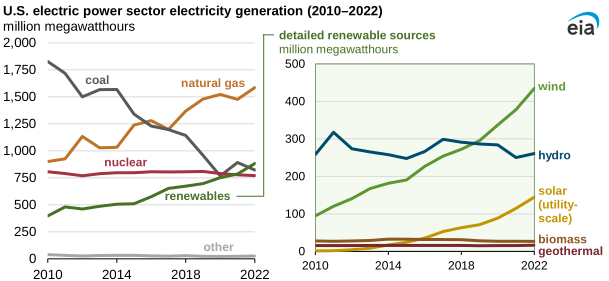
Last year, the U.S. electric power sector produced 4,090 million megawatthours (MWh) of electric power. In 2022, generation from renewable sources—wind, solar, hydro, biomass, and geothermal—surpassed coal-fired generation in the electric power sector for the first time. Renewable generation surpassed nuclear generation for the first time in 2021 and continued to provide more electricity than nuclear generation last year.
Natural gas remained the largest source of U.S. electricity generation, increasing from a 37% share of U.S. generation in 2021 to 39% in 2022. The share of coal-fired generation decreased from 23% in 2021 to 20% in 2022 as a number of coal-fired power plants retired and the remaining plants were used less. The share of nuclear generation decreased from 20% in 2021 to 19% in 2022, following the Palisades nuclear power plant’s retirement in May 2022. The combined wind and solar share of total generation increased from 12% in 2021 to 14% in 2022. Hydropower generation remained unchanged, at 6%, in 2022. The shares for biomass and geothermal sources remained unchanged, at less than 1%.
Growth in wind and solar generating capacity drove the increase in wind and solar generation. Utility-scale solar capacity in the U.S. electric power sector increased from 61 gigawatts (GW) in 2021 to 71 GW in 2022, according to data from our Electricity Power Monthly. Wind capacity grew from 133 GW in 2021 to 141 GW in 2022.
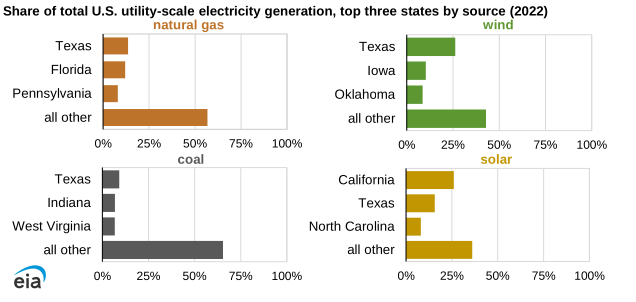
More wind-generated power was produced in Texas than in any other state last year. Texas accounted for 26% of total U.S. wind generation last year, followed by Iowa (10%) and Oklahoma (9%). One of the largest wind farms in the United States (nearly 1,000 megawatt capacity [MW]) came online in Oklahoma in 2022.
In 2022, California ranked first in utility-scale solar generation, producing 26% of the country’s utility-scale solar electricity. Texas was the second-largest producing state (16%), followed by North Carolina (8%). Several of the largest solar plants built in the United States in the last three years are located in Texas, including the 275 MW Noble solar plant, which started operations in 2022.
In our March Short-Term Energy Outlook, we forecast the wind share of the U.S. generation mix will increase from 11% last year to 12% this year. We forecast that the solar share will grow to 5% in 2023, up from 4% last year. The natural gas share of generation is forecast to remain unchanged from last year (39%); the coal share of generation is forecast to decline from 20% last year to 17% in 2023.
The electric power sector includes electric utilities and independent power producers. It does not include generators in the industrial, commercial, or residential sectors, such as rooftop solar panels installed on homes or businesses or some combined-heat-and-power systems.
Principal contributor: Katherine Antonio
Tags: generation, coal, electricity, natural gas, nuclear, renewables, wind, hydroelectric, solar