
The 9th U.S. liquefied natural gas export terminal, Golden Pass, ships first cargo
The article has been changed to reflect Corpus Christi and Corpus Christi Liquefaction Stage 3 as one terminal, reflecting the co-location of these projects, although having different liquefaction train technologies.
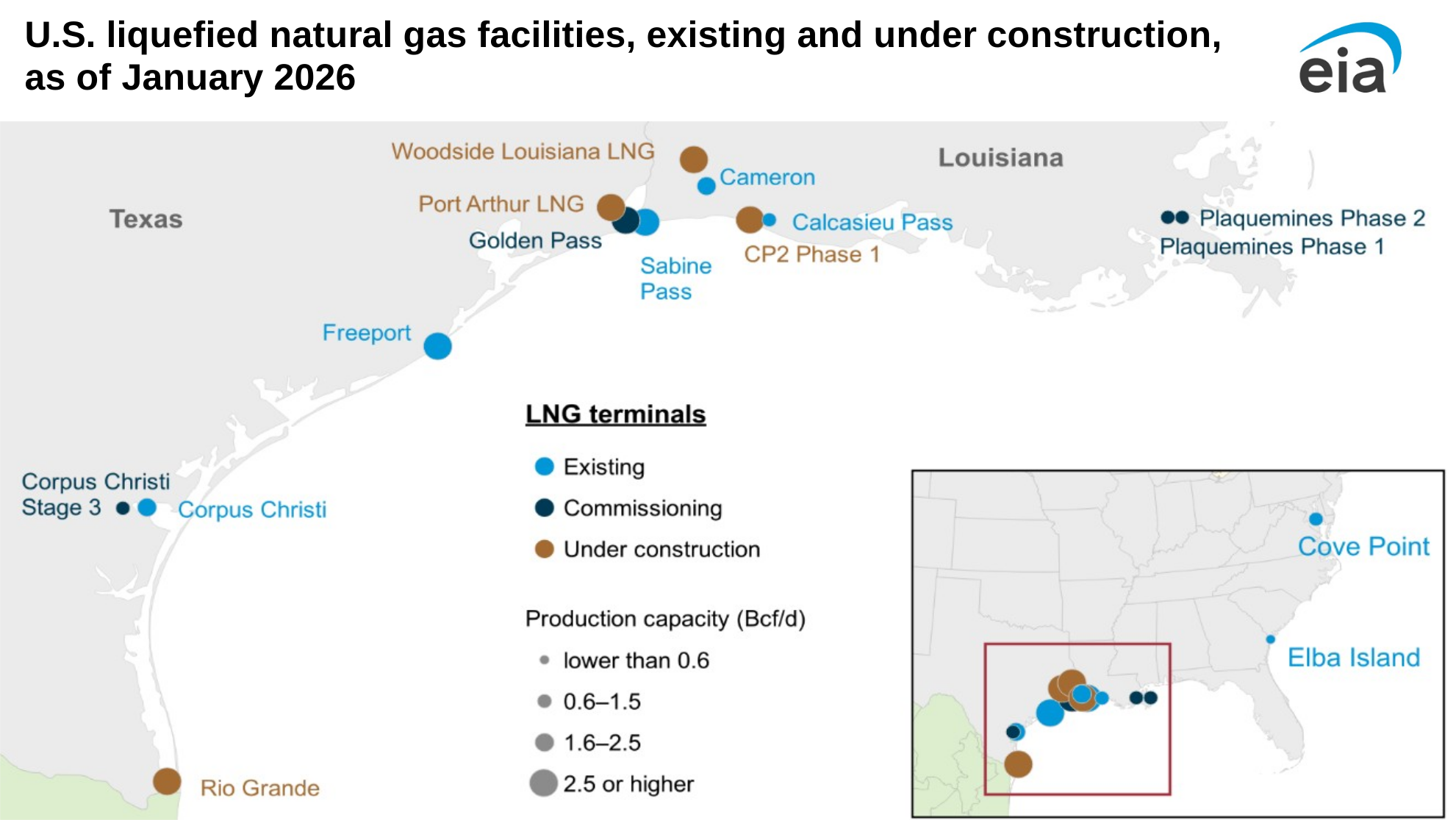
Note: Bcf/d=billion cubic feet per day; LNG=liquefied natural gas
On April 22, 2026, Golden Pass LNG—the 9th liquefied natural gas (LNG) terminal in the United States—shipped its first cargo from Train 1, according to the project developer. The shipment left port 23 days after achieving first LNG production in March 2026. The terminal began shipping as geopolitical developments in the Strait of Hormuz have affected over 10 billion cubic feet per day (Bcf/d), or approximately 20%, of global supply. Golden Pass LNG is the only new U.S. LNG export terminal currently expected to begin LNG shipments in 2026.
The project reached a final investment decision in February 2019, although it was delayed when the lead construction contractor filed for Chapter 11 bankruptcy in 2024, requiring a new lead contractor to finish the plant. Golden Pass LNG was developed by a joint venture of QatarEnergy (70% ownership) and ExxonMobil (30% ownership), bearing the same name.
The project consists of three liquefaction trains, each with a nominal capacity of 0.7 Bcf/d and peak capacity of 0.8 Bcf/d. The total nominal capacity of the facility will be 2.0 Bcf/d (2.4 Bcf/d peak capacity). LNG export facilities often operate at more than 100% of their nominal capacity but less than 100% of their peak capacity. When fully complete, the project will have the third-highest nominal capacity of all U.S. LNG export projects currently exporting LNG, behind Sabine Pass (3.6 Bcf/d) and Plaquemines LNG (2.6 Bcf/d). Golden Pass LNG aims to start up Train 2 in the second half of 2026 and Train 3 in the first half of 2027.
Principal contributor: Jordan Young