
Fossil generation could rise with faster-than-expected growth in data center power demand
This analysis was completed in conjunction with the February Short-Term Energy Outlook (STEO). The results may differ slightly from the most recent forecasts published in the March STEO.
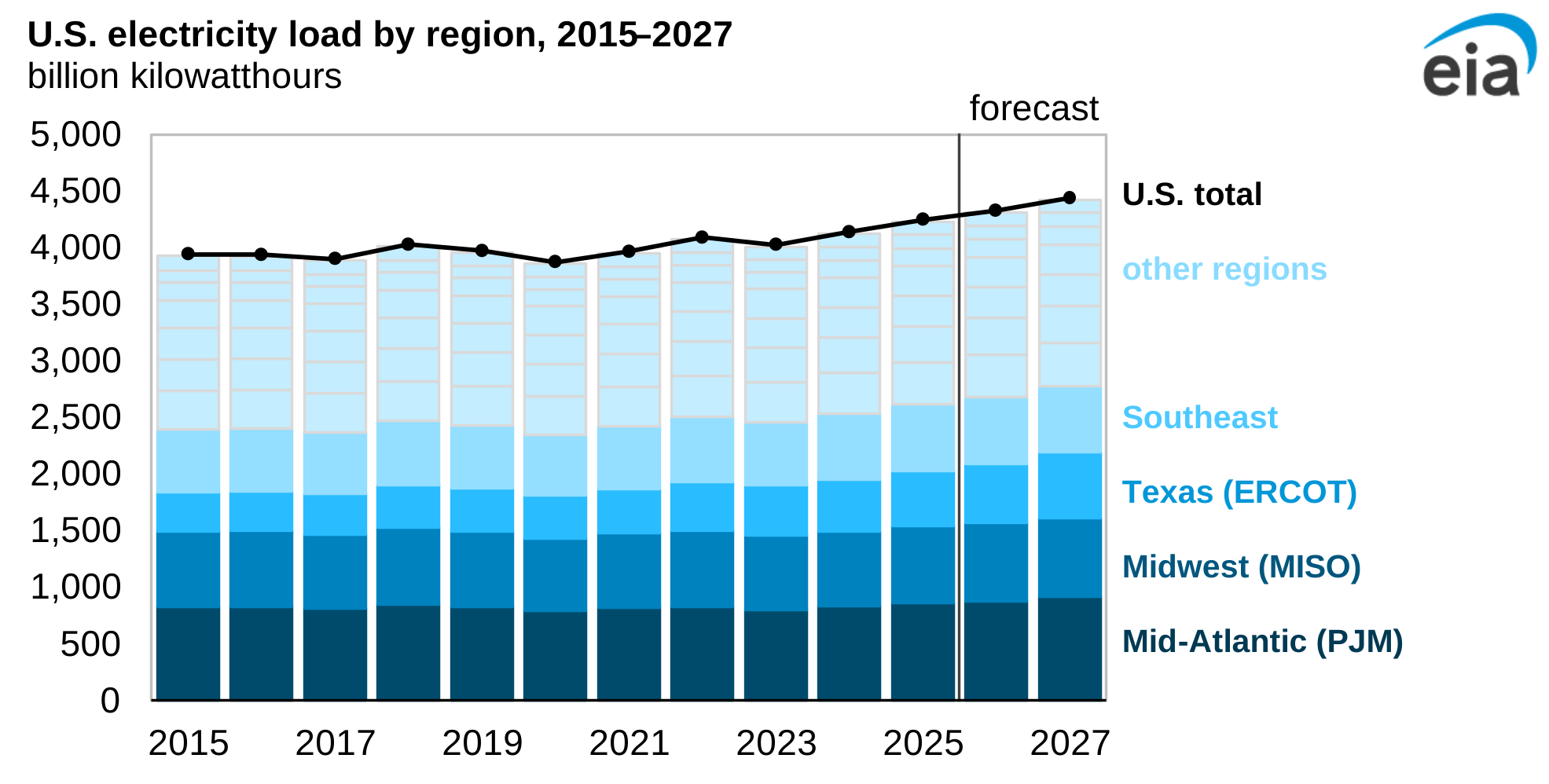
Note: Other regions include the New York Independent System Operator (ISO), New England ISO, Florida, Southwest, Northwest, California ISO, and Southwest Power Pool ISO regions. Electricity load by region is measured as net energy for load in the STEO.
Electricity demand has been rising steadily since 2020 after more than a decade of little change. Between 2020 and 2025, U.S. electricity demand, as measured by net energy for load, grew about 1.7% annually compared with 0.1% annual growth between 2005 and 2019. Electricity use by data centers is driving the electricity demand growth. Continued development of these large computing facilities and growth from expanded industrial use of electricity are likely to continue driving growth in U.S. electricity demand in the near term. In this analysis, we explore the potential impact of faster-than-expected electricity demand growth, while assuming the same future generating capacity as the February Short-Term Energy Outlook (STEO).
Our February STEO reflects the latest forecasts published by grid operators PJM and the Electric Reliability Council of Texas (ERCOT) and uses forecasts for economic activity and weather to arrive at our baseline forecast for electricity load. ERCOT manages the grid covering most of Texas, and PJM manages the grid covering all or part of 13 states (Delaware, Illinois, Indiana, Kentucky, Maryland, Michigan, New Jersey, North Carolina, Ohio, Pennsylvania, Tennessee, Virginia, West Virginia) and Washington, DC. In our February STEO, we forecast that U.S. electricity load will increase by 1.9% in 2026 and 2.5% in 2027. We expect that the highest load growth will be in the ERCOT and PJM regions where forecast growth of annual electricity load averages 10% and 3%, respectively, between 2025 and 2027.
Grid managers are responsible for regulating the interconnection of new generating capacity and new large load customers to ensure that future electricity demand can be accommodated by the available supply of power. If demand were to grow faster than supply, the stresses on the grid would be evident in spikes in wholesale power prices or even periods of rolling blackouts. In this analysis, we focus on the potential for faster-than-expected growth in U.S. electricity demand in the near term along with the potential effects on electricity generation and prices. The results indicate that most regions can accommodate higher-than-expected electricity demand growth, but the modeled price effects in ERCOT highlight some of the challenges grid operators have in managing large increases of load in the near term.
High electricity demand growth scenarios in STEO
We expect that the regions of the country whose grids are managed by ERCOT and PJM will experience the fastest growth in electricity demand from data centers through 2027.
States in the central part of the country, where electricity transmission is managed by the Midcontinent Independent System Operator (MISO) and the Southwest Power Pool (SPP), will also likely experience high growth in power demand from data centers. However, we forecast that these regions will experience relatively low load growth overall because of low electricity demand growth from households and other sectors. The low demand growth from households will keep the average load growth rates in these large regions below the U.S. average. We also expect continued data center power demand growth in the southwestern states of Arizona and Nevada. However, overall load growth in the southwest region remains relatively low because most of the data center load growth is expected to happen after 2027.
For this analysis, we developed a high demand growth scenario in which the 2026 and 2027 growth rates were 50% higher than the baseline forecast in the February STEO for those regions with significant development of data centers. For other regions of the country, we assumed demand growth rates were one percentage point higher than the February STEO forecasts to account for potential increased development of data centers in those areas.
High demand growth scenario assumptions by STEO region
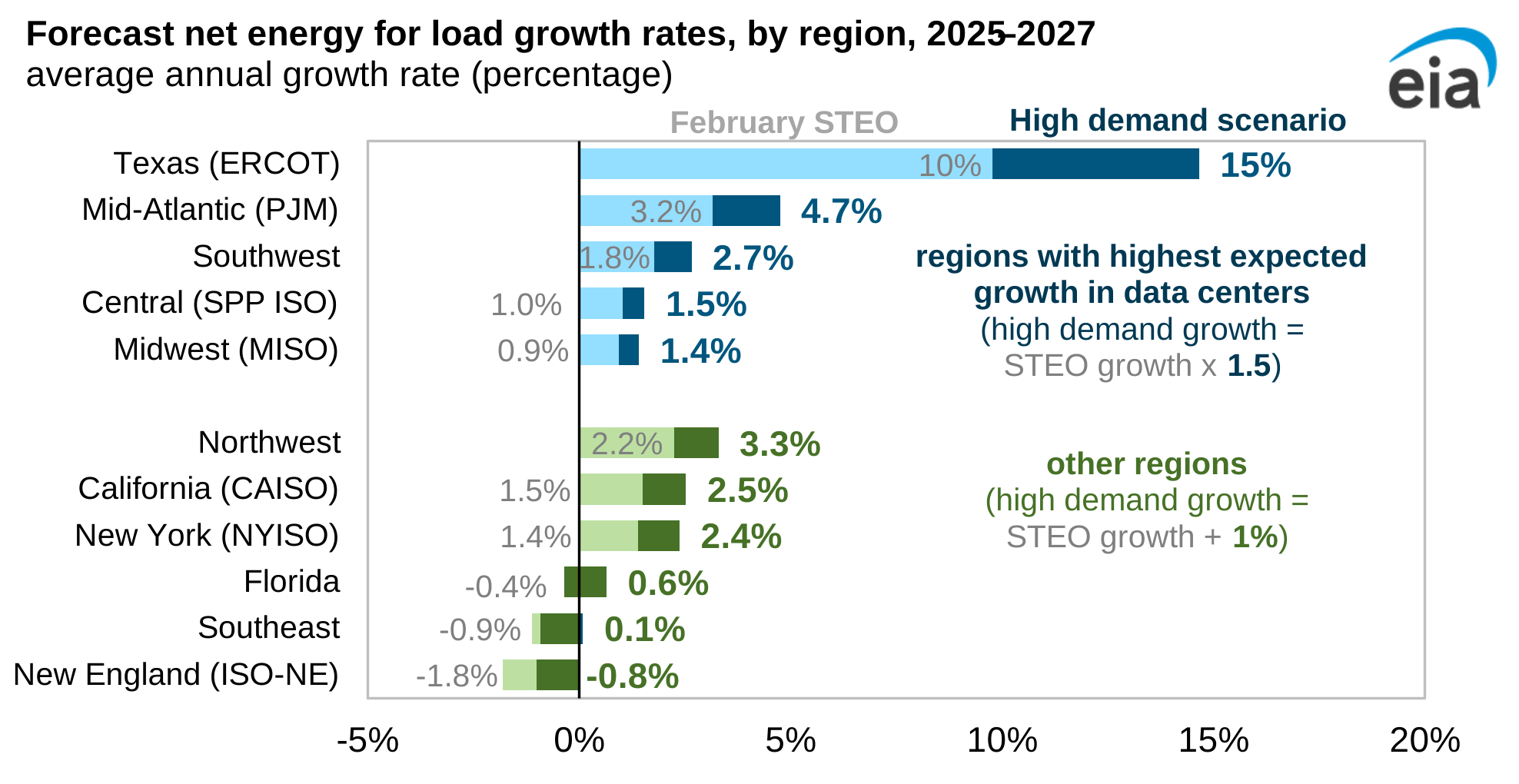
Note: ISO=Independent System Operator
The STEO’s electricity generation forecasts are based off the generating capacity of existing power plants listed in EIA’s Preliminary Monthly Electric Generator Inventory and future additions reported to us by utilities and companies. Due to long lead times for planning, construction, and interconnections of new generating capacity, it is unlikely that more capacity will become operational by the end of the STEO forecast period beyond what is accounted for in our base forecast. In the high demand growth scenario, we assumed the same future generating capacity as in the February STEO, with natural gas the primary source of available power generation to meet incremental demand. With additional demand for the fuel in the high demand scenario, we assumed an increase of about $0.50 per million British thermal units (MMBtu) in the cost of natural gas delivered to power generators compared to the baseline February STEO forecast. We apply these higher natural gas prices to the high demand growth scenario across all regions.
Effect of higher demand growth on generation mix
The assumption of higher electricity demand requires higher overall generation by the electric power sector. The required increase in generation would primarily come from increased utilization of natural gas-fired power plants, the main source for U.S. electricity generation, accounting for 40% of total generation in 2025. Generation from coal, the second-largest source of electricity generation, accounted for 17% of total generation in 2025. Generation from intermittent sources (wind and solar) is dispatched as the resource is available and, combined, accounted for 18% of total generation in 2025.
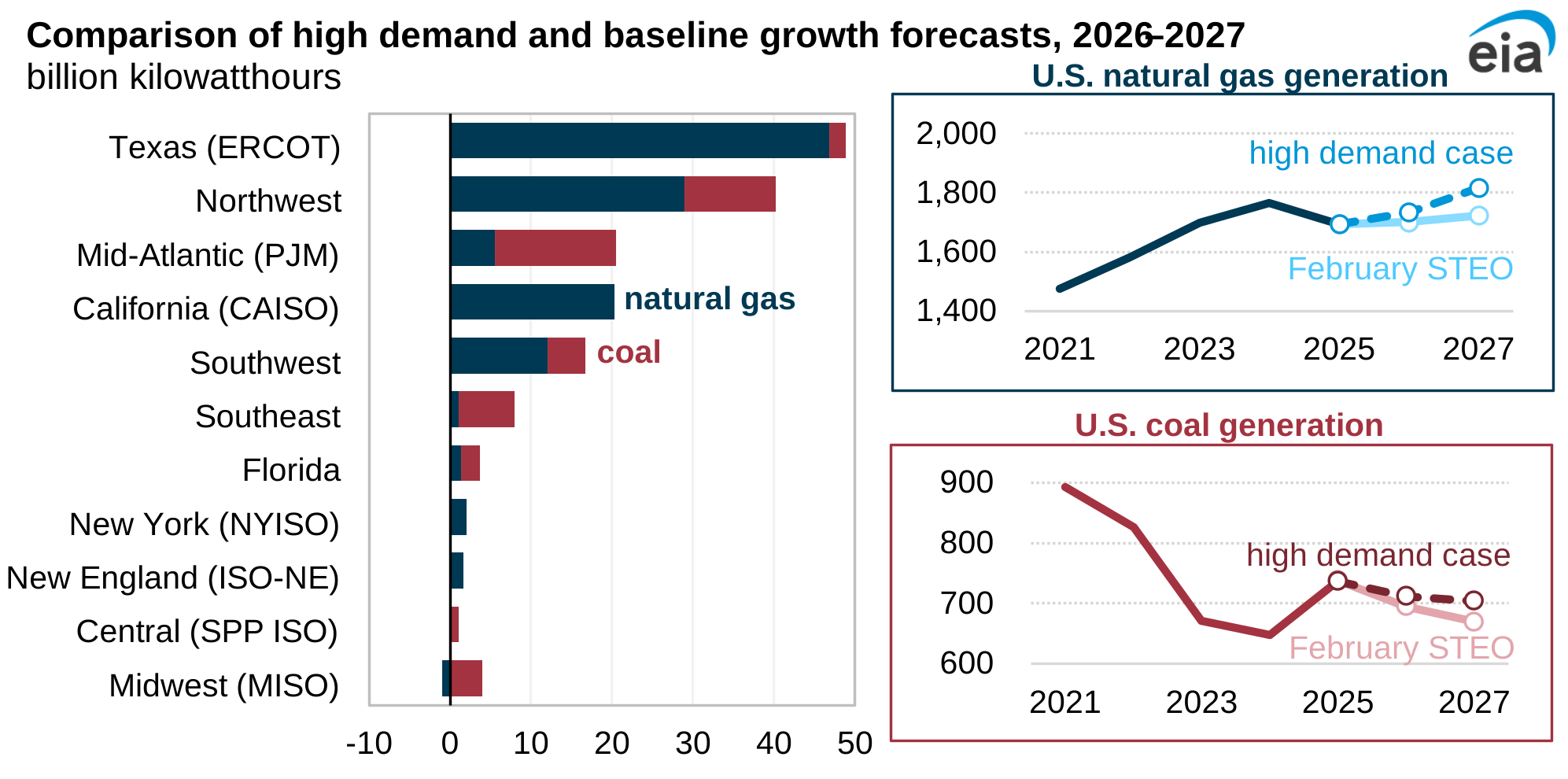
In the February STEO, we forecast that U.S. natural gas generation will increase by 1.7% between 2025 and 2027, or 29 billion kilowatthours (BkWh). Under the higher electricity demand scenario, the two-year increase would rise to 7.3% (123 BkWh). Natural gas generation between 2025 and 2027 increases the most in ERCOT, rising by 105 BkWh in the high demand growth scenario compared with 68 BkWh in the February STEO.
We forecast that U.S. coal generation will decrease by 9.3% between 2025 and 2027 (68 BkWh) in our February STEO. In the high demand growth scenario, coal generation nationwide decreases by 5.0% (37 BkWh) over the next two years. In the Mid-Atlantic (PJM), Midwest (MISO), and Southeast (SERC) regions, coal accounts for more than half the additional increase in electricity generation in the high demand growth scenario because coal-fired plants have existing spare capacity.
Effect of higher load on wholesale electricity prices
Our assumption of higher electricity demand than we forecast in the February STEO would result in higher forecast average wholesale electricity prices. The effect would be relatively minor in 2026 given the ramp up time of the increasing load in the high demand scenario, but the effect is more evident in 2027, as higher demand in this scenario increases the utilization of existing generating capacity. The effect of higher demand would be most pronounced in Texas (ERCOT) where the 2027 wholesale price would be $37 per megawatthour (MWh) higher than forecast in the February STEO. Excluding ERCOT, the average 2027 wholesale price across the other major hubs covered in the STEO would be $2.10/MWh higher in the high demand growth scenario compared with the February STEO forecast average of $48/MWh.
The increase in wholesale prices in the high demand growth scenario relative to the February STEO was most evident in ERCOT, where the 2027 price averaged $37/MWh (79%) higher than the February STEO forecast price. Modeled ERCOT hourly prices in the high demand growth scenario were particularly high during the late summer months when wind generation typically reaches a seasonal low. At the same time, electricity demand tends to reach its seasonal peak. When this occurs, ERCOT needs to rely on the most expensive generators to fulfill demand.
ERCOT’s grid is isolated and has limited connections to the main Eastern and Western grids. This inability to draw from electricity supply in neighboring regions makes the price response to higher demand more acute.
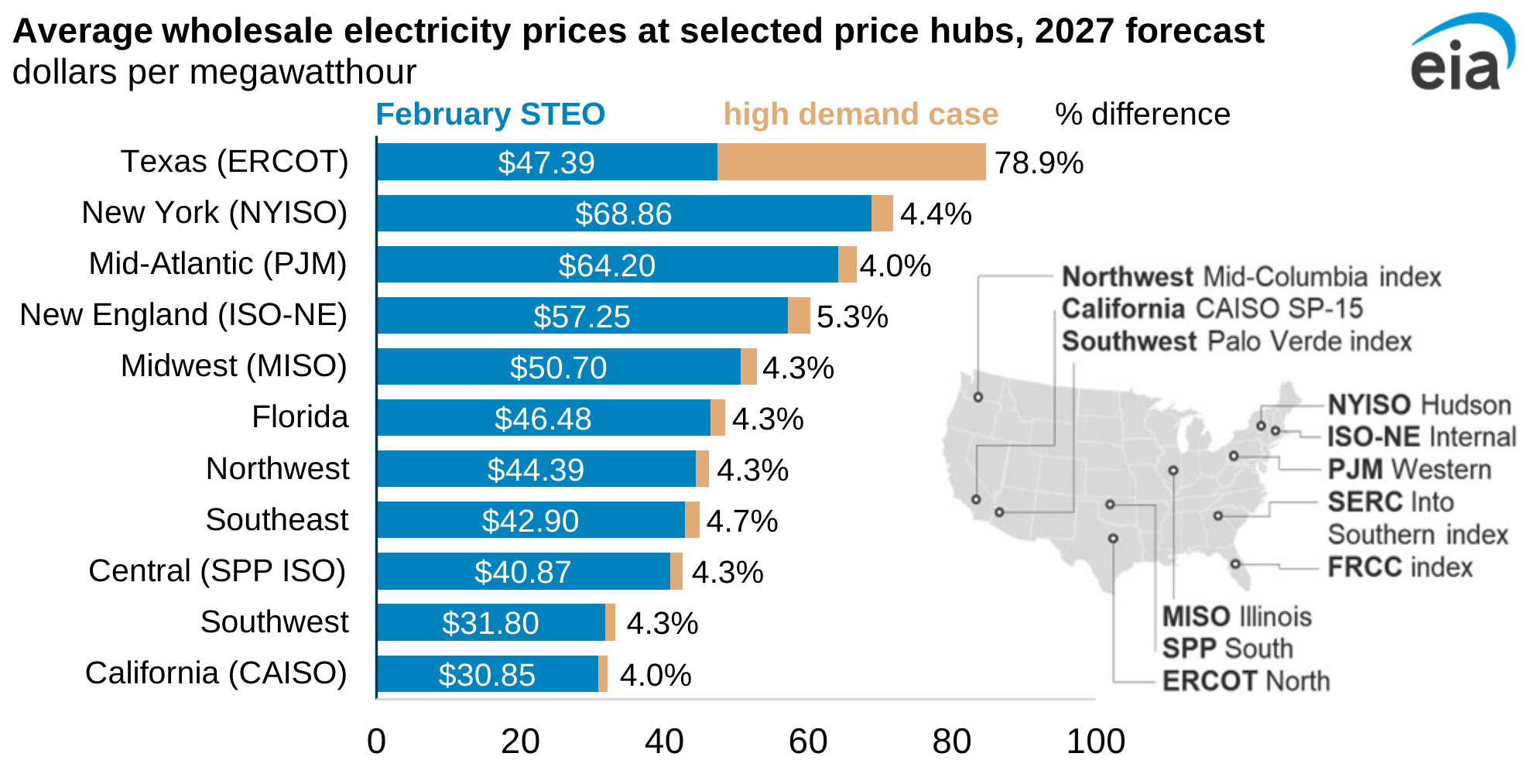
For the Mid-Atlantic (PJM), the second-largest load growth region in our high electricity demand growth scenario, the annual average price increase is more limited than in ERCOT because PJM is interconnected with other regions in the eastern United States and has access to more coal and natural gas generating capacity. We estimate that the modeled PJM wholesale price in 2027 in the high demand growth scenario would be $2.60/MWh (4%) higher than the forecast February STEO price.
In regions that historically have had higher electricity prices, like New England and New York ISO, we expect an additional $3.00/MWh (5%) average wholesale electricity price increase in the high demand growth scenario compared with the February STEO.
For California and the Southwest region, we project an additional $1.30/MWh (4%) increase in annual average electricity price compared with the February STEO forecast. We expect natural gas to support the additional load growth while renewable power capacity and generation remain unchanged.
Principal contributors: Tyler Hodge, Katherine Antonio