
Natural gas pipeline project completions increase takeaway capacity in producing regions
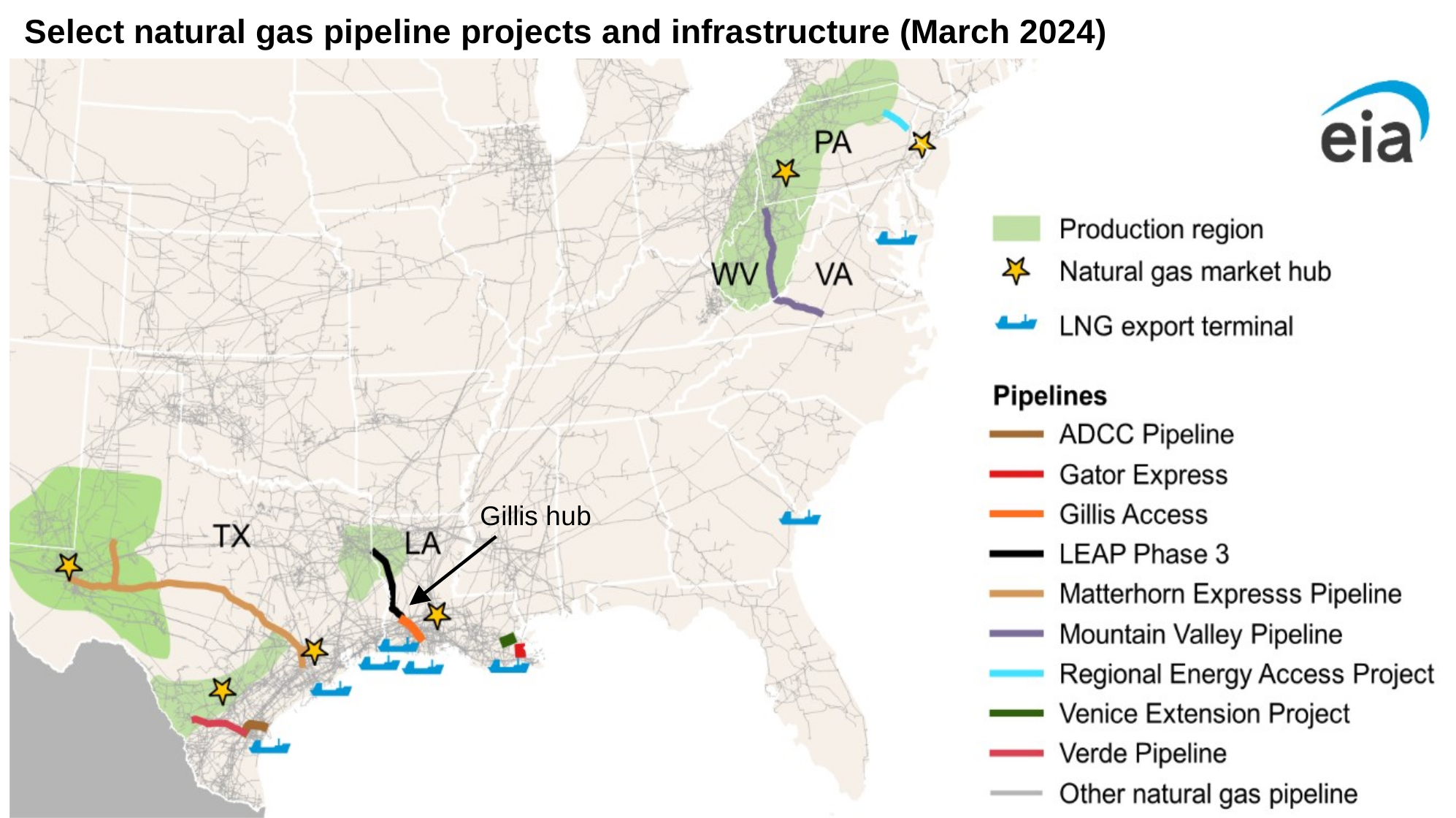
Note: Map includes pipeline projects of more than 0.8 billion cubic feet per day (Bcf/d) of capacity completed in 2024 except the Louisiana Energy Access Project (LEAP) Phase 3, which added 0.2 Bcf/d in 2024 and increased operating capacity of the pipeline to 1.9 Bcf/d. LNG=liquefied natural gas
Natural gas pipeline projects completed in 2024 increased takeaway capacity by approximately 6.5 billion cubic feet per day (Bcf/d) in the U.S. natural gas-producing Appalachia, Haynesville, Permian, and Eagle Ford regions, according to our latest Natural Gas Pipeline Projects tracker. These pipelines deliver natural gas from the producing regions to demand centers in the mid-Atlantic and along the U.S. Gulf Coast:
- Mountain Valley Pipeline
The Mountain Valley Pipeline, operated by Equitrans Midstream Corporation, can move up to 2.0 Bcf/d of Appalachian Basin production from Wetzel, West Virginia, to an interconnect with the Transcontinental Gas Pipe Line Company (Transco) in Pittsylvania, Virginia. - Regional Energy Access Project
Transco’s Regional Energy Access project with capacity of a little more than 0.8 Bcf/d was an expansion of existing Transco infrastructure between Luzerne County, Pennsylvania, and Middlesex County, New Jersey. - Louisiana Energy Access Project (LEAP) Phase 3
DT Midstream’s LEAP Phase 3 project expanded the existing LEAP pipeline by 0.2 Bcf/d. As of June 2024, LEAP can transport 1.9 Bcf/d of natural gas from the Haynesville region to Gulf Coast markets via interconnections with other pipelines at the Gillis Hub near Ragley, Louisiana. - Matterhorn Express Pipeline
The Matterhorn Express Pipeline, operated by Whitewater Midstream, can deliver up to 2.5 Bcf/d of natural gas from the Permian Basin to the Katy, Texas, area. - Verde Pipeline
Pecan Pipeline Company’s Verde Pipeline can move up to 1.0 Bcf/d of producer EOG Resources’ natural gas production from Webb County, Texas, in the Eagle Ford producing region to the Agua Dulce hub in southern Texas.
Another five pipeline projects completed last year in Texas and Louisiana increased capacity to deliver natural gas to liquefied natural gas (LNG) export terminals by approximately 8.5 Bcf/d:
- ADCC Pipeline
The ADCC Pipeline, operated by Whitewater Midstream, can move approximately 1.7 Bcf/d of natural gas to the Corpus Christi Stage 3 LNG project, co-located with the existing Corpus Christi LNG terminal, in South Texas. - Gillis Access
TC Energy’s 1.5-Bcf/d Gillis Access project connects with other pipelines at the Gillis Hub and can transport natural gas from the Haynesville region to LNG export terminals along the Gulf Coast. - Gator Express Phase 1 & 2
Venture Global Gator Express’s Gator Express Pipeline consists of two pipeline segments that can deliver approximately 2.0 Bcf/d each of natural gas from pipeline interconnections to the Plaquemines LNG export terminal located about 20 miles south of New Orleans, Louisiana. - Venice Extension Project
Texas Eastern Transmission’s Venice Extension Project can move up to 1.3 Bcf/d of natural gas to the Plaquemines LNG export terminal.
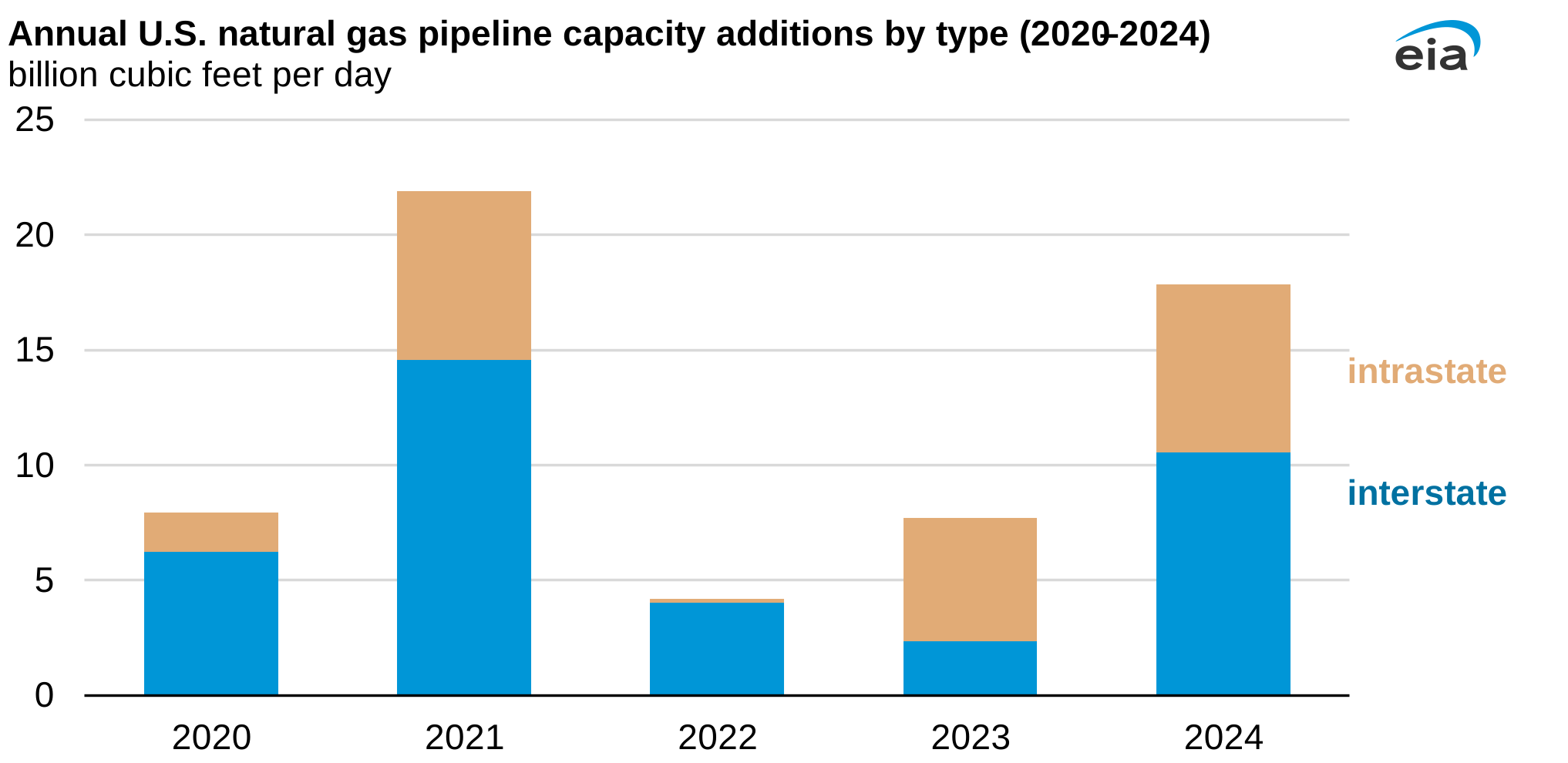
A handful of other relatively small interstate and intrastate pipeline projects (less than 0.8 Bcf/d of capacity each) added another almost 3.0 Bcf/d combined of natural gas pipeline capacity for a total of 17.8 Bcf/d in new capacity in 2024. We consider interstate pipelines to be those that cross state borders and those that serve export demand—both at pipeline border crossings and at LNG export terminals. Intrastate pipelines do not cross state borders.
Interstate project capacity additions outpaced intrastate additions, and total pipeline capacity additions surpassed the previous year’s additions for the second year in a row.
Principal contributor: Katy Fleury
Tags: map, natural gas, pipelines, capacity, production/supply