
Increased U.S. renewable and natural gas generation likely to reduce summer coal demand
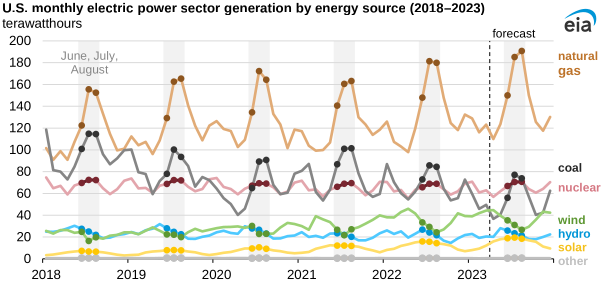
We forecast that the largest increases in U.S. electricity generation this summer (June, July, and August) will come from solar, wind, and natural gas-fired power plants because of new generating capacity coming online, according to our June Short-Term Energy Outlook. The rising generation from these sources will likely be offset by reduced generation from coal-fired power plants.
Natural gas remains the primary source of generation in the electric power sector, and we expect U.S. natural gas-fired generation will grow by 3%, or 16.7 terawatthours (TWh), this summer compared with last year. Additional natural gas-fired generating capacity and favorable fuel costs are the primary drivers of our forecast increase in generation from natural gas this summer.
A large share of the new generating capacity built in the United States over the past few years is powered by solar or wind. The U.S. electric power sector added an estimated 14.5 gigawatts (GW) of solar generating capacity and about 8.0 GW of wind capacity during the 12 months ending May 31, 2023.
Wind power has been the leading source of new renewable electricity generation in recent years and is an especially important component of the generation mix for some regions during the spring months. We forecast that U.S. wind-powered generation this summer will be 7% (5.8 TWh) higher than last summer.
Much of the solar-powered generating capacity that has been installed in recent months is concentrated in Texas and California. We expect that new solar capacity will lead to a 24% (10.8 TWh) increase in solar generation this summer compared with last summer. Many solar projects are also being built with associated battery storage systems to help provide power when solar and wind resources are low. The electric power sector has added an estimated 5.3 GW of battery capacity in the past 12 months, a nearly 90% increase.
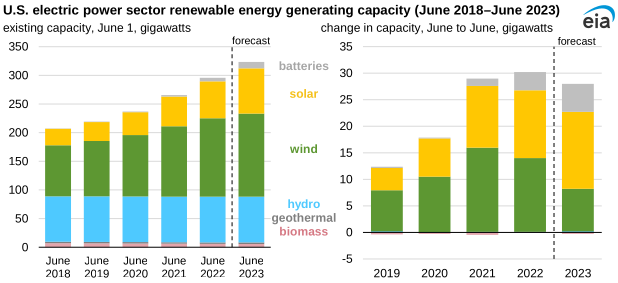
In addition to the continuing growth in generation from renewable energy sources, we forecast 4.5 TWh more nuclear generation this summer than in summer 2022 as result of the planned opening of a new reactor at the Vogtle nuclear power plant. In contrast to this newly added nuclear capacity, a number of reactors at other nuclear plants have retired in recent years.
We expect the increase in summer generation from solar, wind, and nuclear power to contribute to reduced generation from coal-fired power plants. Between June 2022 and May 2023, about 11 GW of U.S. coal capacity retired, and we expect 15% (36.0 TWh) less U.S. coal-fired generation this summer compared with last summer.
Principal contributor: Tyler Hodge