
Solar power will account for nearly half of new U.S. electric generating capacity in 2022
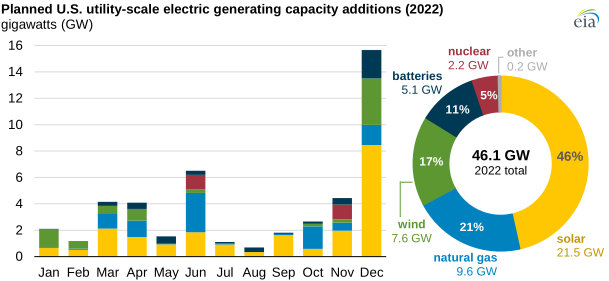
In 2022, we expect 46.1 gigawatts (GW) of new utility-scale electric generating capacity to be added to the U.S. power grid, according to our Preliminary Monthly Electric Generator Inventory. Almost half of the planned 2022 capacity additions are solar, followed by natural gas at 21% and wind at 17%.
Developers and power plant owners report planned additions to us in our annual and monthly electric generator surveys. In the annual survey, we ask respondents to provide planned online dates for generators coming online in the next five years. The monthly survey tracks the status of generators coming online based on reported in-service dates.
Solar. We expect U.S. utility-scale solar generating capacity to grow by 21.5 GW in 2022. This planned new capacity would surpass last year’s 15.5 GW of solar capacity additions, an estimate based on reported additions through October (8.7 GW) and additions scheduled for the last two months of 2021 (6.9 GW). Most planned solar additions in 2022 will be in Texas (6.1 GW, or 28% of the national total), followed by California (4.0 GW).
Natural gas. In 2022, we expect 9.6 GW of new natural gas-fired capacity to come online. Combined-cycle plants account for 8.1 GW of the planned capacity additions (over 84%), and combustion-turbine plants account for 1.4 GW. Almost all (88%) of the planned natural gas capacity is located in Ohio, Florida, Michigan, and Illinois.
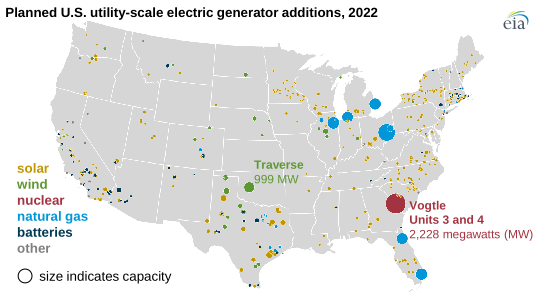
Wind. In 2021, a record-high 17.1 GW of wind capacity came online in the United States. We based this estimate on reported additions through October (9.9 GW) and planned additions in November and December (7.2 GW). Another 7.6 GW of wind capacity is scheduled to come online in 2022. About half (51%) of the 2022 wind capacity additions are located in Texas. The 999 MW Traverse Wind Energy Center in Oklahoma, the largest wind project expected to come online in 2022, is scheduled to begin commercial operations in April.
Battery storage. We expect U.S. utility-scale battery storage capacity to grow by 5.1 GW, or 84%, in 2022. Several factors have helped expand U.S. battery storage, including declining costs of battery storage, deploying battery storage with renewable generation, and adding value through regional transmission organization (RTO) markets.
Nuclear. Another 5% of the country’s planned electric capacity additions in 2022 will come from two new reactors at the Vogtle nuclear power plant in Georgia. One of these reactors, Unit 3, was expected to come online in 2021, but the unit’s planned start date was delayed until June 2022 to allow additional time for construction and testing.
Principal contributors: Elesia Fasching, Suparna Ray
Tags: generation, electricity, natural gas, wind, solar, capacity, map